Trust Roofing Services
Chimney Breast Removal Service
FREE Drone Survey
Free Quote
BBA-Approved Materials. 10-Year Guarantee.
Call: 0115-647-3275
Chimney Breast Removal Nottingham — Structural Work Done Right, First Time
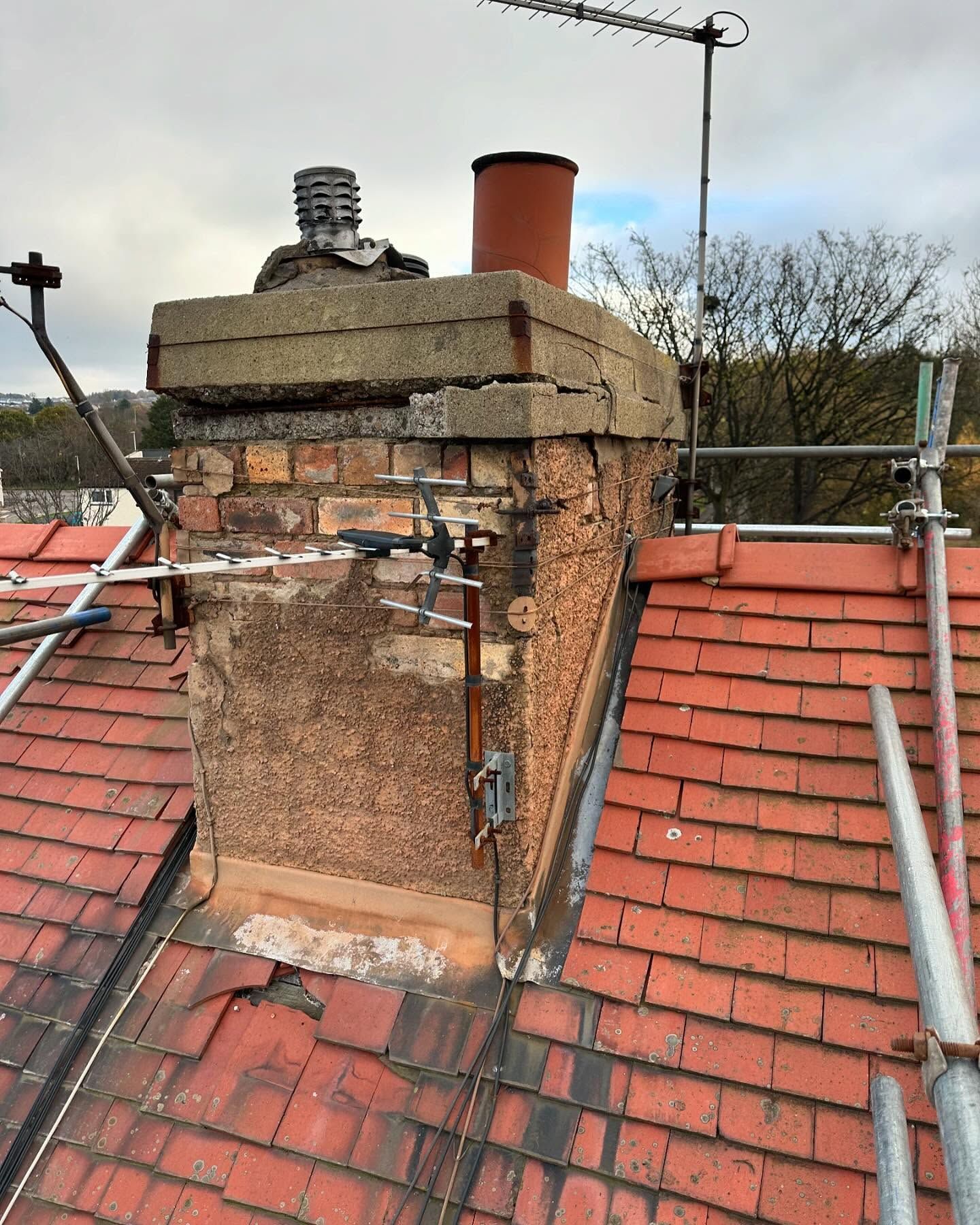
If you're searching for chimney breast removal in Nottingham, you've probably already realised this isn't a simple knock-down job. It's a structural alteration. The chimney breast in your home carries the weight of the stack above it — in many cases, well over a tonne of masonry sitting on a structure that runs from your ground floor, through every ceiling, and out through the roof.
Get it wrong and you risk structural damage, a failed survey, a stalled house sale, and a very expensive remediation job. That's why homeowners across Nottingham and Nottinghamshire call Trust Roofing Services — a family-run team based in Hucknall with over 15 years of hands-on chimney experience.
We manage the whole process — from your free initial survey through to Building Control sign-off and completion certificate. We liaise with structural engineers, handle the paperwork, and carry out all the building and roofing make-good work ourselves.
No subcontractors. No handoffs. One team, start to finish.
Whether you want to open up a living room in a Victorian terrace in Sherwood, free up bedroom space in Arnold, or resolve a chimney breast that a previous owner removed without a completion certificate — we're the local specialists to call.
📞 Call Trust Roofing Services: 0115 647 3275 — Free survey, no-obligation quote.
What Is a Chimney Breast and Why Does Removing One Require a Specialist?
A chimney breast is the section of the chimney structure that projects into a room. It surrounds the flue, houses the fireplace opening, and — crucially — supports the weight of everything above it. That includes the chimney breast on each floor above, the loft section, and the stack that rises through the roof.
Think of it like a load-bearing wall. You wouldn't knock out a load-bearing wall with a lump hammer and hope for the best. A chimney breast is no different.
Here's what's typically involved in a proper removal:
- Structural engineer assessment — to calculate loads and design the steel support system
- Building Regulations Full Plans application — submitted to Nottingham City Council Building Control before a single brick is touched
- Temporary support installation — acrow props hold up the structure safely during demolition
- RSJ steel beam installation — the permanent structural solution in most Nottingham properties
- Staged inspections — Building Control visits at key stages and issues a completion certificate at the end
- Roof and wall make-good — matching tiles, lead flashing, replastering, flooring repairs
A proper chimney breast removal is a 2–5 day job on site, but the full process from survey to completion certificate typically takes 6–10 weeks — largely because of Building Regulations application timescales and, where a party wall is involved, the mandatory two-month notice period.
Why Nottingham Homeowners Are Removing Chimney Breasts Right Now
Nottingham has a substantial stock of Victorian and Edwardian terraced and semi-detached housing — in areas like Sherwood, Carrington, Mapperley, Hyson Green, Basford, Forest Fields, and The Meadows. In these properties, chimney breasts typically project 300–450mm into a room. In a modest bedroom or living room, that's a meaningful chunk of usable floor space.
The most common reasons Nottingham homeowners ask us about removal:
- Creating a flat wall for fitted wardrobes, full-width TV units, or better furniture layout
- Opening up a ground-floor living room to feel more spacious or open-plan
- Removing a damp problem caused by a sealed, unventilated redundant flue
- Clearing a blocked kitchen run where the chimney breast interrupts worktop or cabinet space
- Resolving a failed survey flagged during a house purchase where removal was done previously without Building Control approval
- Sorting out a leaning or structurally compromised stack that makes more sense to remove than repair
The most common scenario we see in Nottingham is a homeowner wanting ground-floor removal only — keeping the stack and upper floors intact but reclaiming the living room floor space. This is entirely possible, but it requires steel beam installation and full Building Regulations compliance regardless.
Building Regulations Approval Is Always Required for Chimney Breast Removal in Nottingham
This is the single most important thing to understand before any work starts.
Chimney breast removal is classified as a structural alteration under Building Regulations Part A. That means Nottingham City Council Building Control must be notified and approve the work before demolition begins — not after.
This rule applies to every property type: terraced houses, semi-detacheds, detacheds. There are no exemptions.
What the Building Regulations Process Involves
- Structural engineer produces calculations and drawings — showing exactly how the load will be transferred once the breast is removed
- Full Plans application submitted to Nottingham City Council Building Control — before any work begins on site
- Building Control carries out staged inspections — checking the structural work at key points during the job
- Completion certificate issued — on successful final inspection, this becomes the legal proof that the work was done correctly
Why the Completion Certificate Matters
Your completion certificate is not just a piece of paper. It's the document that:
- Your conveyancing solicitor will ask for when you sell
- Your mortgage lender will flag as missing on a remortgage
- A buyer's surveyor will note as absent in a building survey
Without it, your sale stalls. You face a structural investigation at your own cost. In some cases, you'll need to open up the work to demonstrate what's behind the plaster — before Building Control will even consider a retrospective application.
Nottingham City Council updated its Building Control fee schedule in April 2025. Supplementary charges apply when the project scope changes after submission. A thorough pre-submission assessment avoids those additional costs.
Trust Roofing Services manages the Building Regulations process for every chimney breast removal we carry out. We work with qualified structural engineers, prepare and submit the documentation, and coordinate all inspections. You don't need to chase paperwork.
Partial Removal on One Floor Still Needs Full Structural Steel Support
The ground-floor-only chimney breast removal is the most popular job we carry out in Nottingham — and the one most frequently done wrong by contractors who don't understand the structural implications.
When the ground floor breast comes out, the mass above it doesn't disappear. The first floor breast, loft section, and chimney stack — often well over a tonne of masonry in total — still needs to be supported. That support is provided by:
- An RSJ steel beam — the standard, Building Control-approved solution for most Nottingham terraces
- Gallows brackets — a less common alternative, permitted only under strict conditions
The Critical Point About Gallows Brackets on Nottingham Terraces
Gallows brackets are only acceptable when all of the following apply:
- The stack is not completely vertical (a gathered flue configuration)
- The party wall is at least 215mm thick and in good structural condition
- The chimney breast is no more than 340mm deep and 1,200mm wide
- The neighbour has NOT already removed their chimney breast on the other side of the wall
That last condition is crucial — and it comes up constantly in areas like Sherwood, Carrington, Basford, and Forest Fields where chimney breast removals have been happening piecemeal for decades. If your neighbour has already removed their side, gallows brackets are ruled out entirely and an RSJ becomes the only approved structural solution.
Gallows brackets also now require structural calculations and pull-out testing before Building Control will accept them. For most Nottingham terraces, an RSJ is the faster, cleaner, and more straightforwardly approved route.
None of this is a decision we make on the day. The structural engineer specifies the support method. Building Control approves it. We build to the approved design.
Party Wall Obligations Must Be Met Before Work Begins on a Shared Chimney
If your chimney breast sits on or against a party wall — the wall shared with a neighbouring property — the Party Wall etc. Act 1996 applies. This is a separate legal requirement to Building Regulations. You need both.
What the Party Wall Act Requires
- You must serve a written Party Structure Notice on your neighbour a minimum of two months before work begins
- The notice must be in writing — a text message, a conversation over the fence, or a verbal agreement are not valid
- Your neighbour has 14 days to respond; if they don't, they are automatically treated as having dissented
What Happens if Your Neighbour Disagrees
- A Party Wall Award must be agreed through appointed surveyors before work can start
- You pay your own surveyor's fees; if your neighbour appoints separately, you pay their fees too
- Failure to serve notice before starting can result in a court injunction — the job stops, possibly for months
The Scenario That Changes Everything Structurally
If your neighbour has already removed their chimney breast on the other side of the party wall:
- Gallows brackets are not permitted
- An RSJ steel beam is required as the structural support method
- A full Party Wall Award is still required before work can begin
- The party wall may be in a weakened condition and needs assessment
This situation is far more common in Nottingham's densely terraced inner suburbs — including Basford, Forest Fields, Hyson Green, and Radford — than most contractors acknowledge.
We advise on Party Wall obligations at the initial survey stage and can connect you with a qualified Party Wall Surveyor where one is needed.
Redundant Flues Must Be Sealed and Ventilated — Not Just Blocked Off
A chimney breast removal that leaves the flue improperly managed creates damp problems, sometimes within months.
When the breast is removed but the stack remains, the flue becomes a vertical void inside your home. Without airflow through it, warm moist air from inside the building enters the flue at the bottom and condenses against the cold masonry. Moisture accumulates. Within months, you get unexplained damp patches appearing on the walls adjacent to where the breast was.
The Correct Approach to Flue Management After Removal
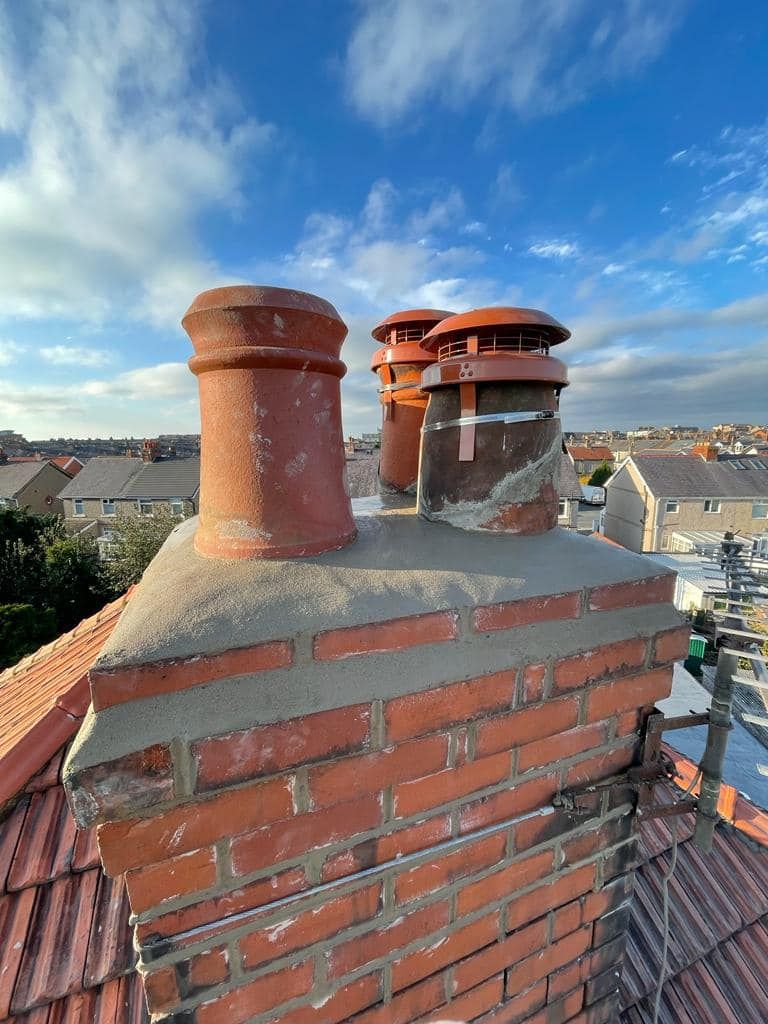
- Ventilated cowl fitted at the chimney pot — allows warm air to draw out from the top
- Air brick installed at low level — allows cool air in from outside to maintain circulation
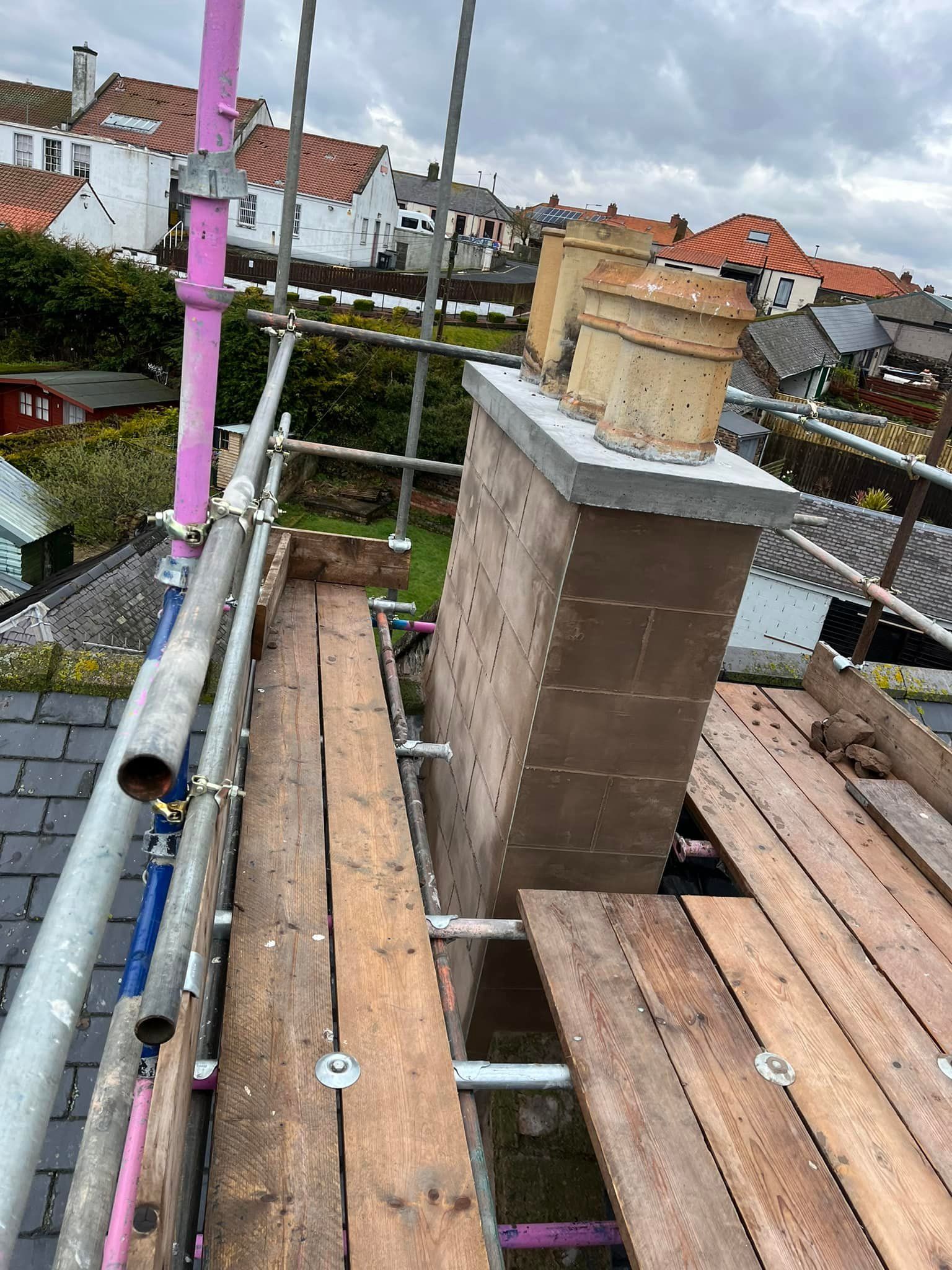
- Roof-level make-good with correctly dressed lead flashing and matching replacement tiles where the breast previously met the roof structure
This is a Building Regulations requirement under Part F (Ventilation) — not an optional extra. Building Control checks this at inspection. If it's not done correctly, the work will not pass.
Why Nottingham Properties Are Particularly Vulnerable
Many pre-1920s brick-built terraces across Nottingham contain hygroscopic salt contamination in the chimney masonry — the residue of decades of coal and wood burning. These salts actively draw moisture from the air, even after the fireplace has been sealed. Poor flue ventilation after removal significantly worsens this problem.
If a previous contractor removed a chimney breast and didn't ventilate the flue correctly, we can inspect the situation, assess the masonry, and carry out the correct remediation.
Asbestos Checks Must Come Before Demolition on Any Pre-1980s Property
This is a step that gets skipped, and it should never be.
Asbestos was widely used in building construction from the 1950s until it was finally banned in 1999. In properties built or substantially modified during that period — which covers a significant proportion of Nottingham's housing stock — chimney breast demolition can disturb asbestos-containing materials (ACMs).
The most commonly found ACMs in chimney breasts include:
- Flue liners — often insulating board containing chrysotile or crocidolite asbestos
- Fire-back boards — particularly in post-war properties
- Insulating board fitted around the fireplace opening during 1960s and 1970s upgrades
Breaking up asbestos-containing materials without identification is a criminal offence under the Control of Asbestos Regulations 2012.
The Correct Sequence Before Any Demolition Begins
- Commission an asbestos survey from a licensed assessor
- Review the report and identify any ACMs in the chimney breast area
- If asbestos is found, engage a licensed asbestos removal contractor to remove it safely before structural work begins
- Ensure asbestos waste is removed and disposed of by a licensed carrier
Properties in areas like Wollaton, Bilborough, Clifton, and Bestwood — predominantly inter-war and post-war housing estates — are among the most likely in Nottingham to contain asbestos-based flue liners or board materials.
We will not start demolition on any pre-1980s Nottingham property without confirmation that an asbestos assessment has been carried out. We are happy to advise on finding a licensed local assessor if you need a recommendation.
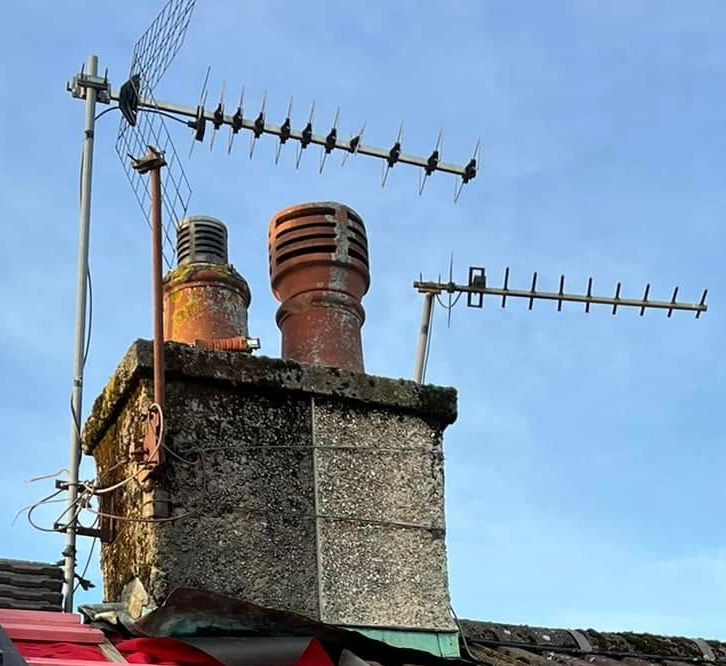
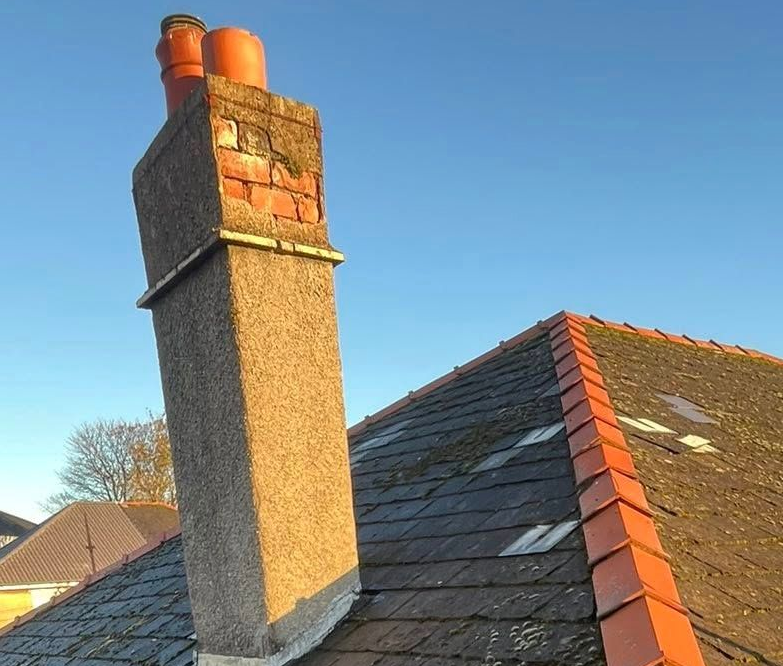
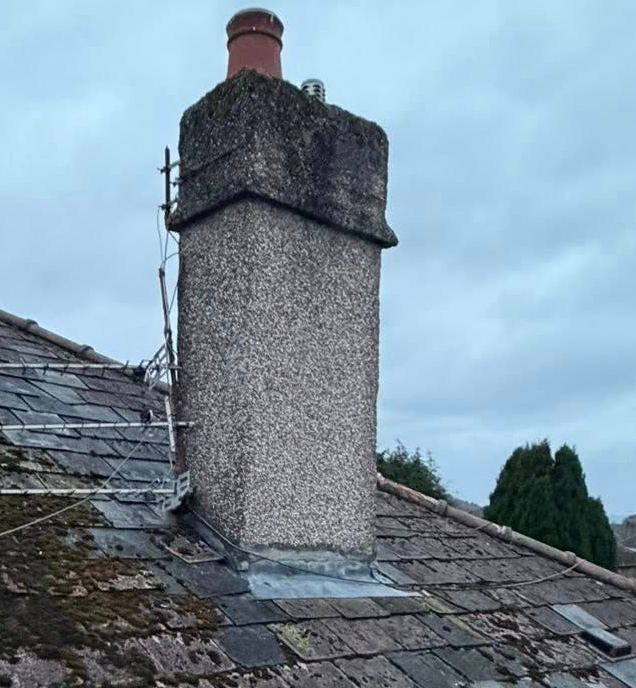
What Happens When a Previous Owner Removed a Chimney Breast Without Building Regulations Approval?
This is one of the most common scenarios we deal with in Nottingham — and it surfaces most often when a property sale is already underway.
A buyer's surveyor flags a chimney breast removal on the building survey. The conveyancer asks for the Building Control completion certificate. There isn't one. The sale stalls.
Your Options in This Situation
Option 1 — Regularisation Application
A retrospective Building Regulations application, submitted to Nottingham City Council Building Control, asks them to inspect and approve work that has already been done. This may require:
- Opening up sections of the ceiling or floor to expose the support structure
- A structural engineer's report confirming the existing support is adequate
- Possible remedial structural work if the existing support doesn't meet current standards
- Payment of council fees on top of the contractor and engineering costs
Option 2 — Indemnity Insurance
In some cases, a solicitor may arrange a legal indemnity policy to cover the absence of Building Regulations approval. This is often faster, but it doesn't make the structure safe — it simply provides financial protection in the event of a future claim. Mortgage lenders vary in whether they'll accept indemnity insurance in place of a completion certificate.
Option 3 — Full Remediation
Remove and properly reinstate the support structure with full Building Control oversight and a new completion certificate.
We've helped homeowners in Arnold, Carlton, Mapperley, and Gedling work through each of these scenarios. If you've bought a property with an undocumented chimney breast removal, call us early — the options narrow as a sale progresses.
A Completion Certificate Protects Your Sale and Your Mortgage
The completion certificate is the document that closes the loop on everything.
Once Nottingham City Council Building Control signs off the final inspection, they issue a completion certificate. This confirms the structural work was designed, approved, and built to the required standard.
Keep it with your property deeds. It protects you when you sell, when you remortgage, and when any future work is planned nearby. Without it, any chimney breast removal is a liability — for you and for any future owner.
Undocumented chimney breast removals are a persistent problem in period property conveyancing across Nottingham. They come up regularly in areas like Arnold (NG5), Carlton (NG4), West Bridgford (NG2), and Mapperley (NG3) — where older terraced and semi-detached properties change hands frequently.
The Trust Roofing Services Chimney Breast Removal Process
Here's exactly what happens when you use Trust Roofing Services for chimney breast removal in Nottingham.
Step 1 — Free Survey and Assessment
We attend your property at a time that suits you. We assess the chimney structure, identify the support requirements, check for party wall implications, and advise on whether an asbestos survey is needed. No charge. No obligation.
Step 2 — Structural Engineer Liaison
We connect you with a qualified structural engineer who will assess the load paths, specify the steel beam or support method, and produce the calculations required for Building Control submission.
Step 3 — Building Regulations Application
We submit the Full Plans application to Nottingham City Council Building Control, including the structural calculations and proposed method of work. We manage the correspondence and respond to any queries from Building Control.
Step 4 — Party Wall Notice (Where Required)
If the chimney breast is on a party wall, we advise you on the Party Wall process and can connect you with a qualified Party Wall Surveyor to serve the notice and manage the process with your neighbour.
Step 5 — On-Site Removal Work
- Temporary acrow props installed to support the load above
- Chimney breast brickwork carefully demolished, working downwards
- RSJ steel beam installed to the engineer's specification, with correct padstones and bearings
- Fire protection applied to steelwork as required
- Flue sealed and ventilated correctly — cowl at top, air brick at low level
- Roof tiles and lead flashing made good where the breast met the roof structure
Step 6 — Building Control Inspections
We coordinate all staged inspections. Building Control attends to inspect the structural work at key points.
Step 7 — Making Good and Final Sign-Off
Walls, floor, and ceiling made good ready for plastering. Final Building Control inspection passed. Completion certificate issued.
Frequently Asked Questions — Chimney Breast Removal Nottingham
Does a chimney breast removal in Nottingham require planning permission?
Planning permission is not required for internal chimney breast removal in most cases. Exceptions include listed buildings and properties within conservation areas — including parts of The Park estate and Mapperley Park in Nottingham. If you're unsure whether your property falls within a designated area, check with Nottingham City Council Planning before any work begins.
Can you remove just the ground floor chimney breast and leave the rest of the chimney in place?
Yes — this is the most common type of removal we carry out in Nottingham. However, the remaining chimney above must be properly supported by an RSJ steel beam or approved structural alternative. Structural calculations must be submitted to and approved by Nottingham City Council Building Control before demolition begins.
What happens if your neighbour has already removed their chimney breast on the other side of the wall?
If the adjacent chimney breast on your neighbour's side of the party wall has already been removed, gallows brackets are not a permitted structural support method. An RSJ steel beam is required. You will also need a Party Wall Award in place before work can legally start.
How long does a chimney breast removal take from start to completion certificate?
Active work on site typically takes two to five days. The overall process — including the Building Regulations application and, where applicable, the two-month Party Wall Notice period — typically takes six to ten weeks from initial survey to completion certificate.
Is it true that removing a chimney breast can cause damp problems?
Yes, if done incorrectly. When the breast is removed but the stack remains, the flue becomes a sealed void. Without a ventilated cowl at the chimney pot and an air brick at low level, moisture accumulates inside the flue and tracks into surrounding walls. Correct ventilation is a Building Regulations requirement — not optional.
Could there be asbestos in my Nottingham chimney breast?
Potentially, yes — particularly in properties built or modified between 1950 and 1999. Asbestos-containing materials were commonly used in flue liners, fire-back boards, and insulating board during this period. A licensed asbestos assessment must be carried out before any demolition begins on older properties.
Will removing a chimney breast add or reduce the value of my Nottingham home?
It depends on the property and the room. In smaller Victorian or Edwardian terraces across Nottingham, removing a ground-floor chimney breast typically adds value by increasing usable floor space and improving room functionality. In larger period properties, removing an original fireplace — particularly in the main reception room — can reduce buyer appeal. We always recommend discussing the specific room and property type before committing to full removal.
What if a previous owner removed the chimney breast without Building Regulations approval?
A retrospective regularisation application can be submitted to Nottingham City Council Building Control. This involves a structural inspection, potentially opening up sections of the ceiling, and an engineer's sign-off confirming the existing support is adequate. Depending on the findings, remedial structural work may also be required. The earlier this is addressed, the less disruptive the resolution.
Why Choose Trust Roofing Services for Chimney Breast Removal in Nottingham?
There are plenty of general builders who will offer to remove a chimney breast. Far fewer have the structural knowledge, the Building Control experience, and the chimney-specific expertise to do it properly and get the paperwork right.
Here is what you get with Trust Roofing Services:
- ✅ Over 15 years of chimney and roofing experience across Nottingham and Nottinghamshire
- ✅ Family-run, Hucknall-based team — you deal with us directly, not a call centre
- ✅ No subcontractors — every job carried out by our own directly employed team
- ✅ Fully insured — full public liability and employer's liability insurance
- ✅ Free survey and no-obligation quote — including free drone roof survey where relevant
- ✅ Full Building Regulations management — we handle the application, inspections, and completion certificate
- ✅ Structural engineer liaison — we connect you with the right professionals and coordinate the process
- ✅ Party wall advice — we'll tell you what applies to your property and point you in the right direction
- ✅ Asbestos protocol — we will not start work on a pre-1980s property without confirmation of an asbestos assessment
- ✅ 10-Year workmanship guarantee — backed in writing before we start
- ✅ Honest advice, fixed written quotes — no hidden costs, no vague verbal estimates
Areas We Cover for Chimney Breast Removal in Nottinghamshire
Trust Roofing Services is based in Hucknall, NG15, and covers the whole of Nottingham city and the wider Nottinghamshire region. If your area isn't listed below, give us a call — we're likely to cover it.
Nottingham City and Inner Suburbs
Nottingham City Centre — NG1
The Meadows and Lenton — NG2 / NG7
Radford and Hyson Green — NG7
Forest Fields and Basford — NG7 / NG6
Sherwood and Mapperley — NG3 / NG5
Arnold — NG5
Bulwell and Bestwood — NG5 / NG6
Carlton and Gedling — NG4
Carrington and St Ann's — NG3
Wollaton and Bilborough — NG8
Beeston and Chilwell — NG9
West Bridgford and Edwalton — NG2 / NG12
Hucknall (our base) — NG15
Greater Nottinghamshire
Mansfield — NG18 / NG19
Kirkby in Ashfield — NG17
Sutton in Ashfield — NG17
Newark-on-Trent — NG24
Eastwood and Kimberley — NG16
Long Eaton — NG10
Stapleford — NG9
Clifton and Ruddington — NG11
Netherfield — NG4
Ilkeston (NG border) — DE7
Not sure if we cover your area? Call us on 0115 647 3275 and we will confirm straight away.
Ready to Get Your Chimney Breast Removed? Here's Your Next Step
If you've been thinking about chimney breast removal in Nottingham, the best thing you can do right now is call us for a free survey. Not a sales call. A genuine assessment of your property, your chimney, the structural requirements, and what the process looks like for your specific home.
We'll tell you exactly what's involved. We'll give you a clear, written, fixed-price quote with no hidden extras. And if the job isn't right for your property — we'll tell you that too.
Trust Roofing Services — Nottingham's local chimney specialists, based in Hucknall.
📞 Call: 0115 647 3275
📍
Trust Roofing Services, Harrow Road, Hucknall, Nottingham, NG15 6JD
Free survey. Written quote. No obligation. One team from start to completion certificate.
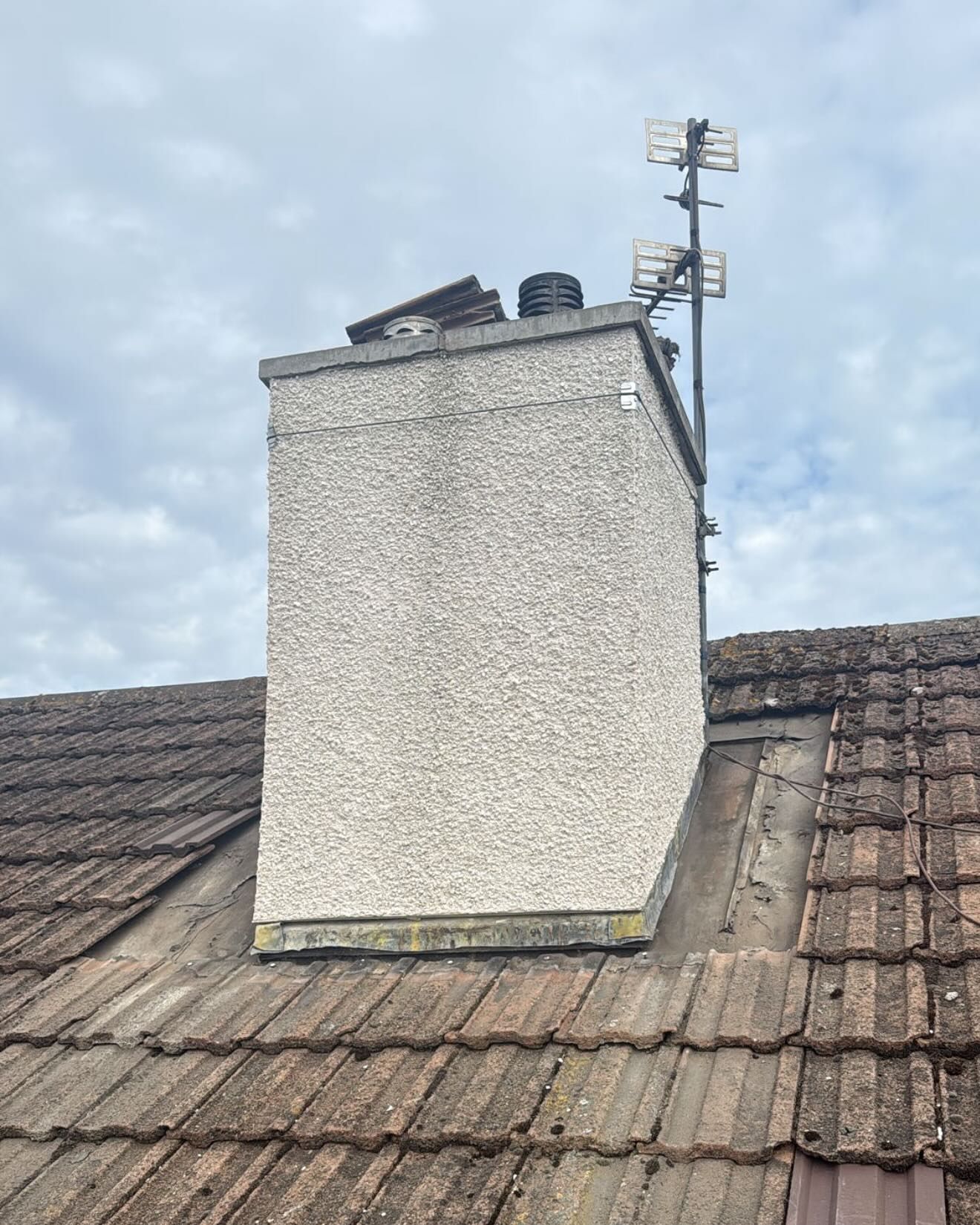
Let’s talk about your Chimney Structural Survey & Inspection request.
Our FREE Drone Service can reveal and and show you any problems that you can see for yourself.
Fill out the form, or call us to discuss your requirements
0115-647-3275