
Trust Roofing Services Nottingham
Residential & Commercial Concrete Roof Tiling Installation
Call Now To Arrange A FREE Drone Survey & Consultation
0115-647-3275
Concrete Roof Tiling Nottingham | Expert Installation & Repairs
Serving Nottingham, Hucknall, Arnold, Beeston, West Bridgford & Across Nottinghamshire
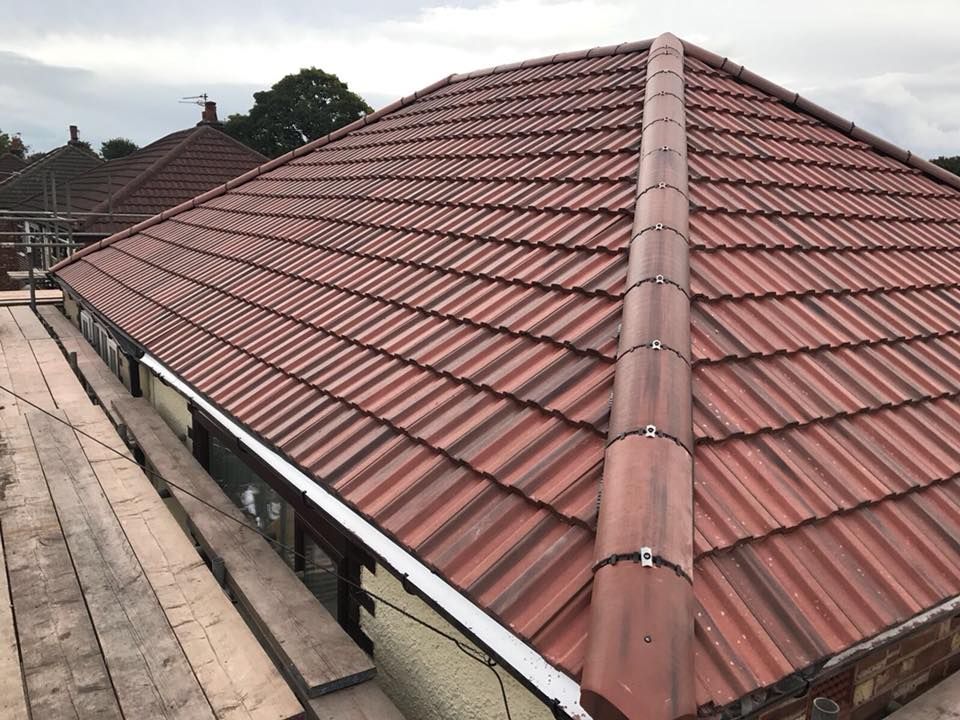
If you need concrete roof tiling in Nottingham, you have found the right team. At Trust Roofing Services, we install, repair, strip and re-tile concrete tile roofs across Nottingham and Nottinghamshire. We are based in Hucknall and have served homes and businesses across the county for over 15 years.
Whether your roof needs a full re-tile, a handful of slipped tiles replaced, or a new dry fix system fitted — we can help. We offer a free survey, including a drone survey where needed, and a no-obligation written quote before any work begins.
Call us today on 0115-647-3275 — or use our online contact form below to book your free survey.
What Is Concrete Roof Tiling?
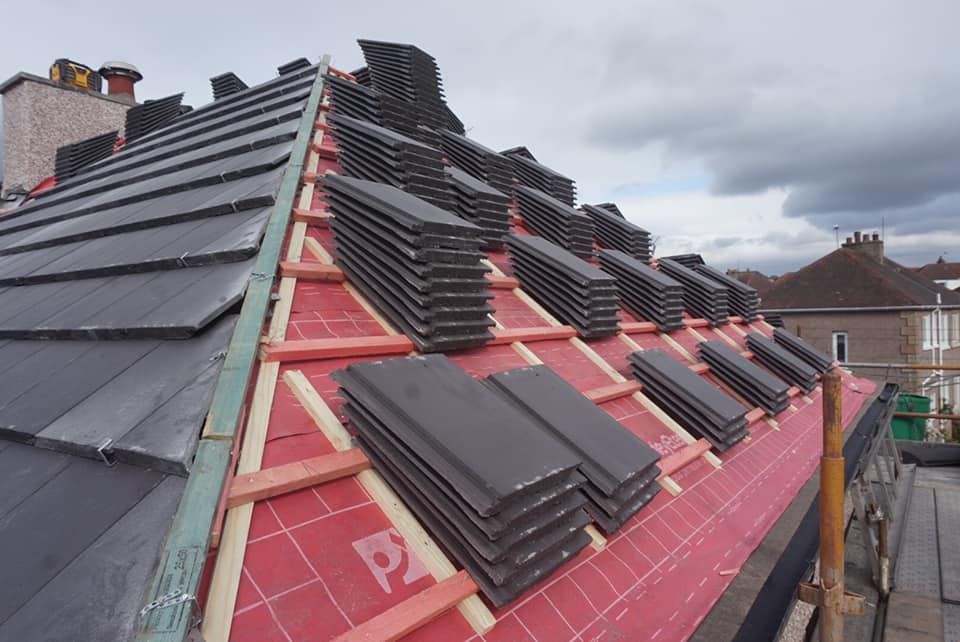
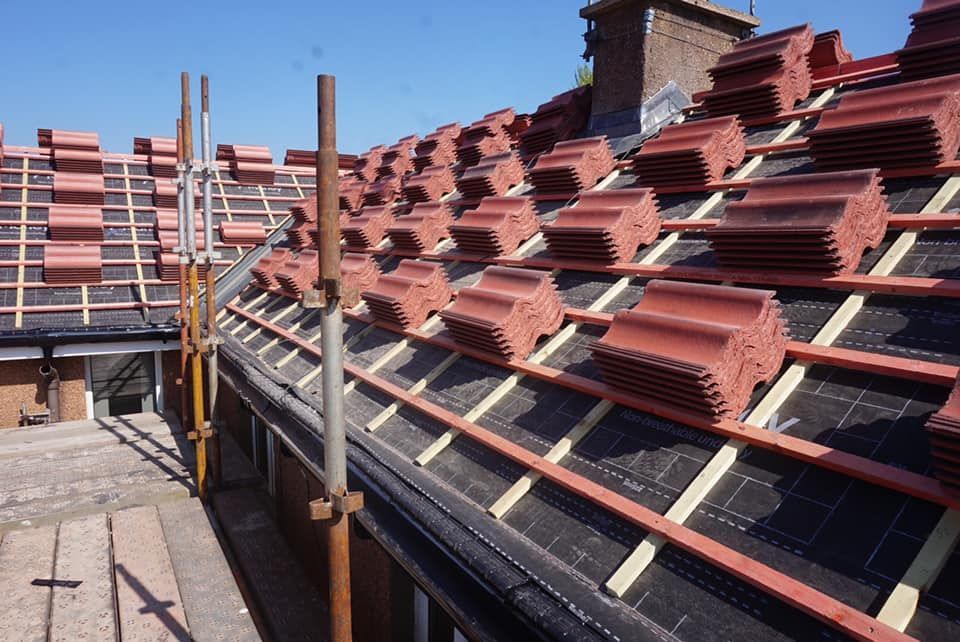
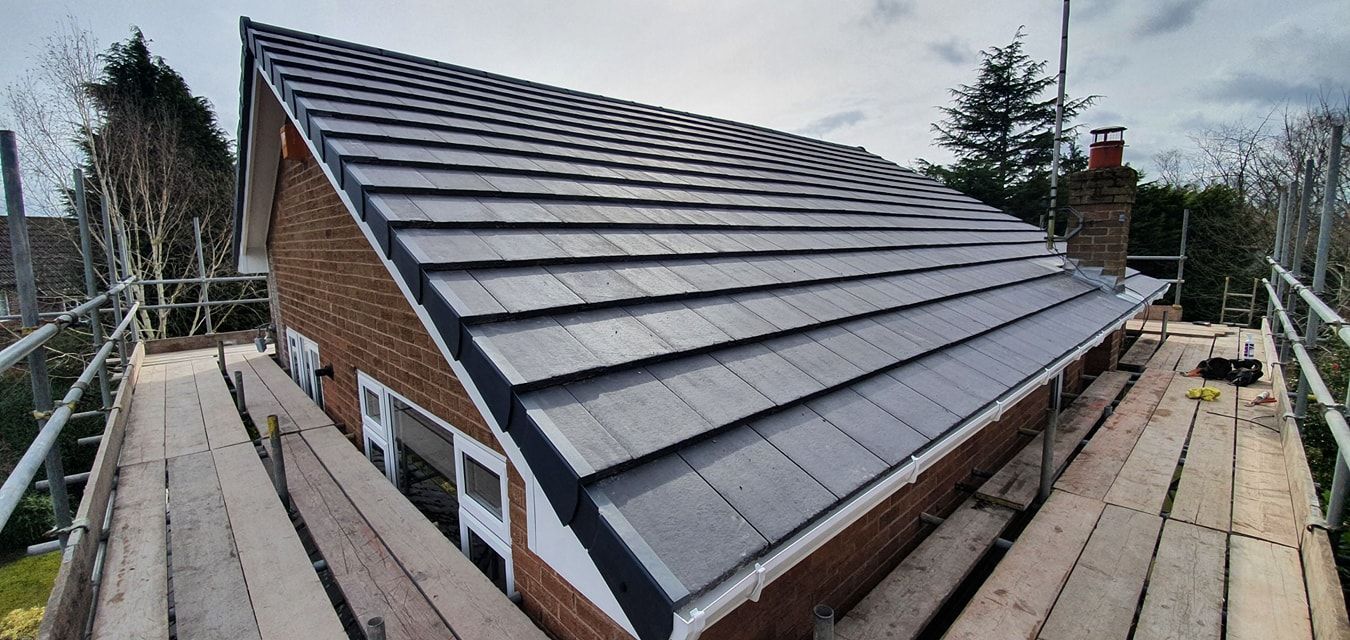
Concrete roof tiling is the installation, repair, or replacement of roof coverings made from cement, sand, and water — moulded into interlocking or plain tile profiles and fixed to a roof structure over breathable underlay and treated battens.
Concrete tiles are the most widely used roofing material in the UK, accounting for close to half of all pitched roof installations. They are manufactured to BS EN 490 standards, perform well in the British climate, and — when correctly installed — can last 50 years or more.
Trust Roofing Services carries out the full range of concrete tiling work:
- New concrete tile roof installations on houses and extensions
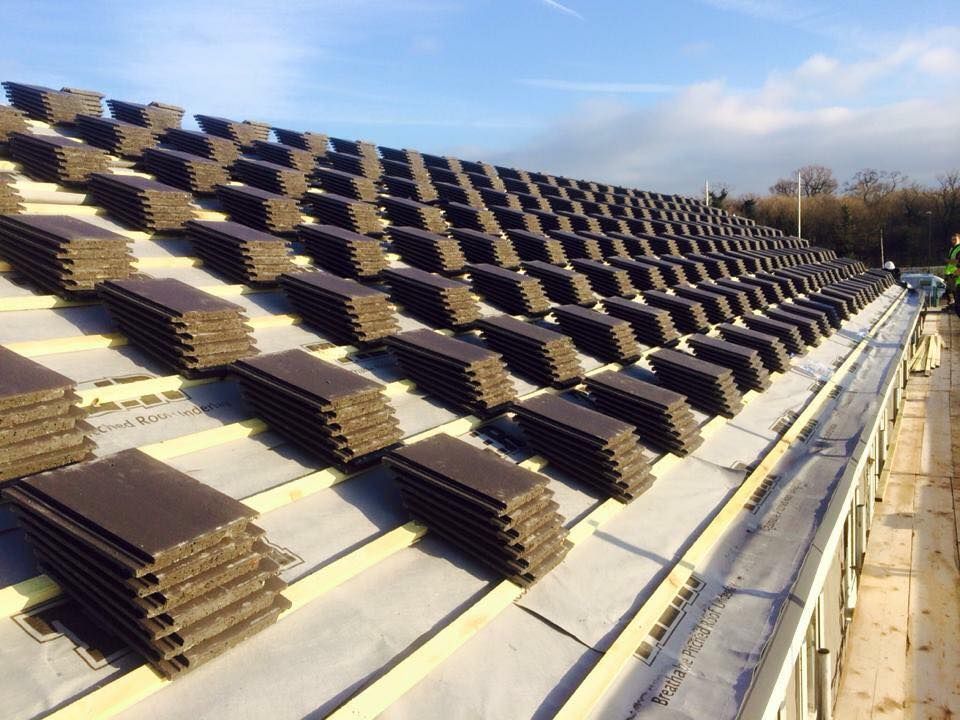
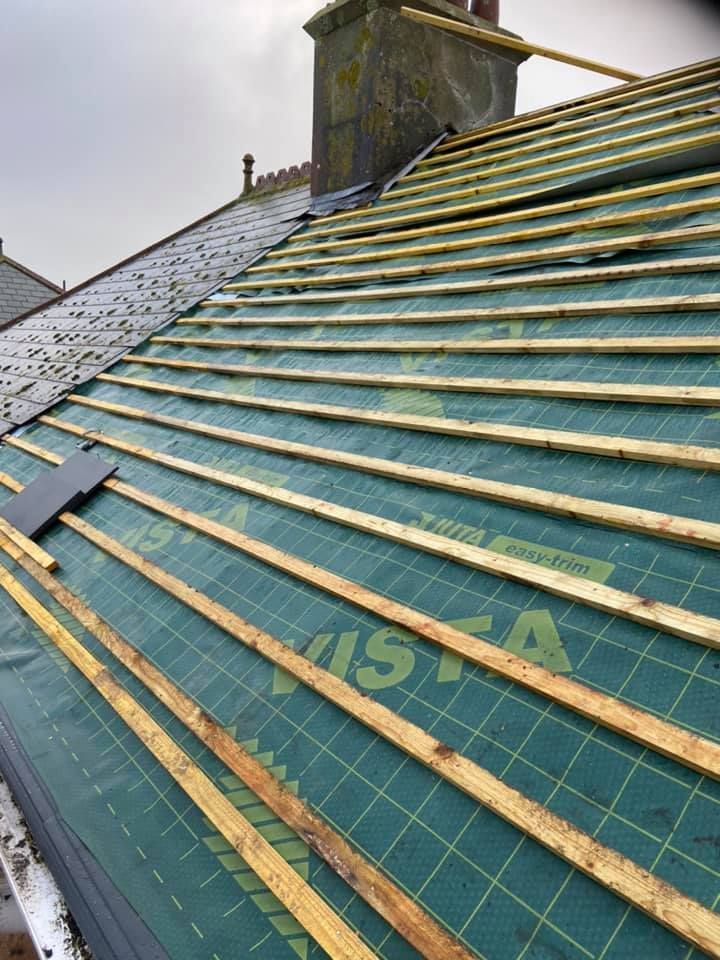
- Full roof strip and re-tile with new breathable underlay and battens
- Replacement of cracked, slipped, or broken individual tiles
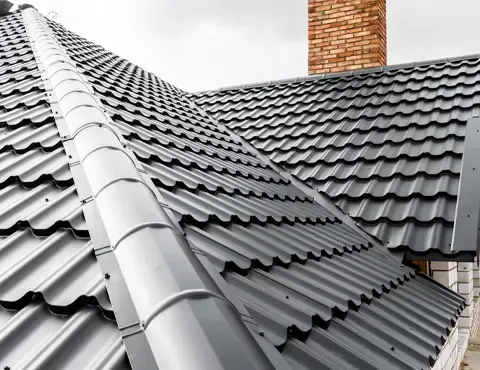
- Dry ridge and dry verge system installation
- Concrete tile repairs following storm or wind damage
- Leadwork and valley flashing as part of a full tiling job
- Moss treatment and soft-wash roof cleaning
- Concrete roof tile surveys and condition reports
Concrete Roof Tiles in Nottingham Last Decades When Fitted Correctly
Many Nottingham homes — especially those built between the 1950s and 1990s in areas like Hucknall, Bulwell, and Clifton — were originally roofed with concrete interlocking tiles. When those tiles are correctly installed with quality breathable underlay, treated battens, and proper mechanical fixings, they can perform for 50 years or more.
The underlayment beneath the tiles matters as much as the tiles themselves. It acts as a second barrier against moisture if a tile cracks or lifts. In Nottingham's climate — where wet autumns are followed by freeze-thaw cycles through winter — a failed or degraded underlayment causes damp and structural damage long before the tiles show obvious surface wear.
We check the full system — tiles, underlay, battens, and fixings — not just what is visible from the outside. If your roof is showing its age, we will tell you honestly whether repair or replacement is the better route. We do not recommend more work than your roof actually needs.
Signs Your Concrete Tiles May Need Attention
- Tiles that have slipped, cracked, or broken after high winds
- Damp patches appearing on ceilings after heavy rain
- Torn or perished underlay visible from inside the loft
- Mortar pointing crumbling away from the ridge or verge
- White powdery streaks on tile surfaces (efflorescence — a sign the tile face is breaking down)
- Ridge or verge tiles that have visibly moved or shifted
Concrete Tiles vs Clay Tiles — Which Is Right for Your Nottingham Property?
When re-roofing a Nottingham property, one of the first decisions is whether to stay with concrete or switch to clay. Both are durable pitched roof options, but they suit different buildings, budgets, and roof structures.
Concrete tiles weigh more than clay. Before installing any concrete tile, we check your roof structure can carry the load.
On older properties — particularly Victorian and Edwardian terraces in areas like the Lace Market, Mapperley, and West Bridgford — the existing timbers sometimes need strengthening first. We assess this as part of your free survey so there are no surprises once work starts.
Concrete Tiles Are Often the Better Fit When:
- The roof already has a concrete tile system that needs like-for-like replacement
- The property is a 1960s–1990s build with timbers already sized for concrete
- Budget is a key consideration — concrete costs less per square metre than clay
- You want a wide choice of profiles — interlocking, double Roman, and plain tile styles are all available
Clay Tiles May Suit You Better When:
- The property is a period home where clay was the original material
- You are in or near a conservation area — such as The Park Estate or parts of the Lace Market in Nottingham city centre — where planning guidance may apply
- Long-term colour stability is a priority — clay holds colour better over decades
- The building is listed, where like-for-like materials may be required
If you are not sure which is right for your Nottingham property, we will give you a clear answer after the survey.
Roof Pitch and Why It Matters for Concrete Tiling
Not every concrete tile works on every roof. The pitch — the angle of your roof slope — sets the minimum specification for the tile profile, the headlap, and the fixing method. Getting this wrong allows water to get under the tiles and into the roof structure.
Most standard interlocking concrete tiles require a minimum pitch of around 17.5°. Many post-war Nottingham estates — including parts of Clifton, Beeston, and Bestwood — were built with shallower pitches. A standard tile will not perform correctly on these roofs. We specify a tile profile designed for lower pitches, laid with the correct headlap and full mechanical fixings to meet current BS 5534 standards.
What We Account for on Every Installation:
- Correct tile profile for the actual measured roof pitch
- Valley flashings properly sealed and dressed
- Tile-and-a-half cuts at verges to avoid narrow offcuts that let in water
- Correct batten gauge and spacing for the tile being used
- Eaves detail — under-eaves course and correct overhang into guttering
- Perimeter fixings at ridges, hips, valleys, and abutments secured to BS 5534
These details are often skipped on cheaper installs. They are exactly where future leaks begin.
Dry Fix vs Mortar — What Is the Difference and Which Should You Choose?
This is one of the most commonly asked questions we get from Nottingham homeowners — and it matters more than most people realise.
If your roof was tiled more than 20 years ago, the ridge and verge tiles were almost certainly bedded in mortar. Mortar has a limited lifespan in the UK climate. Freeze-thaw cycles crack and loosen it, and once it fails, ridge tiles can lift or slip in high winds. Failed mortar ridges are one of the most common causes of emergency roof repair call-outs across Nottingham after winter storms.
Dry fix systems replace mortar with mechanical fixings — clips, interlocking caps, and ventilated ridge components — that hold tiles securely without relying on mortar alone. Under BS 5534:2014+A2:2018, mortar cannot be used as the sole fixing method for ridges and verges on new installations. Dry fix is now the standard approach, and we recommend it for most re-roof and repair projects in Nottingham.
Dry fix also adds ventilation at the ridge, which helps reduce condensation build-up in the roof space — a common issue in Nottingham's older housing stock where loft ventilation was never designed into the original build.
Why Nottingham Homeowners Choose Dry Fix:
- No cracking or crumbling after winter frosts
- Secure mechanical fixing holds ridges in place during high winds
- Longer lifespan than mortar — no repointing needed
- Integrated ventilation reduces the risk of condensation and damp in the loft
- Cleaner, more uniform appearance along the ridge line
We install both dry ridge and dry verge systems as standalone upgrades on existing tiled roofs or as part of a full re-tile.
Moss, Algae and Concrete Roof Tiles — The Right Way to Treat Them
Moss is common on concrete tile roofs across Nottingham — especially on north-facing slopes in areas like Sherwood and Arnold, where mature trees reduce direct sunlight for much of the year. A light covering of moss does not always demand urgent action, but when it builds up it holds moisture against the tile surface, works into joints and channels, and eventually blocks gutter outlets.
Pressure washing is not the correct solution. High-pressure water forces debris into the roof structure, can crack or dislodge tiles, and may push large volumes of water under the tile laps. We use a soft-wash approach — low-pressure application of a professional-grade biocide solution that kills moss and algae at the root without damaging the tile. The growth then dries out and clears over the following weeks.
After cleaning, we can fit a copper or zinc anti-moss strip along the ridge. As rainwater runs over the strip, it releases ions that prevent moss re-establishing — giving a longer-lasting result than repeated cleaning alone.
What We Do Not Recommend:
- Scraping moss off by hand — this damages tile surfaces and loosens fixings
- DIY pressure washing — the risk of tile damage and falls is too high
- Ignoring persistent moss on north-facing slopes — it will block gutters and accelerate tile degradation
Warning Signs That Your Concrete Roof Tiles Need Attention Now
Concrete tiles are robust, but they do give early warning signs before they fail. Catching those signs early keeps repair costs down and protects the roof structure beneath. We carry out free drone surveys across Nottingham — which means we can identify problems from the ground that would otherwise require a roof ladder to find.
Call Us if You Notice Any of the Following:
- White powdery streaks or patches on tile surfaces — this is efflorescence, and on older tiles it indicates the tile face is breaking down
- Cracked, broken, or missing tiles anywhere on the slope
- Ridge or verge tiles that have visibly shifted or moved
- Damp patches on bedroom or loft ceilings after rain
- Mortar debris dropping from the ridge into the gutters
- Tiles on a roof that is 40–50 years old with no professional survey in recent years
- Daylight visible through the roof when viewed from inside the loft
After a storm, a ground-level check is always worthwhile. Nottingham sees strong south-westerly winds in winter, and ridge tiles are the most common casualty. If you spot anything, call us on 0115-647-3275 and we will arrange a survey promptly.
What Happens After You Contact Trust Roofing Services
We make the process simple from the first call to the final clean-up.
- You call us or submit the online form — we discuss your roof and what you have noticed
- We arrange a free site survey — drone survey available where needed, at no charge
- You receive a clear written quote — no hidden costs, no pressure
- We agree a start date — and keep you informed at every stage
- On completion, we inspect the finished work and remove all waste from site
All our work comes with a 10-year workmanship guarantee. We use only BBA-approved roofing materials and our team holds CSCS cards and NFRC membership.
Frequently Asked Questions About Concrete Roof Tiling in Nottingham
How long do concrete roof tiles last in the UK?
Concrete roof tiles typically last between 40 and 60 years when correctly installed with quality underlay and proper mechanical fixings. The lifespan depends on the roof pitch, the fixing method used, and whether the tiles have been maintained. Tiles on Nottingham roofs with failed mortar ridges or degraded underlayment often fail sooner — which is why a professional survey matters before problems escalate.
Do I need planning permission to replace concrete roof tiles in Nottingham?
Like-for-like concrete tile replacement is permitted development on most Nottingham properties and does not require planning permission. Properties in designated conservation areas — such as parts of The Park Estate or the Lace Market — may need approval if you are changing the tile type, profile, or colour. We check planning constraints as part of the survey before any work starts.
What is the minimum roof pitch for concrete tiles?
Most standard concrete interlocking tiles require a minimum roof pitch of around 17.5°. Shallower pitches need a tile profile specifically designed for low-pitch use, laid with a greater headlap and full mechanical fixing. We specify the correct tile and fixing method for your actual measured pitch — not a generic estimate.
What is the difference between dry fix and mortar (wet fix) for concrete roof tiles?
Dry fix uses mechanical clips and interlocking ridge and verge components instead of mortar. Mortar-bedded ridges crack over time in freeze-thaw conditions and need periodic repointing. Dry fix is more durable, requires no maintenance, and is now the required standard under BS 5534:2014. For most Nottingham roofs, we recommend dry fix.
Are concrete roof tiles better than clay tiles?
Neither is universally better — it depends on your property, your roof structure, and your budget. Concrete costs less and is widely available in many profiles. Clay holds its colour better over time and suits period properties. For most Nottingham homes built after the 1950s, concrete is the natural like-for-like choice. We give you a clear recommendation after assessing your specific roof.
How do you clean moss and algae off concrete roof tiles?
The correct method is soft-wash treatment — a low-pressure biocide solution that kills moss and algae at the root without damaging the tile. Pressure washing is not recommended — it can crack tiles, force water under laps, and dislodge fixings. After treatment, a copper or zinc anti-moss strip fitted at the ridge gives long-term protection.
How many concrete roof tiles do I need per square metre?
Tile coverage per square metre depends on the tile profile and the headlap required for your roof pitch. Standard interlocking concrete tiles typically cover around 8–10 tiles per square metre, but this varies by manufacturer and profile. We calculate exact quantities during your free survey — no guesswork and no ordering shortfalls that delay the job.
How do I know when concrete roof tiles need replacing rather than repairing?
If damage is limited to a handful of cracked or slipped tiles, targeted repair is usually the right call. If the underlay has failed, the battens have rotted, or tiles across large areas are porous, powdery, or breaking down, a full replacement delivers better long-term value. We give you a straightforward assessment after the survey — no upselling.
Can a dry ridge or dry verge system be fitted to an existing concrete tiled roof?
Yes — dry ridge and dry verge systems can be retrofitted to an existing concrete tile roof without stripping the whole roof. The process involves removing the existing ridge or verge mortar, checking the condition of the tiles and fixings in those areas, and installing the new mechanical system. We carry this out as a standalone job across Nottingham and Nottinghamshire.
What causes white patches on concrete roof tiles?
White powdery patches on concrete tiles are caused by efflorescence — water-soluble salts in the concrete migrating to the surface and crystallising as they dry. On newly installed tiles, a small amount is normal and usually clears over time. On older tiles, widespread efflorescence alongside surface pitting is a sign the tile face is breaking down and water resistance is reducing. A survey will confirm whether treatment or replacement is needed.
Get Your Concrete Roof Tiling Done Right — First Time
A concrete tile roof is a long-term investment in your Nottingham home. Done correctly, it will protect your property for decades. Done poorly, it will need attention within a few years.
At Trust Roofing Services, we do not cut corners. Our CSCS-certified team works to current BS 5534 standards on every installation. We use BBA-approved materials, carry full liability insurance, hold NFRC membership, and back all our work with a 10-year workmanship guarantee.
From the survey to the final clean-up, you will always know what is happening and why. No hidden costs. No pressure. No more work than your roof actually needs.
Across Hucknall, Arnold, Beeston, West Bridgford, Mansfield, and every postcode in between — we are ready when you are.
📞 Call Trust Roofing Services on 0115-647-3275
🌐 Book online at roofersnottinghamgrp.co.uk
📍
Harrow Rd, Hucknall, Nottingham NG15 6JD
Areas We Cover — Concrete Roof Tiling Across Nottingham & Nottinghamshire
Trust Roofing Services carries out concrete roof tiling work across Nottingham city and the wider Nottinghamshire region.
We cover all NG postcodes and several bordering areas.
- Nottingham City Centre — NG1
- The Meadows & Lenton — NG2
- Radford & Forest Fields — NG7
- Sherwood & Mapperley — NG3 / NG5
- Bulwell & Bestwood — NG5 / NG6
- Hucknall (our base) — NG15
- Arnold — NG5
- Carlton & Gedling — NG4
- West Bridgford & Edwalton — NG2 / NG12
- Beeston & Chilwell — NG9
- Wollaton & Bilborough — NG8
- Basford & Hyson Green — NG6 / NG7
- Kirkby in Ashfield — NG17
- Sutton in Ashfield — NG17
- Mansfield — NG18 / NG19
- Newark on Trent — NG24
- Eastwood & Kimberley — NG16
- Stapleford & Trowell — NG9 / NG10
Not sure if we cover your area? Call us on 0115-647-3275 and we will confirm straight away.
Let’s talk about your Nottingham Concrete Tile Roof project
Fill out the form, or call us to discuss your requirements
0115-647-3275