Trust Roofing Services
Corrugated Roofing, Installaion and Repair Services
FREE Drone Survey
Free Quote
BBA-Approved Materials. 10-Year Guarantee.
Call: 0115-647-3275
Corrugated Roofing Nottingham — Installed & Repaired by Local Experts
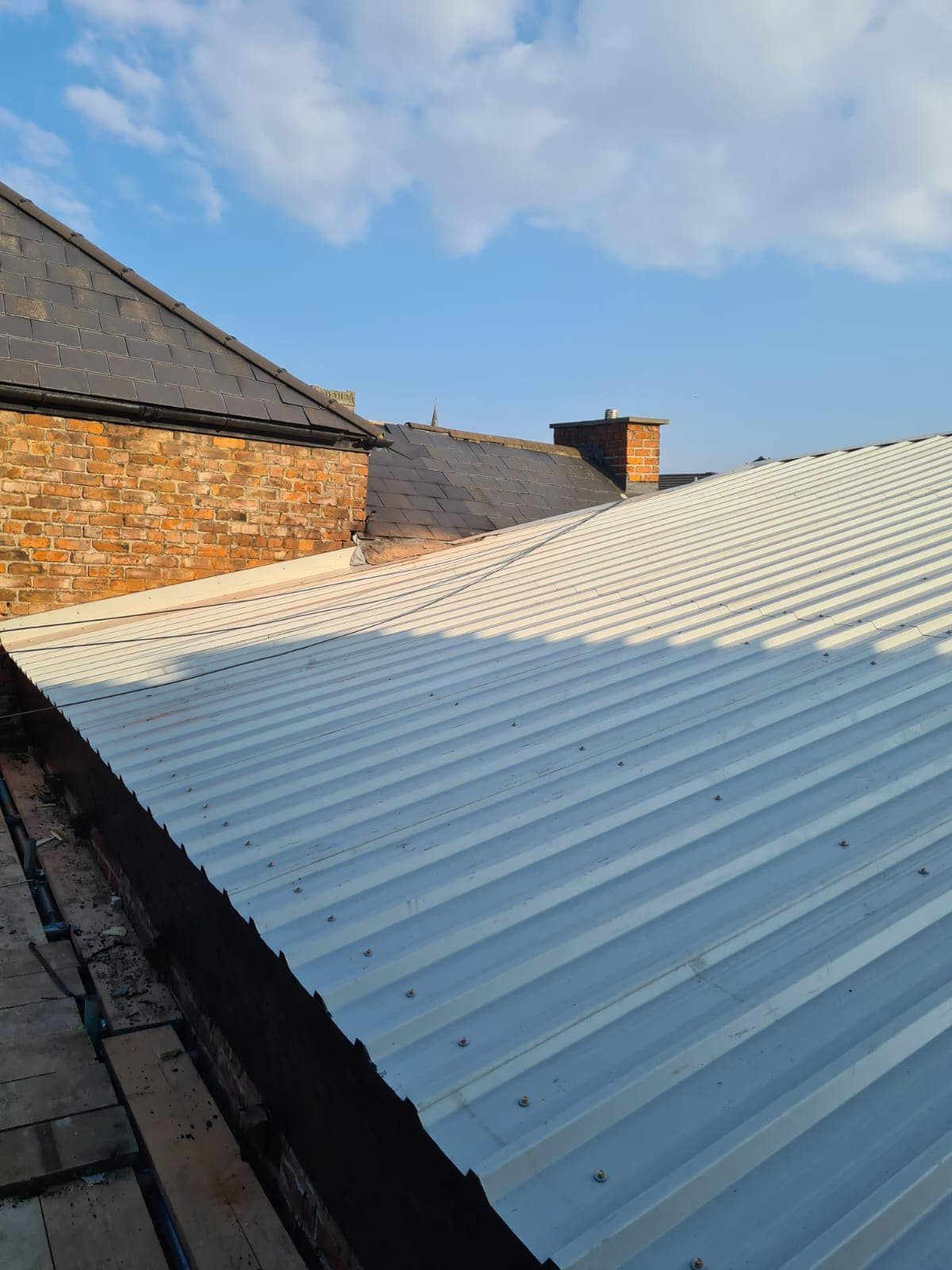
If you are searching for a trusted corrugated roofing contractor in Nottingham, you have come to the right place. At Trust Roofing Services, we install, repair, and replace corrugated roofing on garages, sheds, outbuildings, lean-tos, carports, stables, agricultural buildings, and commercial units across Nottinghamshire.
Whether your corrugated roof is leaking, corroded, missing sheets, or simply at the end of its life — we can help. This page covers everything you need to know before booking: material options, pitch requirements, insulation, building regulations, and fixing standards. We also explain what to expect when you contact us.
We offer a free drone roof survey to every new customer. There is no obligation and no pressure.
Call us on 0115-647-3275 and we will arrange a visit at a time that suits you.
As a family-run roofing contractor based in Hucknall, we know Nottingham's housing stock, local weather patterns, and the materials that perform best here. We treat every property as if it were our own.
What Is Corrugated Roofing — and Is It Right for Your Nottingham Property?
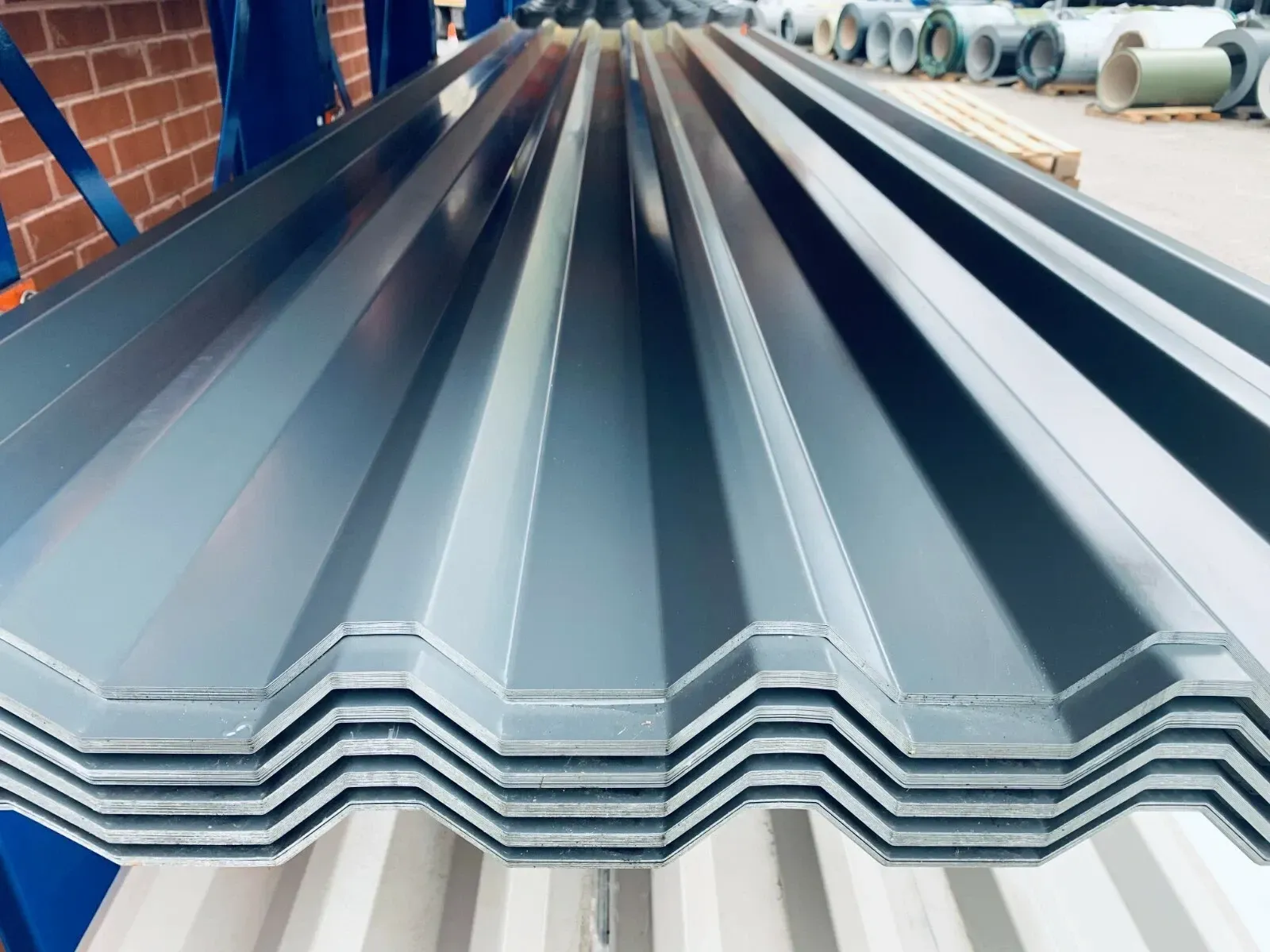
Corrugated roofing uses profiled sheets shaped into a repeating wave pattern — sometimes called a sinusoidal profile. This wave design is not just for looks. It gives the sheets structural strength and channels rainwater away from the surface quickly and efficiently.
The corrugated profile works by spreading the force of impact and load across a larger surface area. This makes the sheets stronger than flat sheets of the same material and thickness. Water is guided down the troughs and off the roof edge, reducing the risk of pooling and leaks.
Corrugated roofing is one of the most widely used roofing solutions in the UK for outbuildings and commercial structures.
It is used on:
- Garages and car ports
- Garden sheds and summer houses
- Agricultural and farm buildings
- Industrial units, warehouses, and workshops
- Lean-tos and covered walkways
- Stables and livestock buildings
If your structure currently has a corrugated roof that is failing, or you are building something new and want a practical, long-lasting solution, corrugated sheeting is worth considering. We can advise you on the right material, profile, and fixing method for your specific build.
Corrugated Roofing Works Best at the Right Pitch — Here's What Nottingham Structures Need
The pitch of your roof controls how fast rainwater runs off and how well your sheets perform over time. Get it wrong and you will get leaks — no matter how good the sheets are.
For most corrugated sheet types, the minimum recommended pitch is 10 degrees. Below that, water moves too slowly across the surface. On shallower pitches, end laps need to increase to compensate — and even then, some sheet types are not suitable.
Purlin spacing also changes with pitch. On a standard roof, purlins sit at around 1.2m centres. On a lower pitch or with thinner sheeting, that spacing needs to come down. We check this on every job before a single sheet is ordered.
Sheet lay direction matters too. Sheets should always be laid starting from the corner furthest from the prevailing wind. This stops side laps facing into the weather and lets water drain away cleanly. On open plots in Hucknall and Basford, where there is little shelter from westerly wind and rain, we assess wind direction as part of our site survey.
End laps also need careful attention. Sheets must overlap by a minimum of two corrugations side by side and at least 150–200mm at the ends, depending on pitch. On lower-pitched roofs we increase end laps further to compensate for slower water run-off.
Nottinghamshire's rainfall and freeze-thaw cycles make all of this more important than it might seem. A corrugated roof with the wrong pitch or poorly calculated overlaps will fail faster here than in a drier part of the country. We size every job to the structure and the local conditions — not just to the sheet manufacturer's minimum figures.
Choosing the Right Corrugated Sheet Material for Your Nottingham Roof
Corrugated roofing comes in several materials. The right choice depends on your structure, your budget, and how the building is used. Here is a plain breakdown of the main options we work with.
Steel and Galvanised Metal Sheets
Steel and galvanised corrugated sheets are the most common choice for commercial yards, agricultural buildings, and larger outbuildings. They are strong, long-lasting, and available in a range of colours and coatings. Plastisol-coated steel holds its colour well and resists corrosion better than plain galvanised sheet. Polyester-coated sheets are a more economical option. Both are available in 0.5mm and 0.7mm thicknesses — we recommend 0.7mm for most Nottinghamshire installations given the local weather.
Fibre Cement Sheets
Fibre cement sheets — sometimes called Big Six profile — are heavy and robust. You will find them on older Nottingham outbuildings, stables, and farm buildings. They need a stronger supporting structure but perform well in exposed conditions and do not corrode. They are also a common replacement material when old asbestos cement sheets need removing — the profile matches closely, which keeps replacement costs down.
Bitumen Corrugated Sheets
Bitumen sheets such as Onduline and Coroline are lightweight and easy to handle. They are a popular choice for domestic garages, garden buildings, and sheds. They cut cleanly, fix quickly, and come in several colours including black, green, and red. Bitumen sheets typically last 10–15 years with normal maintenance.
PVC and Polycarbonate Sheets
PVC and polycarbonate sheets are used where some natural light is needed — porches, lean-tos, and covered walkways are common applications. Clear and opal finishes are available. These are not suitable for high-security buildings but work well on lightweight domestic structures.
Anti-Condensation Lining — Why It Matters on Nottinghamshire Jobs
One material consideration that comes up often on Nottinghamshire jobs is condensation. Unheated units, livestock buildings, and commercial warehouses in Arnold and Carlton can suffer badly from dripping condensation on plain metal sheets. In these cases, we specify sheets with an anti-condensation lining — a non-woven fleece backing, sometimes called Dripstop, that holds moisture until it can evaporate, rather than letting it drip onto stored goods or timber below.
We will always talk through the options with you before recommending a material. The right sheet for a garden shed in Beeston is not the same as the right sheet for a commercial unit in Bulwell.
Building Regulations Apply to Corrugated Roof Work in Nottingham — Know Before You Build
Not all corrugated roofing work needs building regulations approval — but some does. Knowing the difference before you start can save you time and cost further down the line.
As a general rule, a like-for-like roof repair or sheet replacement on an existing outbuilding does not trigger building regs. However, if you are building a new structure or carrying out work that affects the building's structure, fire safety, or thermal performance, approval may be needed.
The three main parts of the Building Regulations that apply to roof work are:
- Part A (Structure) — covers the structural integrity of the roof. Any new roof frame, rafter, or purlin work falls under this.
- Part B (Fire safety) — applies where the roof is close to a boundary or adjoins another building.
- Part L (Energy efficiency) — applies when insulation is added or changed as part of the work.
Outbuildings with a floor area over 30m² are a common trigger point in Nottingham. Many commercial yards in Bulwell and Basford have units that fall into this category — and owners are sometimes caught out by assuming the work is exempt.
It is also worth knowing that if more than 25% of your existing roof is being replaced, you may need to notify your local building control department — even for a like-for-like replacement. We advise on this as part of our free survey.
We advise on this as part of our free survey. If your job needs approval, we tell you upfront. If it does not, we confirm that too. You will not get a surprise notice after the work is done.
The Difference Between Cut Roof and Trussed Roof Affects Your Corrugated Sheet Choice
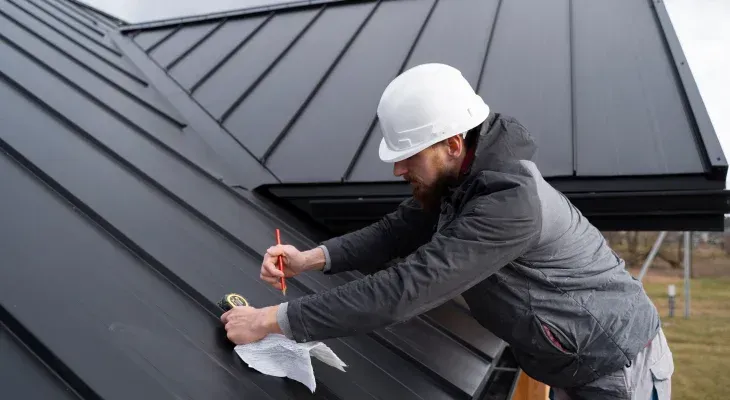
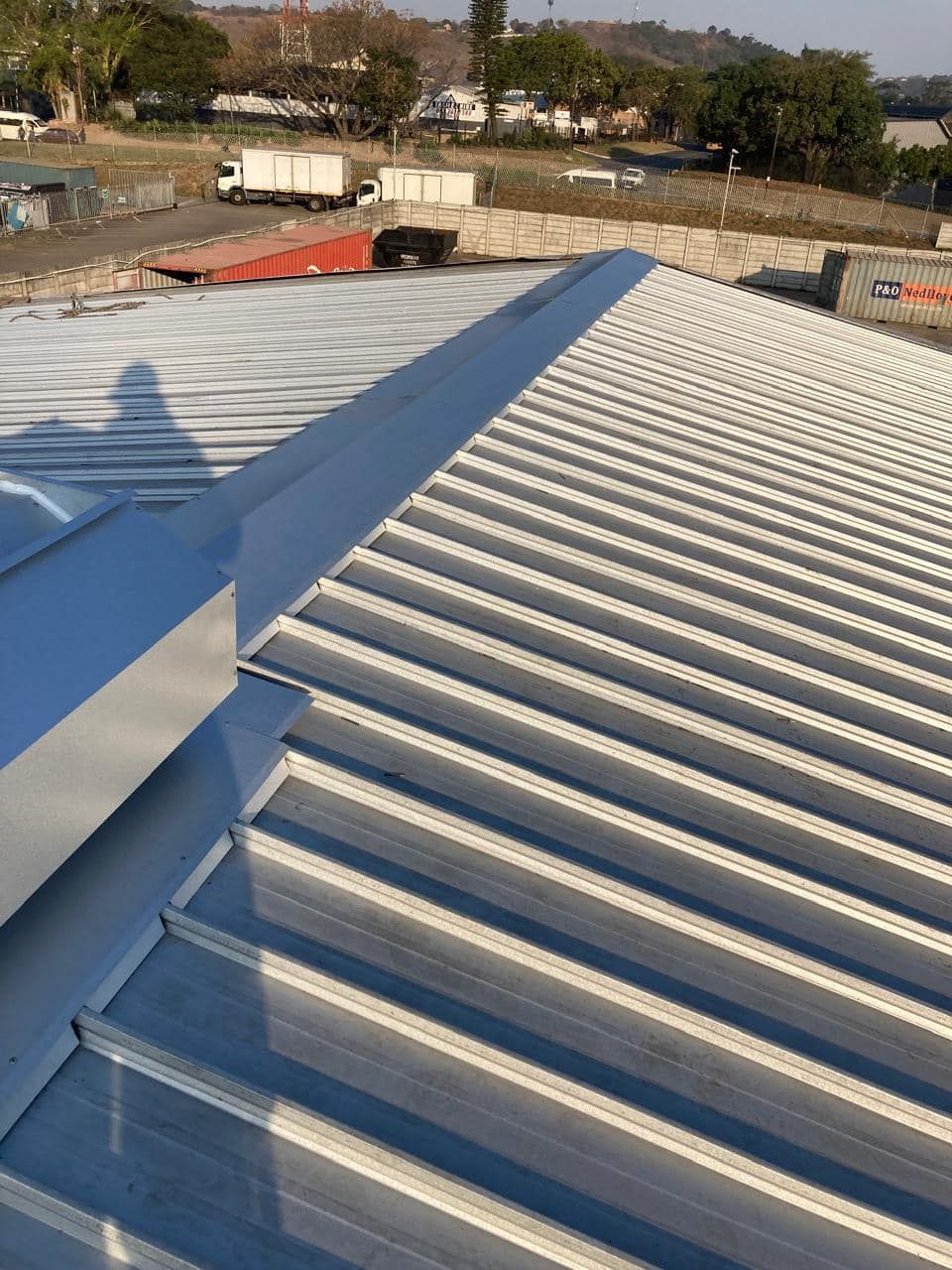
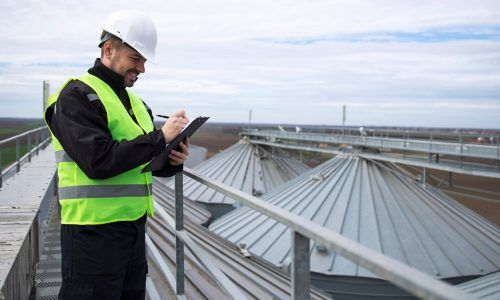
Before we specify sheets for any Nottingham job, we look at the roof structure underneath. The two most common types — cut roofs and trussed roofs — behave differently, and the sheet choice needs to match.
A cut roof is built on site from individual timbers. Rafter spacing can be custom-set, which gives more flexibility in sheet weight and span. Heavier fibre cement sheets work well on cut roofs because the rafter centres can be set closer together to carry the load.
A trussed roof uses factory-made timber frames fixed at set centres — typically 600mm apart. The centres cannot easily be changed. This limits how heavy the sheets can be. Lighter metal or bitumen corrugated sheets are usually the better fit on a trussed structure.
Many older Nottingham properties — terraced houses, outbuildings, and commercial units built before the 1960s — use cut roofs. Newer builds and extensions tend to use trussed construction. We check the structure on every survey and make sure the sheet specification matches what is actually there.
We also check for a breather membrane or underlayment below the sheets. On a significant number of older Nottingham outbuildings, this layer is either missing or deteriorated. Without it, even well-fitted corrugated sheets cannot prevent moisture from working into the timber structure below. If it needs replacing, we include it in our recommendation.
A missing or damaged breather membrane is one of the most common causes of timber rot we find on older Nottingham garages and outbuildings — and it is often completely avoidable.
Insulating a Corrugated Roof Properly Protects Your Nottingham Property Year-Round
An uninsulated corrugated roof lets heat out in winter and heat in during summer. For a garage or workshop in Arnold or Carlton that you use regularly, this matters. For a commercial unit where you store temperature-sensitive stock, it matters even more.
There are two main approaches to insulating a corrugated roof.
Cold roof insulation places the insulation layer between the rafters or purlins, below the roof deck. It is a cost-effective option but requires adequate ventilation above the insulation to prevent condensation building up in the void.
Warm roof insulation places the insulation above the roof deck, under or over the sheets. This removes the cold bridge entirely and is generally the more reliable long-term solution. It does add some height to the overall roof build-up, which we factor into our measurements before work starts.
A third option — and one worth knowing about — is an anti-condensation lining built into the sheet itself. Several metal sheet products include a fleece backing that manages surface condensation without needing a separate insulation layer. This is not the same as full thermal insulation, but for unheated storage buildings it can make a significant practical difference.
Nottinghamshire winters bring sustained cold periods. Unlined metal corrugated roofs form heavy surface condensation that drips onto stored goods, causes rust on tools and equipment, and accelerates rot in timber subframes. We have seen this on outbuildings across West Bridgford and Clifton. The fix is straightforward — but only if it is specified correctly from the start.
Noise is another reason to insulate. Corrugated metal sheets can be loud during heavy Nottinghamshire rain and hail. Adding insulation or a foam eaves filler significantly reduces this. If your job falls under Part L of the Building Regulations, we will also advise on the minimum insulation values required to meet compliance.
BS 5534 Sets the Standard for Corrugated Roof Fixing — Our Team Follows It on Every Job
BS 5534 is the British Standard that governs how roof coverings — including corrugated sheets — are fixed. It sets out the requirements for fixing frequency, fastener type, sheet lap dimensions, and wind uplift resistance. Every corrugated roof we install in Nottingham is fixed to this standard.
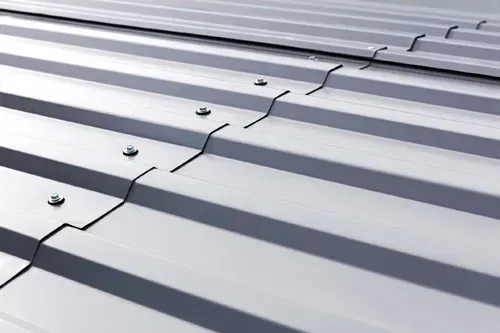
The most common fixing mistake we see on corrugated roofs is fixing through the trough of the sheet rather than the crest. Trough fixing pulls the sheet down under the fastener head and creates a point of weakness. Over time — and especially in wind — this leads to sheet damage, water ingress, and in some cases complete sheet loss.
Correct crest fixing uses the right screw through the high point of the corrugation, with a correctly torqued washer that compresses to form a seal without over-crushing. Screws should be placed at 200–250mm centres along the sides and upper edge of the sheet. The type of screw matters too. Self-drilling TEK screws with bonded neoprene washers are standard for metal sheets. BAZ screws with soft washers are used on corrugated profiles where the fixing passes through the crest into the purlin below.
Ridge caps, barge flashings, and eaves fillers also play a key role in a watertight corrugated roof. We fit all three as standard — they prevent birds and vermin from entering, stop wind-driven rain from working under the sheets, and give the roof a clean, finished edge.
On exposed sites in West Bridgford and Clifton, wind loads are higher than on sheltered urban plots. BS 5534 requires that fixing specifications account for the local wind zone. We calculate this for every job — it affects both the number of fixings per sheet and the lap dimensions at the edges.
Incorrect fixing also voids most sheet manufacturer warranties. If a previous installer cut corners on fixings, any warranty that came with the sheets is likely already void. We document our fixing specification on every job so you have a clear record.
Corrugated Roof Repair in Nottingham — When You Need a Fix, Not a Full Replacement
Not every corrugated roof job is a full replacement. In many cases, repair is the right call — and the more cost-effective one too.
Common corrugated roof repairs we carry out across Nottingham and Nottinghamshire include:
- Replacing individual cracked, corroded, or missing sheets
- Re-fixing loose or blown-off sheets after storm damage
- Sealing leaking fixings and replacing failed washers
- Repairing or replacing ridge caps and barge flashings
- Treating cut edge corrosion on steel sheet overlaps
- Replacing deteriorated or missing eaves fillers
- Fitting new or repairing existing gutters on corrugated roofed buildings
If you are not sure whether your corrugated roof needs a repair or a full replacement, our free drone survey will give you a clear answer. We will always recommend the most cost-effective solution — not the most profitable one for us.
Corrugated Roof Maintenance — How to Extend the Life of Your Roof
A well-maintained corrugated roof will last significantly longer than a neglected one. Here is what we recommend for property owners across Nottinghamshire:
- Clear debris, moss, and leaves from the roof surface and gutters at least once a year — Nottingham's trees mean autumn blockages are common in areas like Sherwood and The Meadows
- Check fixings and washers annually — neoprene washers degrade over time and are a common source of slow leaks
- Inspect ridge caps and flashings after any severe weather — these are the most vulnerable points on a corrugated roof
- Look for signs of cut edge corrosion on steel sheets — a rust line along the sheet overlap is an early warning sign
- Act on small leaks quickly — water that gets into the timber subframe causes rot that is far more expensive to fix than the original leak
We offer corrugated roof maintenance inspections across Nottinghamshire. A quick annual check costs far less than an emergency repair or a premature full replacement.
Call 0115-647-3275 to arrange a visit.
Frequently Asked Questions About Corrugated Roofing in Nottingham
How long does a corrugated roof last?
Most corrugated roofs, when installed correctly and maintained, last for several decades. The lifespan depends on the material: bitumen sheets typically last 10–15 years; PVC sheets around 10–20 years; quality plastisol-coated steel can last 25–40 years or more. Galvanised steel without a coating has a shorter lifespan, especially in exposed Nottinghamshire conditions.
Does corrugated roofing rust?
Steel and iron corrugated sheets can rust if the protective coating is damaged or missing. Galvanised sheets have a zinc coating that slows corrosion significantly. Plastisol-coated steel adds a further layer of protection. Fibre cement, bitumen, and PVC sheets do not rust at all. We check for early-stage corrosion on every survey.
Do I need planning permission to fit a corrugated roof on my garage in Nottingham?
In most cases, no — domestic outbuildings fall under permitted development rights and do not need planning permission. Exceptions apply if your property is in a conservation area, a listed building, or if the outbuilding exceeds permitted development size limits. If you are unsure, we can advise as part of your free survey.
What is the minimum pitch for a corrugated roof in the UK?
The minimum recommended pitch for most corrugated sheets is 10 degrees. Some PVC and box profile sheets can be laid at lower pitches — as low as 4 to 5 degrees — but end lap sizes must increase significantly to compensate. We check pitch and specify laps correctly on every job.
What do you put under corrugated roofing?
This depends on the sheet material and the building use. Steel sheets are often installed with a breather membrane or insulation underneath to reduce condensation and improve thermal performance. Bitumen sheets are commonly installed on top of plywood decking. PVC sheets need an air gap above and below to prevent heat build-up. We specify the right underlayer for every job.
Can a corrugated roof be insulated after it has already been fitted?
Yes. A warm roof overlay can be added above existing sheets, or internal insulation board can be fitted below the existing structure. We assess the existing roof first to confirm which approach is practical and whether any structural reinforcement is needed.
Does fitting a corrugated roof on a large outbuilding in Nottingham need building regs approval?
Yes, if the outbuilding has a floor area over 30m², or if the work involves structural changes, fire safety considerations, or thermal upgrades. We confirm whether your job needs approval as part of our free survey — before any work starts.
How do I know if my corrugated roof needs replacing or just repairing?
Signs that repair may be enough include one or two damaged or missing sheets, isolated leaks around fixings, or minor corrosion on sheet edges. Signs that replacement is likely needed include widespread sheet corrosion, multiple leaks, visible sag in the structure, or sheets that are brittle and breaking apart. Our free drone survey gives you an honest assessment with no pressure to commit.
Can you walk on a corrugated roof?
You should never walk directly on corrugated roof sheets — doing so can crack or dent the sheets and is also a serious safety risk. If access is needed above the roof level, a crawling board should be used to spread weight across the structure. We always use appropriate access equipment and safety measures on every corrugated roofing job.
What is the difference between corrugated and box profile roofing sheets?
Corrugated sheets have a rounded sinusoidal wave profile — the classic curved wave shape. Box profile sheets have a flat-topped trapezoidal profile with square sides. Box profile is more common on modern commercial and agricultural buildings because it spans further between purlins. Corrugated is widely used on domestic outbuildings, garages, and older Nottingham commercial properties. Both are available in similar materials and both are fixed to BS 5534.
Areas We Cover for Corrugated Roofing in Nottinghamshire
We carry out corrugated roofing installation, repair, and replacement work across Nottingham city and the wider Nottinghamshire region. Below are the main areas we cover:
- Nottingham City Centre — NG1
- The Meadows & Lenton — NG2
- Radford & Forest Fields — NG7
- Sherwood & Mapperley — NG3 / NG5
- Bulwell & Bestwood — NG5 / NG6
- Hucknall (our base) — NG15
- Arnold — NG5
- Carlton & Gedling — NG4
- West Bridgford & Edwalton — NG2 / NG12
- Beeston & Chilwell — NG9
- Wollaton & Bilborough — NG8
- Basford & Hyson Green — NG6 / NG7
- Kirkby in Ashfield — NG17
- Sutton in Ashfield — NG17
- Mansfield — NG18 / NG19
- Newark on Trent — NG24
- Eastwood & Kimberley — NG16
- Stapleford & Trowell — NG9 / NG10
Not sure if we cover your area? Call us on 0115-647-3275 and we will confirm straight away.
Ready to Book? Here's Why Nottingham Property Owners Choose Trust Roofing Services
When you need corrugated roofing work done right — the first time — these are the reasons our customers in Nottingham and Nottinghamshire call us:
- ✅ Family-run business based in Hucknall — personal service and real accountability
- ✅ Over 15 years of roofing experience across Nottinghamshire
- ✅ Fully insured — public liability and employer's liability as standard
- ✅ Free drone roof survey — we assess your roof before recommending anything
- ✅ No hidden costs — transparent, itemised quotes every time
- ✅ All work carries a workmanship guarantee
- ✅ Local knowledge of Nottingham's housing stock, weather conditions, and building types
- ✅ We work on domestic and commercial corrugated roofs of all sizes
Your corrugated roof protects everything underneath it — your tools, your stock, your vehicles, your business. A failing roof that is ignored always costs more to fix later. Don't wait for the next heavy rain to make the call.
📞 Call Trust Roofing Services today on 0115-647-3275 for your FREE, no-obligation corrugated roof survey and quote.
We cover Nottingham, Nottinghamshire and the wider East Midlands.
Let’s talk about your Corrugated roofing project.
Fill out the form, or call us to discuss your requirements
0115-647-3275