
Trust Roofing Services
GRP Fibreglass Roofing Solutions
Professional Roofing Services
FREE Drone Survey
Free Quote
BBA-Approved Materials. 10-Year Guarantee.
Call: 0115-647-3275
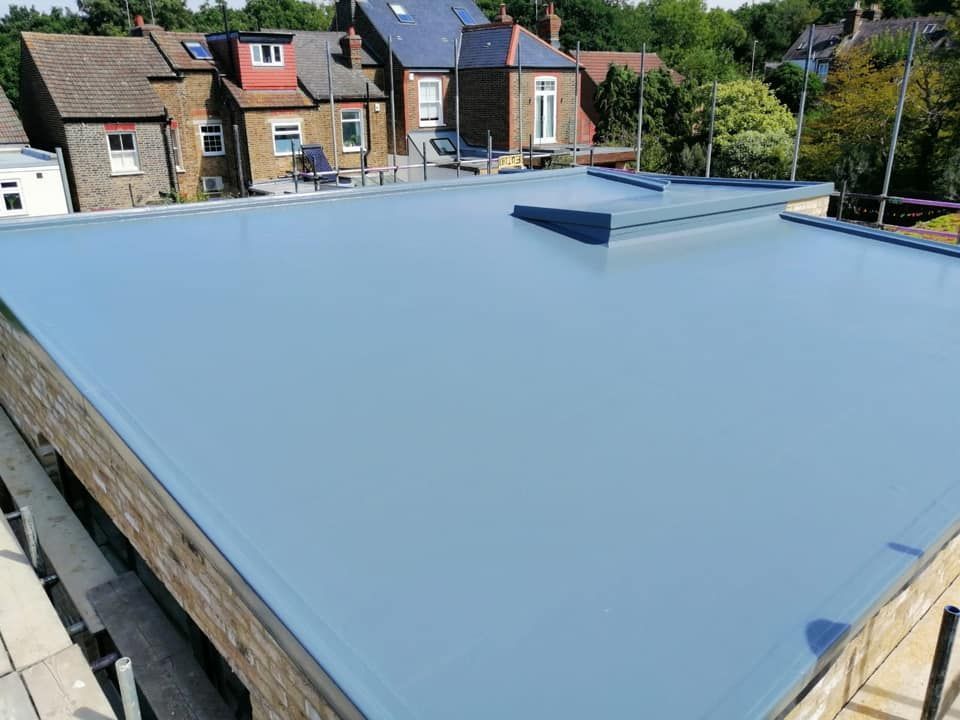
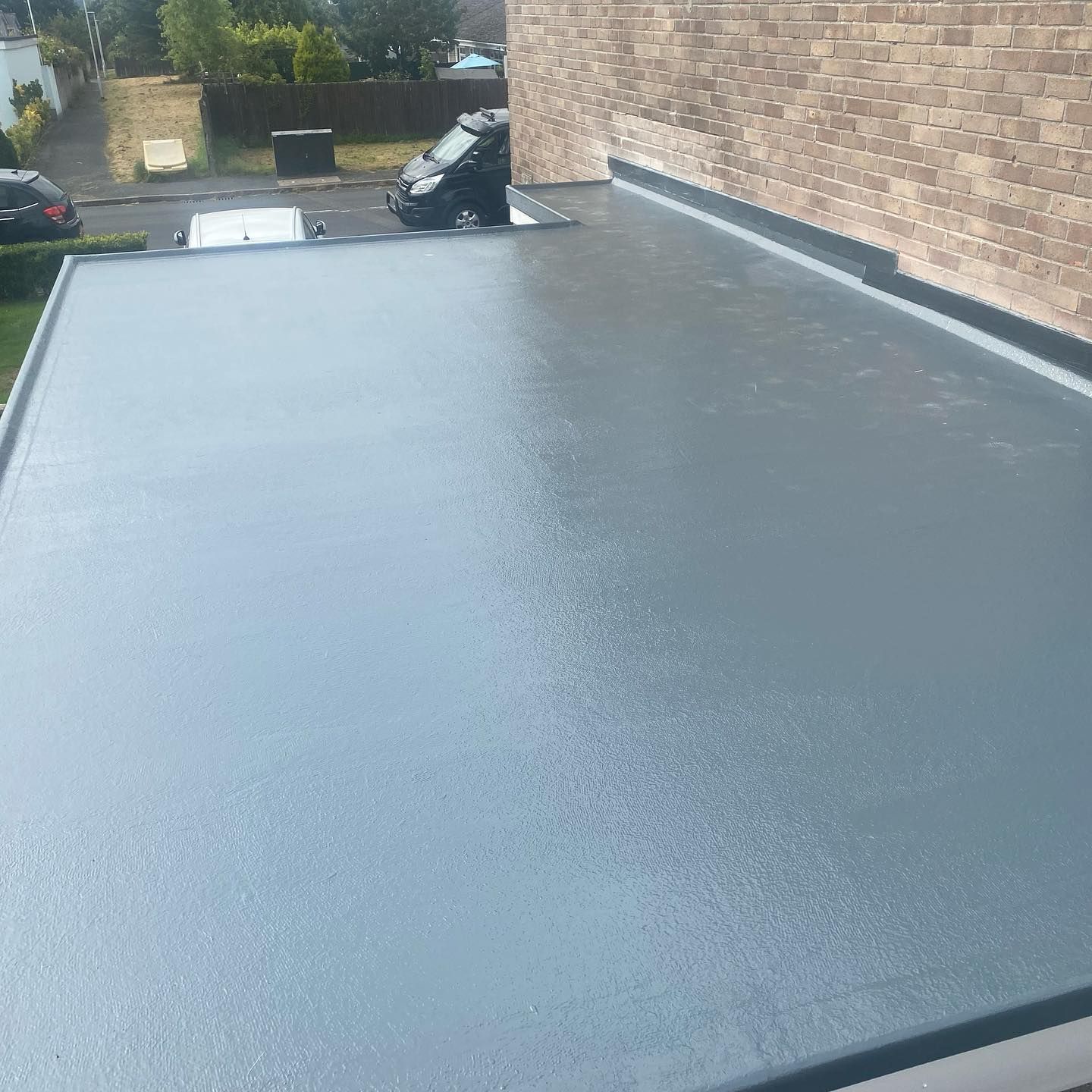
GRP Fibreglass Roofing Nottingham — Expert Flat Roof Installation, Repair & Replacement
GRP fibreglass roofing in Nottingham is one of the most popular flat roof choices for homeowners and landlords across the city. Whether you need a new roof on a garage, a kitchen extension, a dormer, a porch, or an outbuilding, GRP delivers a seamless, waterproof finish that lasts for decades.
At Trust Roofing Services, we install and repair GRP fibreglass roofs across all Nottingham NG postcodes and the wider Nottinghamshire area. We offer a free consultation, honest advice, and a written quote before any work begins.
We are a family-run team with over a decade of hands-on experience with fibreglass roofing on both residential and commercial properties — and we take pride in every job we do.
Call us on 0115-647-3275 to book your free, no-obligation survey.
What Is GRP Fibreglass Roofing and How Long Does It Last in Nottingham?
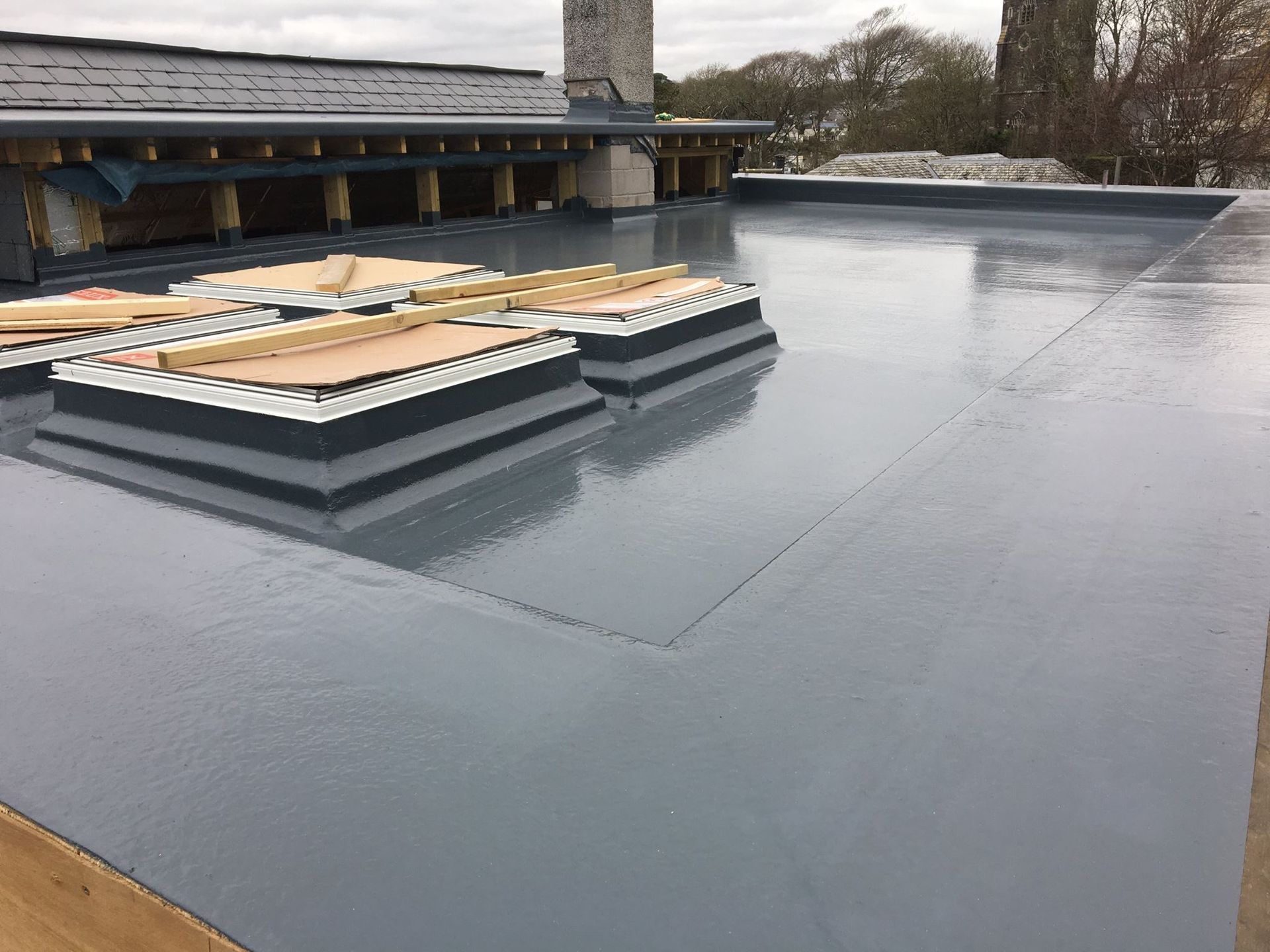
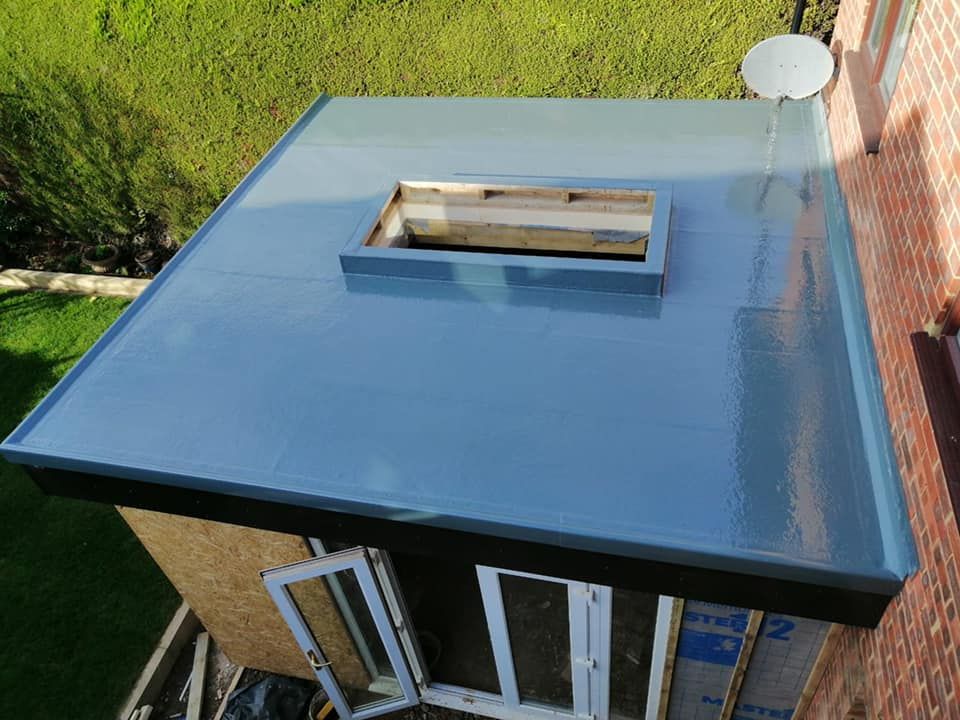
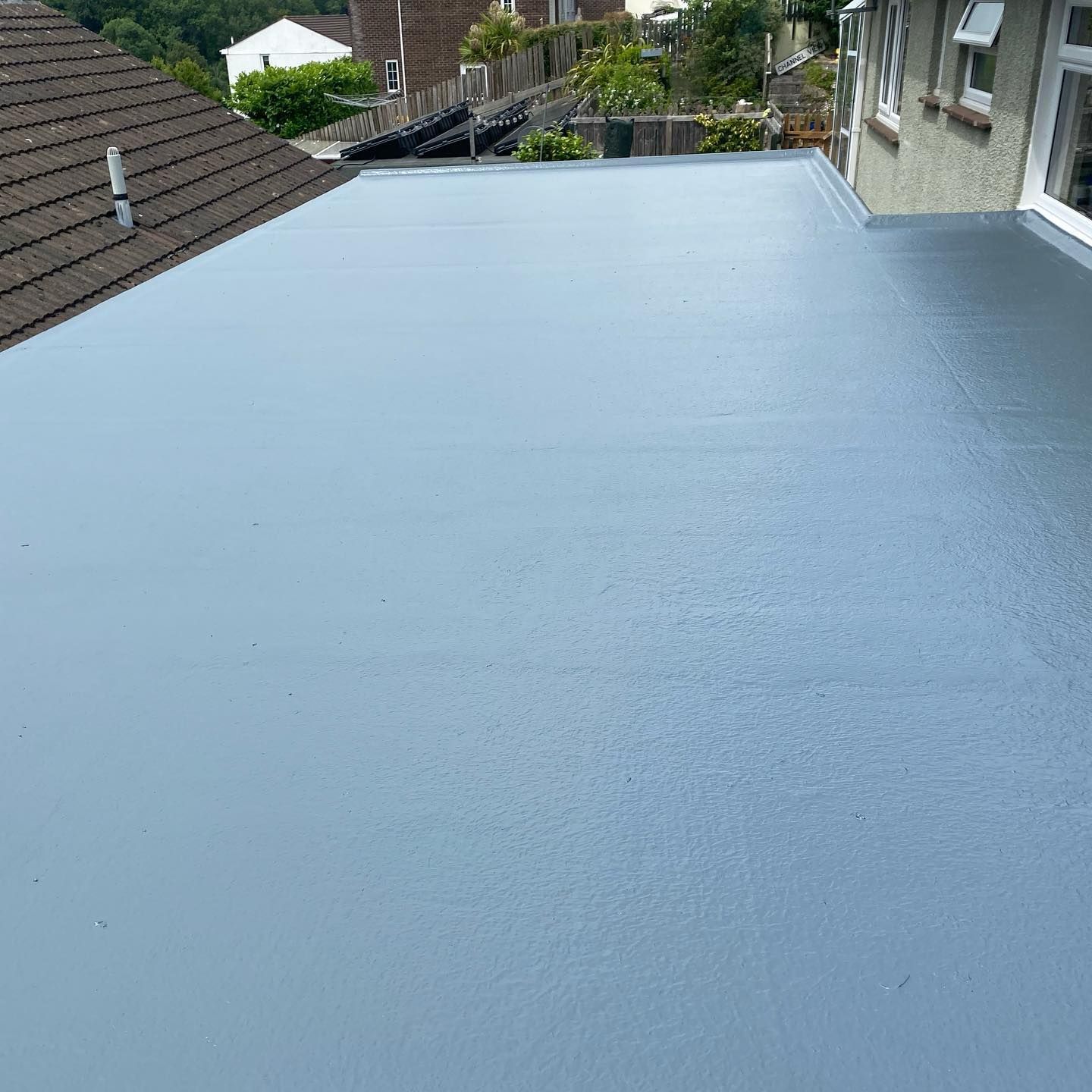
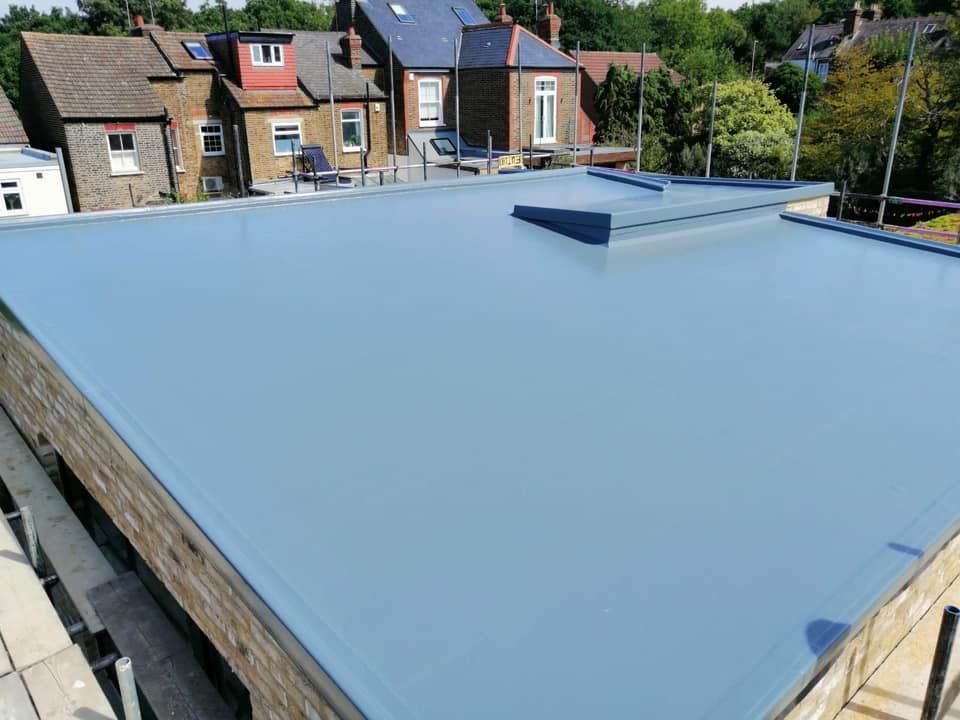
GRP stands for Glass Reinforced Plastic — also known as fibreglass roofing. It is a flat roofing system made from fibreglass matting bonded with polyester resin and finished with a protective topcoat. Once cured, it forms a single, seamless, solid surface with no joins, seams, or overlapping layers.
A GRP roof installed by a qualified contractor lasts 30 years or more with minimal upkeep. Nottingham's wet winters and freeze-thaw conditions put older felt roofs under pressure every year. GRP handles both without cracking, blistering, or lifting at the edges.
Key facts about GRP fibreglass roofing:
- Fully seamless — no joints where water can enter
- 100% waterproof — resistant to standing water, prolonged rain, and freeze-thaw cycles
- Resistant to UV, frost, fire, and chemical exposure
- Suitable for extensions, garages, porches, balconies, dormers, and commercial buildings
- Can be walked on once fully cured
- Available in a range of colours to suit your property
- Lightweight — puts less stress on your building's structure than heavier roofing systems
Browse our website for a full suite of roofing services:
https://www.roofersnottinghamgrp.co.uk
A Well-Installed GRP Roof in Nottingham Lasts 30 Years or More
Fibreglass flat roofing is a reliable and long-lasting option for covering your home or commercial building. If your current flat roof leaks every winter or needs patching every couple of years, it is time to look at what GRP can offer. Many homes across Nottingham — particularly semis and terraces with rear extensions in areas like Sherwood, Carlton, and Clifton — still carry original felt roofs from the 1970s and 1980s. Felt has a typical lifespan of 10 to 15 years. After that, seams split, the surface blisters, and water finds a way through.
GRP is a different product entirely. It bonds directly to the timber deck as one solid shell. There are no overlapping layers and no vulnerable seam lines. When we install a GRP roof in Nottingham, we prepare the OSB3 deck correctly, fit the edge trims first, apply the fibreglass laminate in full, and finish with a UV-stable topcoat. Every stage matters. A correctly installed roof shows no measurable deterioration for 30 years or more.
How to Keep Your GRP Roof in Good Condition
Regular attention helps extend that life even further:
- Clear gutters and drainage channels each autumn
- Check upstands and trims after severe weather
- Sweep debris from the surface after storms — standing debris traps moisture
- Call us if you notice any surface discolouration or soft spots
GRP costs more upfront than felt, but it does not need replacing anywhere near as often.
Over the lifetime of the roof, it is consistently the more cost-effective choice.
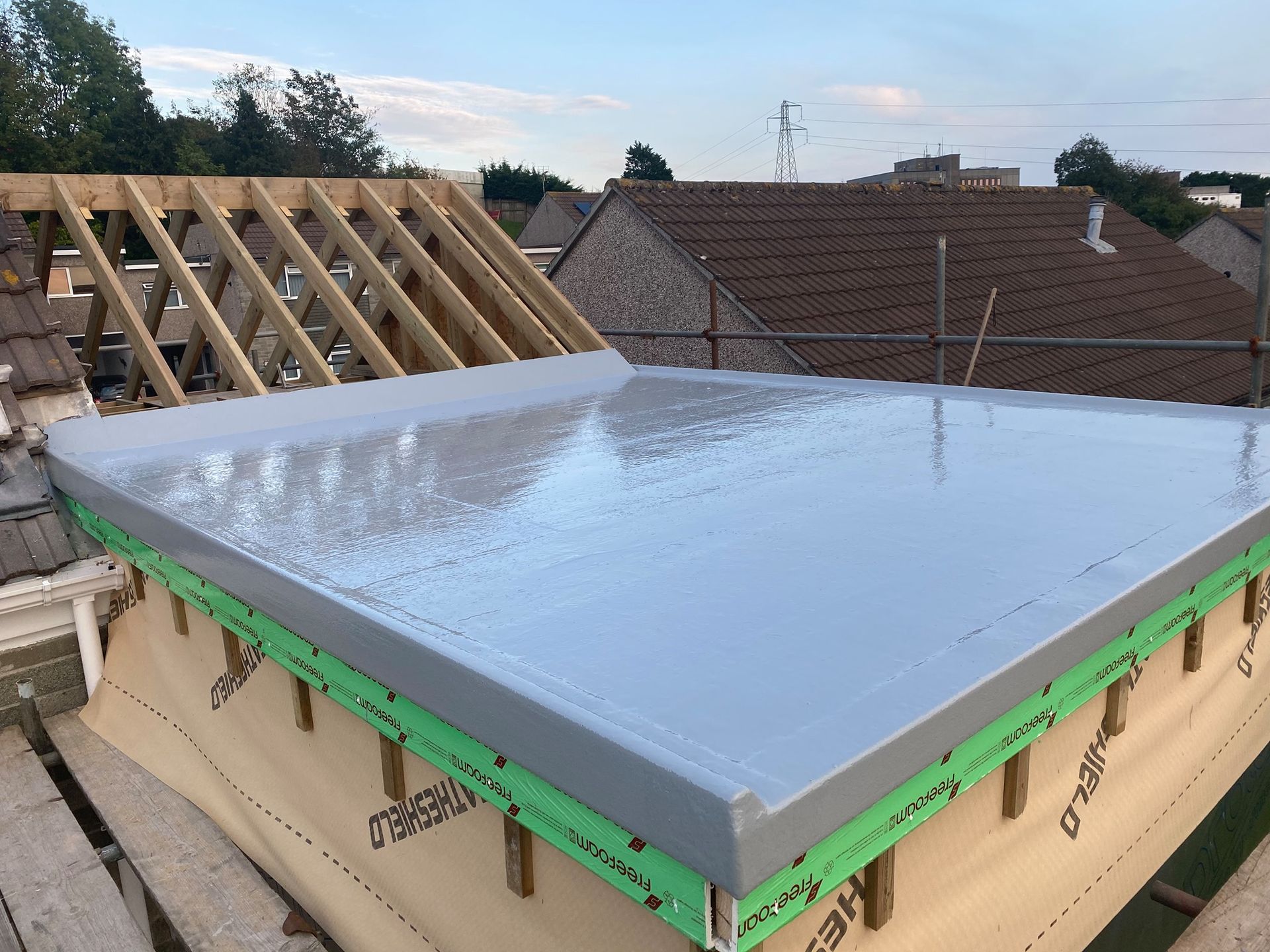
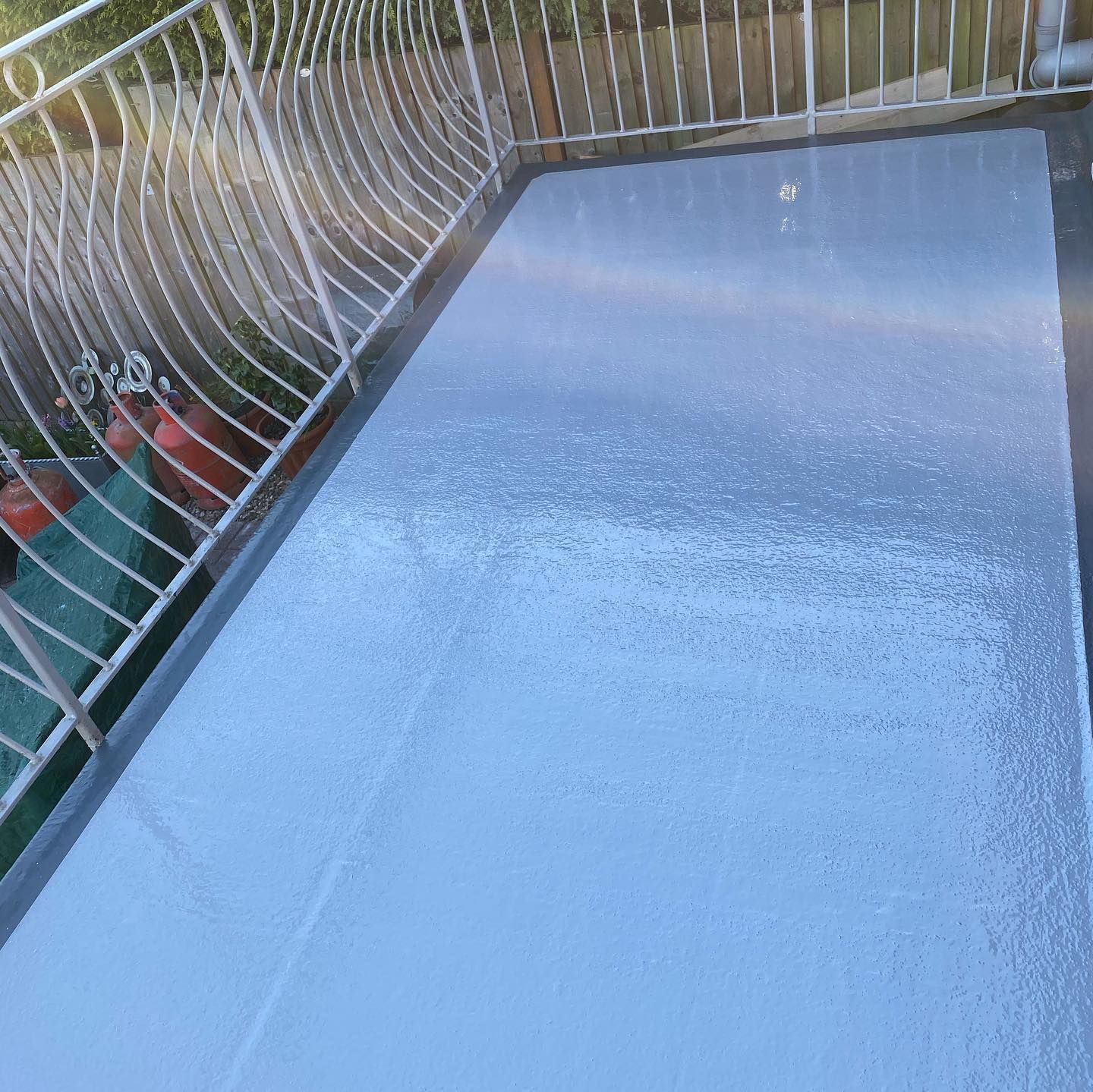
GRP Fibreglass Outperforms Felt Roofing in Every Key Area
Felt has been the default flat roof material in the UK for decades. It is inexpensive to install, and most builders are familiar with it. But for homeowners in Nottingham who want a roof that does not need constant attention, felt falls short in almost every area.
Here is how the two materials compare:
Lifespan — GRP lasts 30 years or more. Felt typically lasts 10 to 15 years before it needs full replacement.
Seams — GRP is applied as one continuous surface. Felt relies on overlapping layers, and every overlap is a potential leak point.
Installation — GRP uses a cold-applied resin and catalyst. No naked flames on your roof. Felt requires heat torching, which carries a fire risk during installation.
Maintenance — GRP needs very little attention once cured. Felt requires periodic re-coating and regular checks to stay watertight.
Weather resistance — GRP holds firm through Nottingham's wet winters and summer heat cycles. Felt blisters in heat and cracks in cold.
Appearance — GRP gives a clean, smooth finish that stays looking good for years. Felt stains, blisters, and ages visibly.
Fire resistance — GRP carries a BROOF(t4) fire classification. Felt does not offer the same level of fire resistance.
If your property in Beeston, Bulwell,
Hyson Green, or anywhere across Nottinghamshire has an ageing felt roof, switching to GRP is one of the most cost-effective decisions you can make.
Is a GRP Fibreglass Roof Waterproof?
Yes — a correctly installed GRP fibreglass roof is completely waterproof. This is one of the most common questions we are asked, and the answer is straightforward.
GRP forms an impermeable shell over your roof deck. Unlike felt or bitumen systems that rely on sealed overlaps, GRP contains no joints at all. The resin and fibreglass matting bond together and cure as one rigid, watertight layer. It is resistant to standing water, prolonged rainfall, and the freeze-thaw cycles that Nottinghamshire winters regularly produce.
The topcoat adds a further layer of UV and weather protection, keeping the waterproofing intact across decades of use. As long as the roof is installed correctly on a sound, dry deck, water ingress is not a concern.
GRP Fibreglass vs EPDM Rubber — Which Is Right for Your Nottingham Roof?
This is one of the questions we get asked most often. Both GRP and EPDM are popular flat roofing systems in Nottingham. Both outperform felt by a significant margin. The right choice depends on your roof and how you plan to use it.
GRP is the stronger surface. It handles foot traffic better, which makes it the right choice for balconies, roof terraces, and walkways. Its seamless, smooth finish also suits visible roof areas on extensions and porches where appearance matters. GRP is fire-resistant and bonds rigidly to the deck.
EPDM is a rubber membrane. It is flexible and forgives minor movement in the building structure more readily than GRP. On large, simple roof areas where foot traffic is low and appearance is less critical, EPDM can be a practical option.
Here is a simple guide:
- Balcony or roof terrace — GRP is the right choice; it handles regular foot traffic
- Garage or outbuilding — either system works; we advise based on your deck condition
- Kitchen or rear extension — GRP gives a cleaner, smarter finish on a visible area
- Dormer window roof — GRP moulds precisely to complex shapes and upstands
- Large commercial roof — both are viable; we survey and recommend based on your building
We will always give you our honest assessment before any work starts.
We install both systems across Nottingham, so we have no reason to push one over the other — we recommend what is right for your specific roof. Call
0115-647-3275 to talk it through.
How We Install a GRP Fibreglass Roof in Nottingham
The quality of a GRP roof depends entirely on the installation. A rushed or poorly prepared installation will crack, flake, and fail within a few years. We take every stage seriously because a correctly installed roof is one that does not need us to come back.
Our GRP Installation Process
Step 1 — Free survey We visit your property, inspect the existing deck and structure, and confirm whether an overlay is suitable or whether the deck needs replacing. We check for soft spots, rot, and moisture before anything else.
Step 2 — Deck preparation We use 18mm OSB3 boarding as the base for all GRP installations. If your existing deck is sound, we can lay OSB3 on top. If it is damaged or rotten, we replace it first. The deck must be dry, flat, and solid before GRP goes on. We also confirm the correct falls are in place to drain rainwater away from the building.
Step 3 — Edge trims GRP edge trims are fitted around the perimeter before the laminate is applied. They give the roof a clean finish and direct rainwater away from the fascia and walls. All trims are fitted with correct expansion gaps to allow for thermal movement.
Step 4 — Fibreglass laminate We apply fibreglass chopped strand matting and saturate it with polyester resin, working in sections to prevent the resin hardening too quickly. The laminate is rolled out thoroughly to remove air pockets. Standard specification is 450g chopped strand matting. For balconies and high-traffic areas, we use 600g heavy-duty matting.
Step 5 — Topcoat Once the laminate has cured, we apply the UV-stable topcoat finish. This is what you see and what protects the laminate from sunlight and weathering. Standard finish is dark grey; other colours are available to match your property.
Step 6 — Inspection and handover We check the finished surface before we leave. We walk you through the work and confirm
care and maintenance steps. You receive a written record of the work carried out.
Most standard extension and garage roofs in Nottingham are completed in one to two days, weather permitting.
Cracking and Flaking on Your Fibreglass Roof Has a Fix
Surface damage on a GRP roof is not always a sign that the whole roof needs replacing. Most problems we see across Nottingham properties come down to three causes: poor original installation, thermal expansion without adequate expansion joints, and normal end-of-life wear.
Understanding What You Are Looking At
Topcoat flaking or chalking — This is a surface-level issue. It usually happens when the topcoat was applied too quickly after the laminate, or when the roof is reaching the end of its original topcoat life. In most cases, the laminate underneath is still sound. We clean the surface, prepare it correctly, and apply a fresh topcoat.
Edge cracking — Cracks along the perimeter edges are often caused by thermal expansion. On a warm day, GRP expands. On a cold night, it contracts. If no expansion joints were fitted during installation, this movement has nowhere to go and cracks appear at the edges. We cut out the affected section and relay it with correct expansion gaps.
Widespread surface cracking (alligatoring) — This pattern of deep, interconnected cracks across the whole surface tells us the laminate has lost its flexibility. This is an end-of-life indicator. A full replacement is the right answer, and we will tell you that clearly rather than apply a cosmetic repair that will not hold.
Pinholes or blistering — Small pinholes form when air is trapped during installation. Blisters suggest moisture in the substrate at the time of installation. Both are repairable if caught early.
Leaking at upstands or trims — Water entry at the edges, around skylights, or at wall abutments is usually a sealant or trim failure, not a problem with the main laminate. This is one of the most straightforward repairs we carry out.
If your fibreglass roof in Nottingham is showing any of these signs, call us on
0115-647-3275. We inspect free of charge and tell you honestly what it needs.
GRP Fibreglass Roofing and Insulation — What You Need to Know
When installing a new GRP flat roof, insulation is not optional — it is part of building regulations compliance under Part L. A flat roof in England must meet a U-value of 0.18 W/m²K. We specify the correct insulation build-up as part of every new installation.
There are two main approaches:
- Warm roof — insulation sits above the deck and below the GRP. This is the most common and preferred method. It prevents cold bridging and condensation problems.
- Cold roof — insulation sits between the joists below the deck. This requires cross-ventilation to be built in, as per BS 5250.
A well-insulated GRP flat roof also improves your home's EPC rating, which can add value to your property. We advise on the right build-up for your project during the free survey.
Your Nottingham GRP Roof Stays in Good Shape With Simple Maintenance
One of the main reasons homeowners across Nottingham choose GRP is how little it asks of them once installed. You do not need to re-coat it, treat it with chemicals, or inspect it every year.
What you do need to do:
Clear debris regularly. Leaves and moss build up quickly in autumn, particularly in Wollaton, Gedling, and other leafy suburban areas. Debris traps water against the surface and blocks drainage outlets. Sweep the roof and clear the gutters at the start and end of autumn.
Clean with mild detergent and water. A soft brush and soapy water is all you need. Do not use a jet wash. High-pressure water damages the gel coat, strips sealants around trims, and pushes moisture into the substrate.
Inspect upstands and seals. Check around any skylights, vents, soil pipes, or wall abutments once a year. These are the most likely points for water entry over time.
Do not ignore creaking or popping noises. If your GRP roof makes these sounds on warm days, that is normal thermal movement — not a fault. If the noise started suddenly or is accompanied by visible cracking, call us.
Get a professional check every few years. We offer inspection visits for existing GRP roofs across Nottingham. A short check now identifies minor issues before they become bigger ones. We also provide an emergency call-out service if you experience a sudden problem.
Most GRP Flat Roof Jobs in Nottingham Need No Planning Permission
Most homeowners in Nottingham do not need planning permission to replace or install a GRP flat roof. Standard domestic flat roof replacement falls under permitted development rights in the majority of cases.
When You May Need to Check First
There are exceptions:
- Properties in a conservation area — such as The Park, parts of the Lace Market, or Mapperley Park — should check with Nottingham City Council before work starts
- Listed buildings require consent regardless of the work involved
- Roofs that increase the height of the structure by more than 150mm may need permission
Building Regulations That Apply
Building regulations are separate from planning permission and apply to new builds and significant alterations:
- Part L (Conservation of Fuel and Power) — your roof must meet a U-value of 0.18 W/m²K in England. We specify the correct insulation build-up as part of every installation.
- Part B (Fire Safety) — GRP systems must carry a BROOF(t4) fire classification. All systems we install meet this requirement.
- BS 6229 — the British Standard for flat roofs. Our installations are carried out to this specification.
- Roofs within one metre of a boundary require fire-resistant materials. The GRP systems we use meet this with the correct spec.
We handle the technical side. If you are unsure what applies to your property, call
0115-647-3275 and we will advise before any work starts.
GRP Fibreglass Can Go Over Your Existing Flat Roof in Many Cases
Replacing a flat roof involves stripping off the existing material, disposing of it, and starting from scratch. That takes time and adds cost. In many cases across Nottingham, we can lay GRP directly over an existing flat roof — saving you both.
When a GRP Overlay Works
An overlay is suitable when:
- The existing deck is structurally sound with no rot or soft spots
- The surface is dry and free of standing water or trapped moisture
- The existing covering is not severely blistered or delaminated
- The roof has adequate falls to drain correctly
When an overlay is not suitable, we will say so. Laying GRP over a compromised deck leads to failure. Our free survey checks all of these conditions before we give you a recommendation — we will never suggest an overlay where a full replacement is the right answer.
For properties in Arnold, Carlton, West Bridgford,
Gedling, and Radcliffe on Trent, many 1970s to 1990s extensions have original timber decks that are still solid. In those cases, we lay 18mm OSB3 on top of the existing deck and apply GRP over that. You get a new surface, proper drainage falls, and a clean finish — without the cost of a full strip.
Areas We Cover Across Nottingham and Nottinghamshire
Trust Roofing Services is based in Hucknall and covers all Nottingham NG postcodes and the wider Nottinghamshire area. We install and repair GRP fibreglass roofs across the following towns and areas:
- Nottingham City Centre — NG1
- The Meadows and Lenton — NG2
- Radford and Forest Fields — NG7
- Sherwood and Mapperley — NG3 / NG5
- Bulwell and Bestwood — NG5 / NG6
- Hucknall (our base) — NG15
- Arnold — NG5
- Carlton and Gedling — NG4
- West Bridgford and Edwalton — NG2 / NG12
- Beeston and Chilwell — NG9
- Wollaton and Bilborough — NG8
- Basford and Hyson Green — NG6 / NG7
- Kirkby in Ashfield — NG17
- Sutton in Ashfield — NG17
- Mansfield — NG18 / NG19
- Newark on Trent — NG24
- Eastwood and Kimberley — NG16
- Stapleford and Trowell — NG9 / NG10
- Radcliffe on Trent — NG12
- Southwell — NG25
Not sure if we cover your area? Call 0115-647-3275 and we will confirm straight away.
Frequently Asked Questions — GRP Fibreglass Roofing in Nottingham
Can you install a GRP fibreglass roof on a house extension in Nottingham?
Yes — extensions are one of the most common GRP jobs we carry out across Nottingham and Nottinghamshire. We cover all NG postcodes and can usually visit within a few days to survey and quote.
Is a GRP fibreglass roof completely waterproof?
Yes — a correctly installed GRP fibreglass roof is completely waterproof. The resin and fibreglass matting bond and cure as one impermeable layer with no joints or seams. It is resistant to standing water, prolonged rainfall, and freeze-thaw conditions.
How do I know if my flat roof needs a full replacement or just a repair?
Surface flaking or minor edge cracking is usually repairable. Widespread alligatoring, soft or spongy areas in the deck, or active leaks through the laminate typically mean a full replacement is needed. We inspect GRP roofs free of charge and give you a straight answer.
Can I walk on my GRP roof?
Yes, once fully cured. Standard 450g chopped strand matting handles occasional foot traffic such as cleaning gutters. For a balcony or roof terrace with regular foot traffic, we specify 600g heavy-duty matting for a stronger surface.
Why does my fibreglass roof make a creaking or popping noise?
The noise is caused by thermal expansion — GRP expands when the sun heats it and contracts when it cools. This is a normal characteristic of the material. Expansion joints fitted during installation reduce the noise significantly. If the noise is new or accompanied by cracking, call us.
Does a new GRP flat roof need building regulations approval in Nottingham?
New-build flat roofs and significant alterations usually require building regulations approval. A like-for-like replacement on the same footprint generally does not. We advise you on what applies to your specific project before any work starts.
How long does it take to fit a GRP fibreglass roof on a typical Nottingham extension?
Most standard extension roofs are completed in one to two days, weather permitting. Larger or more complex roofs take longer. We give you a clear timeframe as part of your written quote.
Can GRP fibreglass roofing be used on a dormer window?
Yes — GRP is one of the best materials for dormer roofs because it can be moulded precisely around upstands, cheeks, and complex angles without seams. We install GRP on dormers regularly across Nottingham.
How soon after installation can I use a balcony with a new GRP roof?
The initial cure takes around 24 hours. Full cure, after which the surface can handle regular foot traffic, takes 3 to 7 days depending on temperature. We confirm this with you at handover.
Ready to Book? Talk to Trust Roofing Services Today
If your flat roof is leaking, ageing, or simply due for replacement, do not wait for it to become an emergency. A GRP fibreglass roof fitted by our team gives you 30 or more years of waterproof, low-maintenance protection — and we back every job with our workmanship guarantee.
Here is what you get when you call Trust Roofing Services:
- Free visit, survey, and written quote — no obligation
- Honest advice on whether repair or replacement is the right call
- All work carried out by our own directly employed team — no subcontractors
- Over a decade of fibreglass roofing experience in Nottingham and Nottinghamshire
- A family-run business that takes pride in every roof we fit
- Emergency call-out available if you need us fast
Your roof protects everything beneath it. Make sure it is in the right hands.
📞 Call Trust Roofing Services on 0115-647-3275
🌐 roofersnottinghamgrp.co.uk
📍 Harrow Rd, Hucknall, Nottingham NG15 6JD
Don't wait for a small problem to become a big one. Call us today and let's get your roof sorted, properly.
Let’s talk about your GRP Fibreglass Roofing project
Fill out the form, or call us to discuss your requirements
0115-647-3275