Know When To Replace Your Roof
Do I Know My Roof Needs Replacement? A Nottingham Homeowner's Guide
Your roof is the most important part of your home. It protects everything beneath it — your family, your belongings, and the structure of the building itself. Yet most Nottingham homeowners only think about their roof when something goes wrong.
A damp patch on the bedroom ceiling. A tile in the back garden after a winter storm. A musty smell coming from the loft. These are the moments the question finally gets asked: how do I know my roof needs replacement?
The good news is that knowing the signs early can save you thousands of pounds. Caught in time, most roof problems are fixable without a full replacement. Left too long, a small issue becomes a structural one — and the costs rise sharply.
Whether you own a Victorian terrace in The Meadows, a 1930s semi in Arnold, a post-war property in Bulwell, or a detached home in West Bridgford, this guide is written for you. We cover every warning sign, explain when repair is enough versus when to replace your roof is needed, and walk you through what it costs and what to watch out for when choosing a roofer in Nottingham.
What Are the Warning Signs Your Roof Needs Replacing?
If you are asking "how do I know my roof needs replacement?", start with these eight warning signs. You do not need to climb onto your roof to check most of them. A walk around the outside of your property and five minutes in your loft will tell you a great deal.
1. Missing, Cracked, or Slipped Tiles or Slates
Stand back from your home and look at the roofline. Are all tiles sitting flat and in position? Any that are visibly displaced, cracked, or missing are allowing water into the structure. One or two tiles can be replaced quickly and affordably. A pattern of failing tiles spread across the whole roof tells a different story.
2. A Sagging Ridge Line
The ridge of your roof should run in a perfectly straight horizontal line. If it dips, curves, or bows anywhere, this points to structural movement beneath — often rotting timber or failing joists. A sagging ridge is not a cosmetic issue. It needs professional attention quickly.
3. Water Stains or Damp Patches in Upper Rooms
Dark staining on bedroom ceilings, damp patches on top-floor walls, or a persistent musty smell in the loft are all signs that water is getting in. Do not assume it is condensation or a window issue. Get the roof inspected.
4. Daylight Visible Through the Loft
Go into your loft on a bright day and turn the lights off. If you can see streaks of daylight through the boards or around the eaves, there are gaps in your roof structure. Even small gaps allow rain and cold air to enter — and over Nottinghamshire winters, that causes damage quickly.
5. Deteriorating Felt or Underlay
This is one of the most commonly missed warning signs. The felt or underlay beneath your tiles is your roof's secondary defence against water. In Nottingham's wet winters, it works hard. If it has become brittle, torn, or is sagging visibly between the rafters, it can no longer do its job. Many leaks in older NG-postcode properties trace back to failed underlay rather than broken tiles.
6. Failing Flashings Around the Chimney or Roof Vents
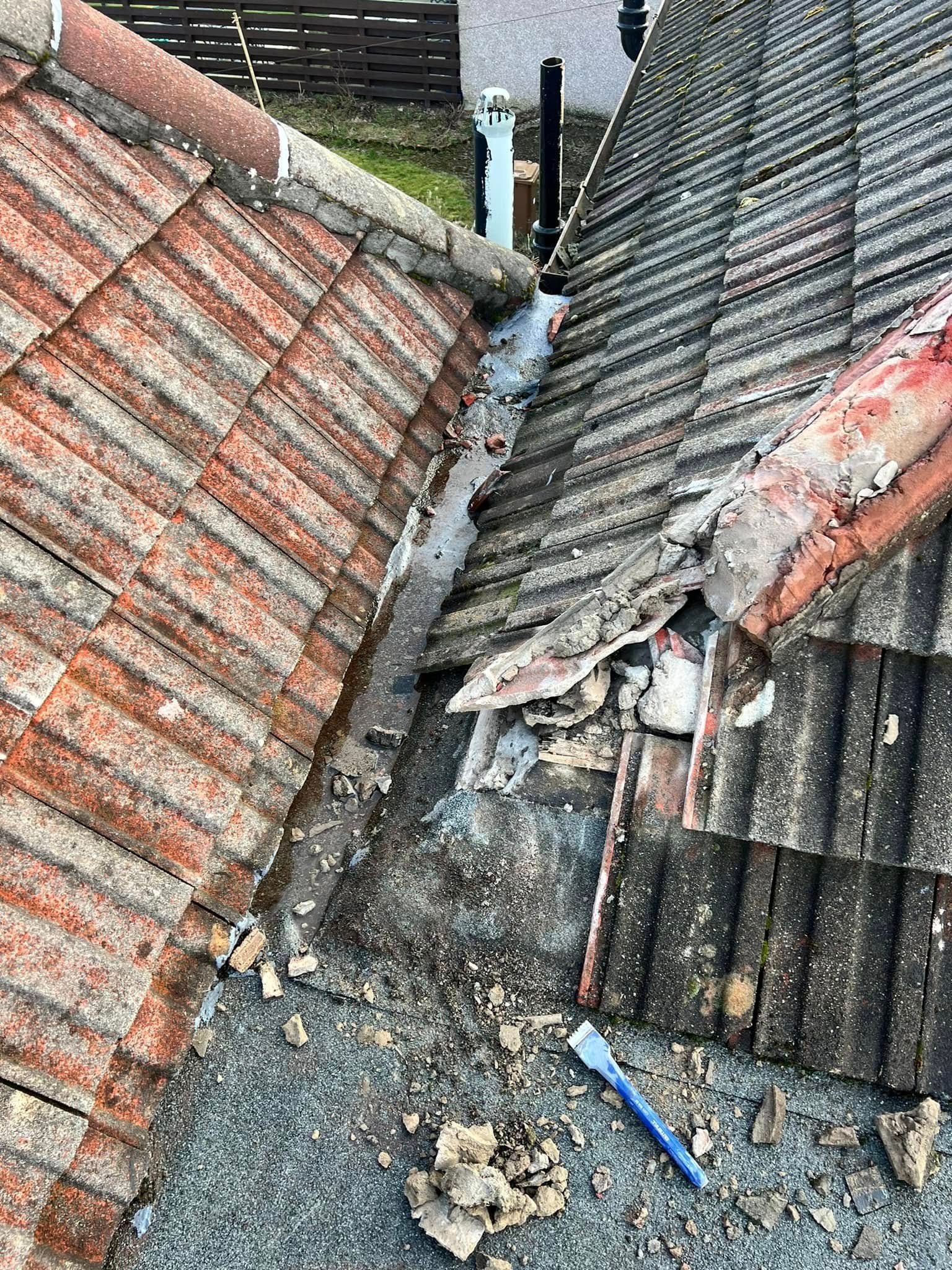
Lead or felt flashings seal the joints where your roof meets a chimney, dormer, or wall. When they crack, lift, or pull away, water tracks straight into the structure below. Repairing flashings is usually straightforward — but if the rest of the roof is aged, failing flashings are often a sign that wider problems are developing.
7. Rising Energy Bills With No Obvious Cause
A deteriorating roof becomes less effective at insulating your home. If your heating bills have crept up without explanation, a failing roof could be the reason — particularly in older properties where the original felt or insulation has broken down.
8. Blocked or Overflowing Gutters Causing Roof Edge Damage
Gutters clogged with debris cause water to back up against the roof edge, fascia boards, and soffit. Over time this causes rot, damp, and structural damage at the eaves. If your gutters are constantly overflowing or pulling away from the roofline, have the whole roofline checked at the same time.
If you have spotted any of these signs, the right next step is a proper inspection — not a guess from the pavement. We offer a free drone roof survey across Nottinghamshire that shows you exactly what is happening on top of your home in high definition, before a single penny is committed. Call our local Nottingham roofers now to arrange a free quote.
Roof Repair or Full Replacement — How to Tell the Difference?
This is the question we are asked most often — and the honest answer is: it depends on what we find when we inspect the roof properly.
When Repair Is the Right Call
If damage is isolated to one area and the rest of the roof is in reasonable condition, repair is almost always the better option. A few slipped slates, a section of failed flashing, or a cracked ridge tile can all be fixed without disturbing the whole roof.
We regularly deal with this type of work on Victorian terraces in West Bridgford and Carlton — solid roofs with one or two weak spots that a targeted repair sorts out for years.
When Full Replacement Makes More Sense
Replacement becomes the sensible choice when:
- Damage is spread across a large portion of the roof
- The underlying felt or underlay has failed across multiple sections
- The roof is approaching or beyond its expected lifespan for its material type
- The same area has been repaired more than twice in a short period
- The timber structure beneath shows signs of rot or water saturation
- Multiple areas are leaking simultaneously
One practical point many homeowners overlook: if scaffolding is already going up for a repair, it is always worth having the whole roof assessed at the same time. Scaffold hire is a significant part of the cost of any roofing job. Completing a repair now and a replacement in two years means paying for scaffolding twice. We will always tell you honestly if that situation applies to your property.
A Real Example From Our Work in Nottingham
A customer in Long Eaton called us about a leak over their kitchen extension. We sent the drone up and found three cracked slates — straightforward enough. But the footage also showed that the felt across the back slope had fully deteriorated and was holding water against the timber. A repair would have fixed the immediate leak for one season. A partial re-roof of the back slope sorted the problem properly and will last for decades. That is the kind of honest assessment you should always expect from a roofer.
Not sure which applies to your property? Request a no-obligation quote and we will give you a straight answer.
How Long Should a Roof Last in the UK?
The lifespan of your roof depends on the material it is made from, the quality of the original installation, and how well it has been maintained over the years.
Here is a straightforward guide to the most common roof types found on Nottinghamshire properties:
Felt Flat Roof — 10 to 20 years
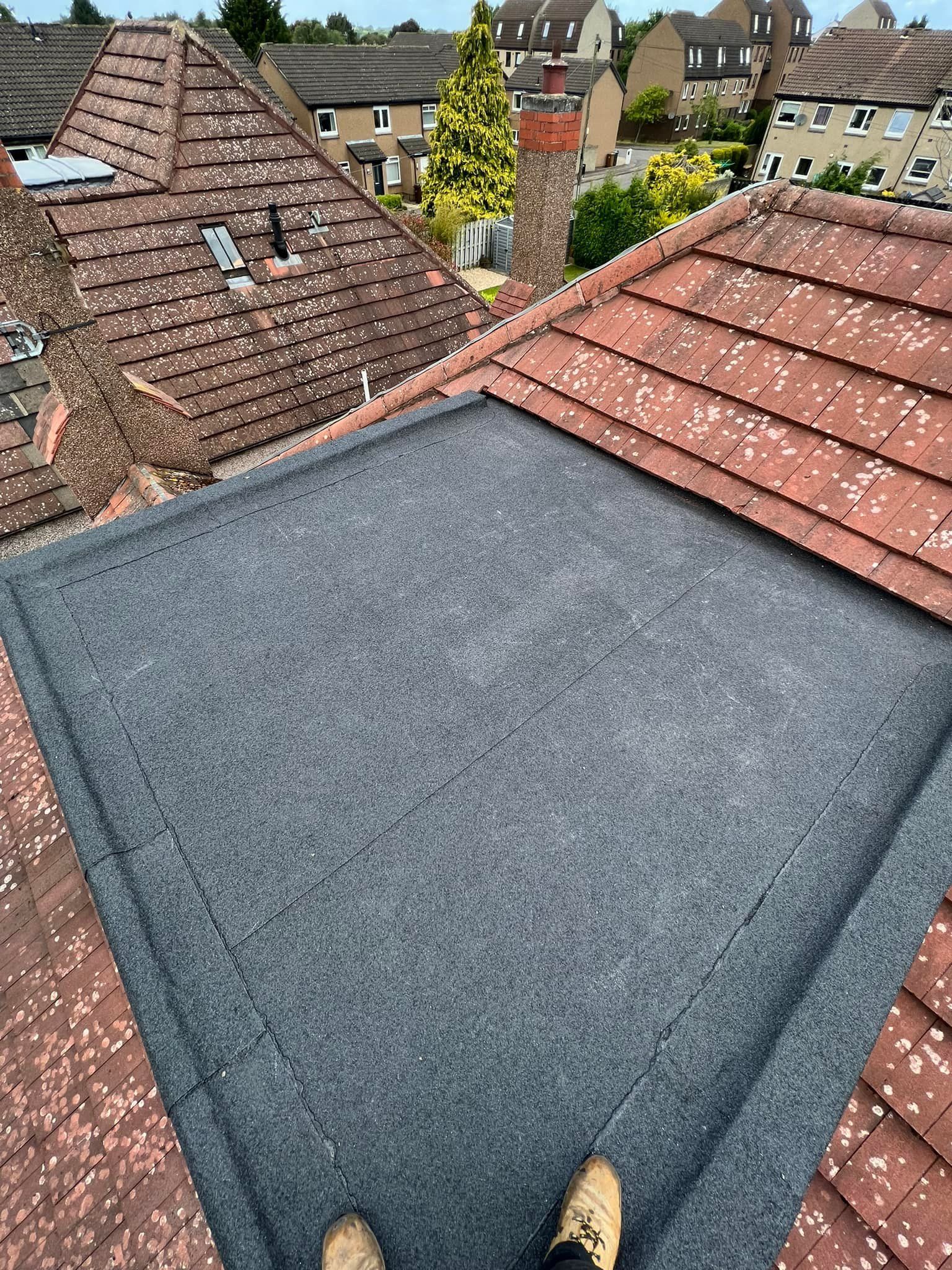
One of the shorter-lived roof types. If yours is approaching 15 years old and has never been inspected, it is worth getting it checked. Common on extensions and garages across Nottingham.
Concrete Tiles — 30 to 50 years
The most common roof type across Nottinghamshire housing stock. Many homes built between the 1940s and 1980s in areas like Bulwell, Bestwood, and Hucknall still have their original concrete tile roofs — which are now reaching or past the end of their expected life.
Natural Slate — 75 to 100+ years
One of the most durable roofing materials available. Well-maintained natural slate can last well over a century. Common on older and period properties across Nottingham.
Clay Tiles — 60 to 100 years
Long-lasting and well-suited to the UK climate. Often found on Victorian and Edwardian properties in areas like West Bridgford and The Meadows.
EPDM Rubber Flat Roof — 20 to 30+ years
A modern flat roofing material used on extensions, porches, and garages. Durable and low-maintenance when installed correctly.
GRP Fibreglass Flat Roof — 25 to 30+ years
Another modern flat roof option. Seamless and highly water-resistant, making it a popular choice for Nottingham homeowners replacing older felt flat roofs.
A Note on Nottinghamshire's Climate
Our winters matter here. The freeze-thaw cycle — where water works its way into small cracks, freezes overnight, then expands — puts particular stress on mortar-pointed ridges and verges. It is one of the main reasons we see ridge tile failures across NG postcodes after cold spells. Even a well-aged roof can be accelerated into failure by a harsh Nottinghamshire winter if small problems are left unaddressed.
One More Thing Worth Knowing
Since 2010, Building Regulations require loft insulation to be upgraded to current standards whenever a re-roof takes place. This is not a barrier — it is actually a benefit, as improved insulation reduces your heating bills. It is simply something to factor into your planning and your budget conversations with any roofer you speak to.
Does a New Roof Add Value to Your Home?
This is a question we hear more and more, especially from Nottingham homeowners who are planning to sell or remortgage.
A new roof will not automatically increase the value of your home — but a failing or visibly deteriorating roof will reduce it. Surveyors flag roof condition as a primary concern in home valuations. A poor roof can cause buyers to pull out, reduce offers, or demand significant money off the asking price.
Here is what a new or well-maintained roof does for your property:
- Protects the asking price — buyers cannot use roof condition to negotiate you down
- Improves kerb appeal — a clean, properly finished roofline makes an immediate impression
- Speeds up the sale — buyers are far less likely to pull out when the roof is confirmed sound
- Reduces energy bills — new roofing with upgraded insulation improves thermal performance
- Gives you peace of mind for years!
If you are preparing to put your Nottingham home on the market, we can provide a roof condition report alongside your free drone survey — giving you and your estate agent something concrete to present to buyers.
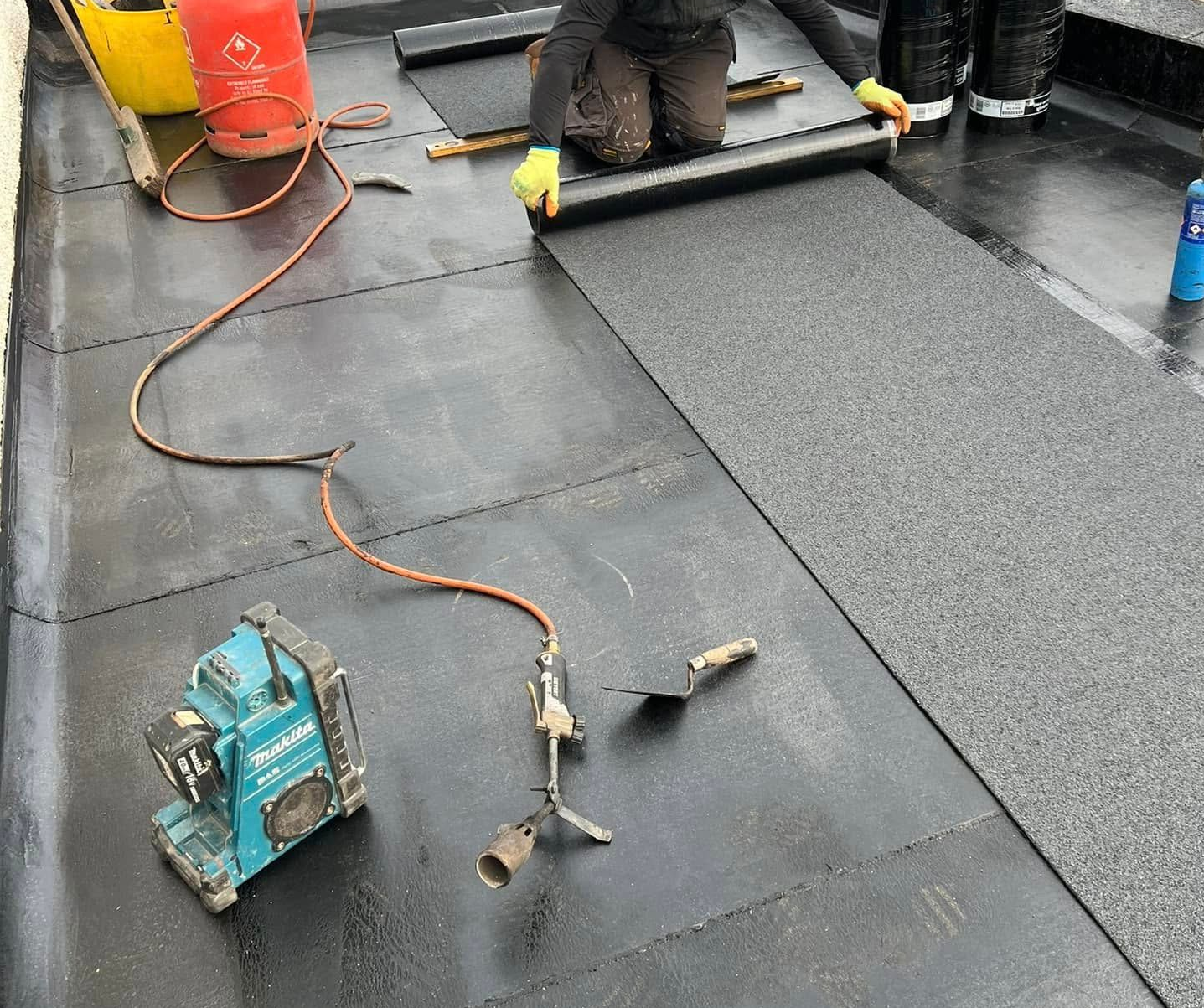
How Much Does Roof Replacement Cost in Nottingham?
Roof replacement costs vary from property to property. The size of your roof, the material you choose, and the complexity of the job all affect the final price. Here is an honest and straightforward guide to what Nottingham homeowners typically spend.
Typical Cost Ranges by Property Type
Terraced House — £4,000 to £7,000 The most common property type across central Nottingham, Arnold, Carlton, and Bulwell. A standard re-roof using concrete tiles or slate falls within this range for most terraced homes.
Semi-Detached House — £5,500 to £9,000 Very common across areas like Beeston, Hucknall, West Bridgford, and Gedling. Costs vary depending on roof size, pitch, and whether additional work is needed to the fascias or guttering at the same time.
Detached House — £8,000 to £18,000+ Larger roofs, more complex shapes, and additional features like dormers or multiple chimney stacks all add to the cost. Properties in areas like Ruddington, Wollaton, and Radcliffe on Trent often fall into this bracket.
Flat Roof — Extension or Garage — £1,500 to £4,500 Flat roof replacements on extensions, porches, and garages are among the more straightforward jobs. EPDM rubber and GRP fibreglass are both popular modern options we install across Nottinghamshire.
What Is Usually Included in a Full Re-Roof Quote
When you receive a quote for a full roof replacement, the following should normally be included:
- Removal and safe disposal of the old roof covering
- New felt underlay and battens
- Supply and fitting of new tiles or slates
- Ridge and verge work
- Lead flashing replacement around chimneys and abutments
What Might Be Charged as an Extra
Some costs are not always included in the initial quote. Always ask your roofer about the following before agreeing to any work:
- Scaffold hire — this is often quoted separately and can add to the overall cost
- Replacement of rotten timbers found once the old covering is stripped back
- New fascias, soffits, or guttering if these need attention at the same time
- Loft insulation upgrade to meet current Building Regulations
Our Promise on Pricing
At Trust Roofing Services we always provide a written, fixed-price quote before any work begins. There are no verbal estimates and no figures that change once we are on the roof.
If we find something unexpected once the old covering is stripped back, we stop work, show you exactly what we have found, and agree on a clear way forward before continuing. No surprises. No shock invoices.
For a full breakdown of roofing costs specific to your property type, visit our new roof cost guide.
Call us on 0115 647 3275 or get your free, no-obligation quote here.
Does Moss or Mould Mean My Roof Needs Replacing?
Not automatically — but it should never be ignored.
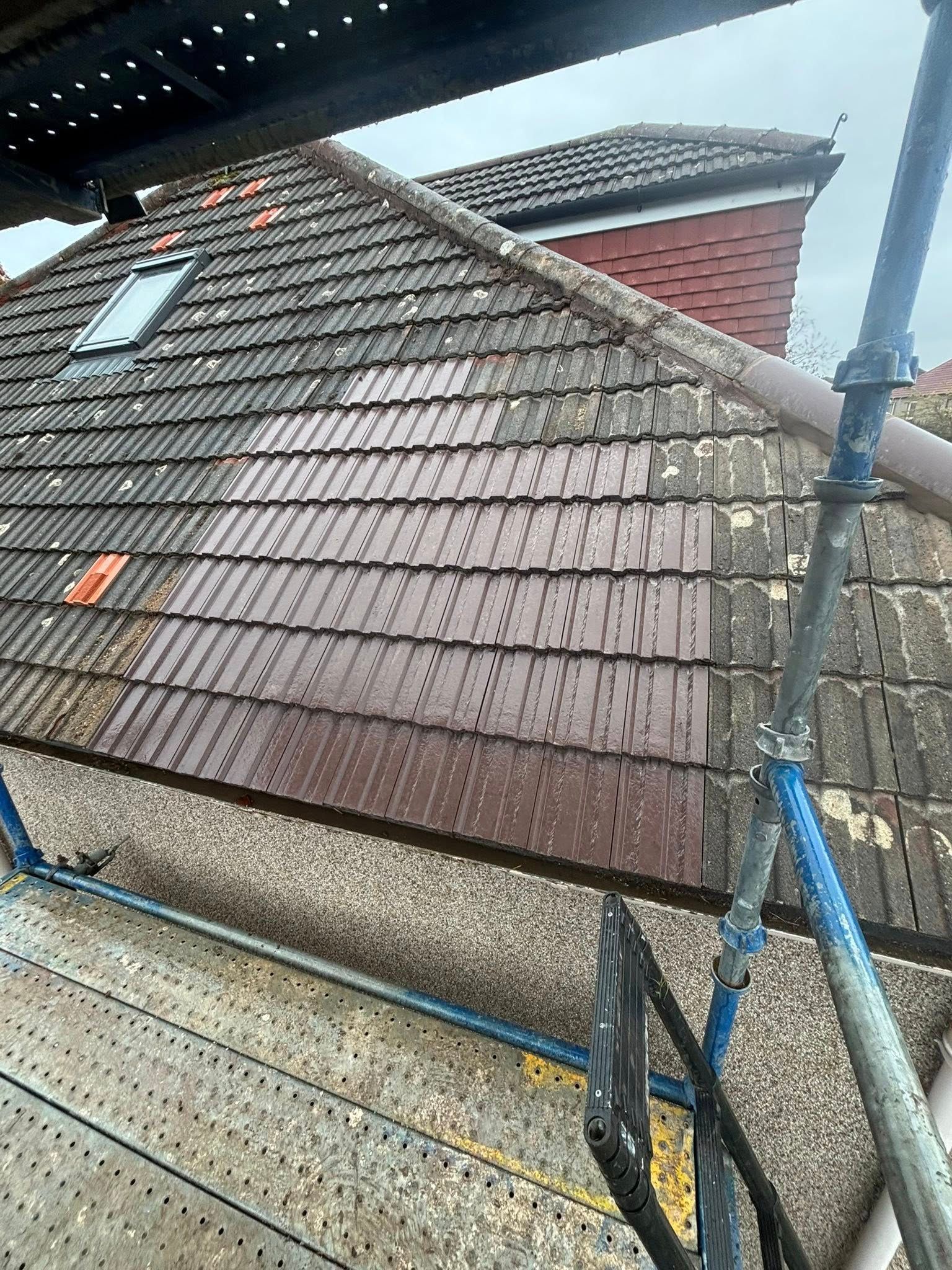
A light covering of moss on roof tiles is common across Nottinghamshire. Our wet winters and the shade cast by mature trees in areas like Sherwood, Wollaton, and Ruddington create exactly the damp conditions moss needs to thrive. On its own, surface moss is not an automatic sign your roof needs replacing. It does need to be treated and removed properly.
Why moss matters: moss holds moisture against the surface of tiles. In winter, that trapped moisture freezes, expands, and over time causes tiles to crack or lift at the edges. Once tiles start lifting, water gets underneath. That is when a cosmetic problem becomes a structural one.
Signs that moss or mould has gone beyond surface level:
- Tiles visibly lifting or displaced along the line of heaviest moss growth
- Black or green staining seeping beneath the tile line
- Mould or damp appearing inside the loft — moisture has already penetrated the structure
- Soft or spongy areas when the roof is walked on by a roofer during inspection
We offer professional roof cleaning and moss removal using a safe, biodegradable soft-wash treatment. This removes moss without damaging tiles or the pointing beneath them. We will always tell you honestly whether the condition of the tiles underneath means cleaning is sufficient — or whether something more is needed.
One important warning: be cautious of anyone who knocks on your door offering to pressure-wash your roof at a low price. High-pressure washing strips the surface of concrete tiles, damages pointing, and can force water directly into the roof structure. It is a cheap short-term fix that frequently causes expensive long-term problems.
What Happens If You Ignore the Warning Signs?
This is a question worth answering clearly, because many homeowners put off getting their roof checked — hoping the problem will stay small.
It rarely does. Here is what typically happens when roof warning signs are left unaddressed:
- A slipped tile leads to water ingress → the felt underneath becomes saturated → timber battens begin to rot → a £200 tile repair becomes a £3,000–£5,000 structural repair
- A failed flashing around the chimney → persistent leak into the wall cavity → mould growth, damp plaster, and potential electrical issues → what should have been a £300 repair becomes a multi-trade problem costing thousands
- Deteriorating underlay across an ageing roof → widespread water ingress after a heavy Nottinghamshire winter → a full re-roof becomes urgent rather than planned, meaning less time to budget and compare quotes
- Ignored moss growth → tiles lift over a single winter → water penetrates the deck → ceiling damage, insulation failure, and loft structural issues follow
Acting early almost always costs less. A free drone roof survey with Trust Roofing Services gives you a clear picture of exactly what is happening on your roof — before any of these scenarios develop.
Do You Need Planning Permission to Replace a Roof in the UK?
For most straightforward roof replacements, the answer is no.
Replacing a roof with the same type of material, in the same style, on a standard domestic property falls under Permitted Development rights in England. You do not need to apply for planning permission before work starts.
However, there are situations where you need to check first:
- Conservation areas: If your home is in a conservation area, you may need to notify your local planning authority before replacing the roof. Some materials — such as concrete tiles replacing original clay tiles — may not be permitted without prior approval. Parts of Nottingham city centre and certain older residential streets in the area fall under conservation designations.
- Listed buildings: Any property with listed building status requires Listed Building Consent before roof work begins, and replacement materials must match the original as closely as possible.
- More than 25% of the roof: Building Regulations approval is required when more than 25% of the total roof area is being replaced. Your roofer should handle this notification and inspection process on your behalf.
- Protected species: If bats are roosting in your roof — which is more common than many homeowners realise, particularly in older Nottinghamshire properties — work cannot begin without a habitat survey and a licence from Natural England. This is a legal requirement.
Not sure whether your property falls into any of these categories? We know the Nottinghamshire planning context well. Call us on 0115 647 3275 and we will advise you before anything is quoted or started.
Areas We Cover
Trust Roofing Services provides roof replacement, repair, and inspection services across Nottingham and the wider Nottinghamshire area. Our base is in Hucknall (NG15) and we cover all NG postcodes as well as surrounding areas.
Nottingham City & Inner Suburbs
- Nottingham City Centre — NG1
- Sherwood — NG5
- Arnold — NG5
- Bestwood — NG5
- Bulwell — NG6
- Hyson Green — NG7
- Radford — NG7
- Forest Fields — NG7
- Lenton — NG7
- Beeston — NG9
- West Bridgford — NG2
- Carlton — NG4
- Mapperley — NG3
- Netherfield — NG4
- Gedling — NG4
Greater Nottinghamshire
- Hucknall — NG15 (our base)
- Long Eaton — NG10
- Stapleford — NG9
- Clifton — NG11
- Ruddington — NG11
- Kirkby in Ashfield — NG17
- Sutton in Ashfield — NG17
- Mansfield — NG18 / NG19
- Newark-on-Trent — NG24
- Eastwood — NG16
- Ilkeston — DE7
Not sure if we cover your area? Call us on 0115 647 3275 and we will confirm straight away.
Frequently Asked Questions
How do I know if my roof needs replacing or just repairing?
The key factor is how widespread the damage is. Isolated damage — a few slipped tiles, a cracked flashing, a small section of failed felt — can usually be repaired. When damage is spread across a large portion of the roof, when the same area has been repaired more than once, or when the underlying timber structure is involved, replacement is the better long-term choice. A professional inspection is the only reliable way to know for certain.
What are the most common signs that a roof needs replacing in the UK?
The main signs are missing, cracked, or slipped tiles; a sagging ridge line; water stains or damp patches in upper rooms; daylight visible through the loft; deteriorating underlay or felt; failing flashings around the chimney; and unexplained rises in heating bills. Our free drone roof survey can identify all of these without anyone needing to set foot on your roof.
How long does a roof replacement take in Nottingham?
A straightforward re-roof on a standard Nottingham terraced or semi-detached property typically takes two to four working days. Larger or more complex roofs may take five to seven days. Flat roof replacements on extensions or garages can often be completed in a single day. We will always give you a realistic timeframe upfront and keep you updated throughout the job.
How long should a roof last in the UK?
It depends on the material. Felt flat roofs typically last 10–20 years. Concrete tiles last 30–50 years. Natural slate can last 75–100 years or more with proper maintenance. Many homes across Nottinghamshire with original concrete tiles from the 1960s and 1970s are now at or beyond the end of their expected lifespan.
How much does roof replacement cost in Nottingham?
As a general guide, a full re-roof on a Nottingham terraced house typically costs between £4,000 and £7,000. A semi-detached property usually falls between £5,500 and £9,000. Larger or more complex roofs cost more. We provide written, fixed-price quotes so you always know exactly what you are paying before any work begins.
Does my roof need replacing if it has moss on it?
Not necessarily. Surface moss is common on Nottinghamshire roofs and can often be resolved with professional soft-wash cleaning and treatment. However, if moss has caused tiles to lift or if mould is appearing inside the loft, there may be a deeper problem. We will always give you an honest assessment rather than recommend more work than is needed
.
Can I repair my own roof in the UK?
We strongly advise against it. Working at height carries serious injury risks without the correct training, safety equipment, and insurance. Beyond the personal safety risk, DIY repairs that are not carried out correctly can invalidate your home insurance, void any existing workmanship warranties, and lead to far more expensive problems later. Our team covers all of Nottinghamshire and can usually visit within a few days for non-emergency work.
Do I need planning permission to replace my roof in the UK?
Most like-for-like roof replacements on standard domestic properties do not need planning permission under Permitted Development rights in England. You will need to check separately if your home is in a conservation area, is a listed building, or if more than 25% of the roof is being replaced — in which case Building Regulations approval is required. Call us if you are unsure and we will advise you.
Will home insurance cover roof replacement or repairs in the UK?
Home insurance can cover roof damage caused by a sudden event such as a storm, fire, or fallen tree. It does not normally cover gradual wear and tear or maintenance-related deterioration. If you have recently experienced storm or wind damage, contact your insurer before booking repairs. We have experience working alongside insurance claims and can provide the documentation and photographic evidence your insurer requires. Read our roof insurance claims guide for full details.
What is the best roofing material for a UK home?
For pitched roofs, natural slate and clay tiles offer the longest lifespan but come at a higher material cost. Concrete tiles are the most common choice across Nottinghamshire — cost-effective, durable, and well-suited to the local climate. For flat roofs, EPDM rubber and GRP fibreglass are both excellent modern options with long service lives and minimal maintenance requirements. We will always recommend the right material for your specific property, your budget, and the conditions in your part of Nottinghamshire.
What is a drone roof survey and is it really free?
A drone roof survey uses a professional UAV (unmanned aerial vehicle) to capture high-definition video and images of your entire roof from multiple angles. It identifies damage, wear, failed mortar, deteriorating felt, and any other issues — all without anyone needing to go up a ladder or onto your roof. At Trust Roofing Services, this survey is completely free for all enquiries across Nottinghamshire. You receive an honest written report with no obligation to proceed with any work.
Ready to Find Out What Is Really Happening on Your Roof?
You do not need to guess. You do not need to climb a ladder. And you do not need to commit to anything.
At Trust Roofing Services, we offer a completely free drone roof survey to every Nottingham homeowner who gets in touch. Our CAA-registered drone surveyor will capture high-definition footage of your entire roof, identify any areas of concern, and give you a clear, honest report — with no pressure and no obligation to proceed.
We are a family-run business based in Hucknall, NG15. We have been working on roofs across Nottinghamshire for over 15 years. Every job comes with a written fixed-price quote, a 10-year workmanship guarantee, BBA-approved materials, and a team of directly employed roofers — never subcontractors.
If you have spotted any of the warning signs on this page — or simply want peace of mind about the condition of your roof — we are ready to help.
Call Trust Roofing Services today on 0115 647 3275 or visit roofersnottinghamgrp.co.uk to book your free drone roof survey.
We cover Nottingham, Hucknall, Arnold, Beeston, West Bridgford, Carlton, Long Eaton, Mansfield, Kirkby in Ashfield, Sutton in Ashfield, Newark-on-Trent, and all NG postcodes across Nottinghamshire.
Book Your Free Roof Survey → | View All Our Roofing Services → | Call Us: 0115 647 3275
Let’s talk about your project
Fill out the form, or call us on
0115-647-3275 to arrange a free quote