
Trust Roofing Services
Professional Lead Flashing For Around Chimneys
FREE Drone Survey
Free Quote
BBA-Approved Materials. 10-Year Guarantee.
Call: 0115-647-3275
Lead Flashing Around Chimneys Nottingham - Professional Lead Work
Noticed a damp patch near your chimney? Spotted cracked or lifted lead on your roof? You are not alone. If your chimney is letting water in, lead flashing is usually where the problem starts. We carry out chimney lead flashing repairs, full replacements, and new installations across Nottingham and Nottinghamshire.
From Victorian terraces in Sherwood to semi-detacheds in West Bridgford, we work on all property types across the area.
Lead flashing around chimneys is one of the most searched roofing topics in the UK — and for good reason. When it fails, water gets in fast. This page covers everything you need to know: warning signs, how the system works, what the job involves, and how to get it fixed properly in Nottingham.
Call Trust Roofing Services : 0115-647-3275
Free roof & chimney lead flashing inspections available across Nottingham and Nottinghamshire — no obligation, no pressure. FREE Drone Survey
What Is Lead Flashing Around a Chimney?
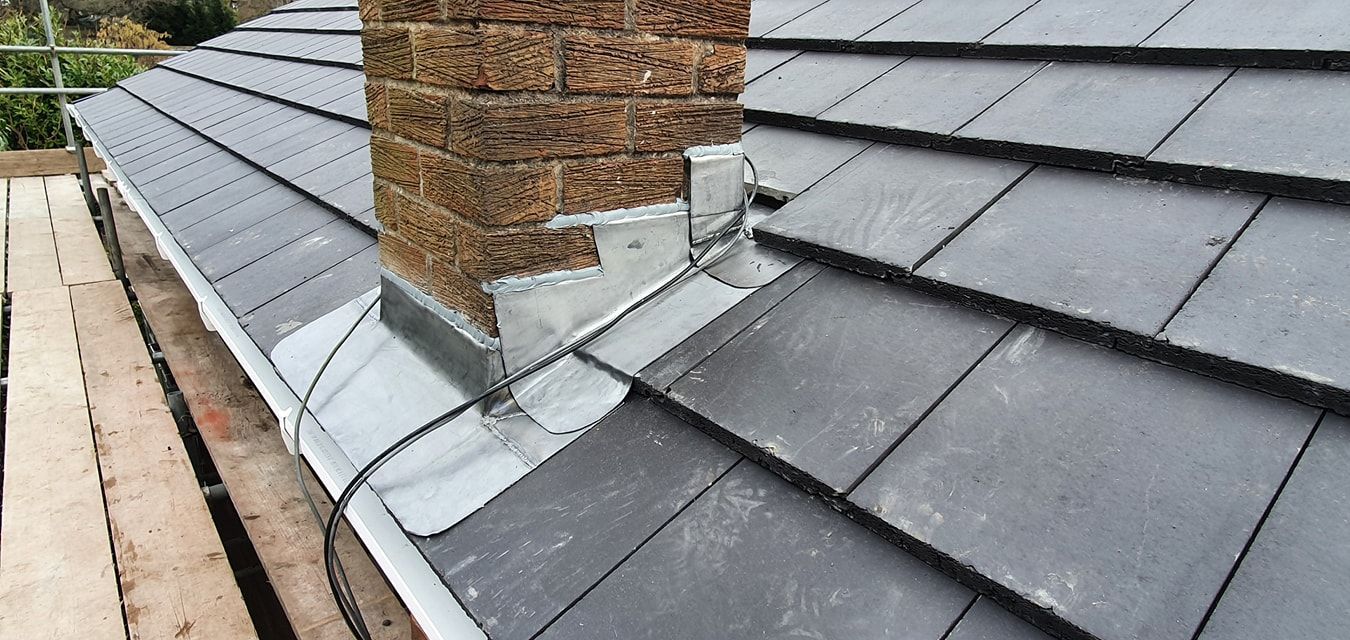
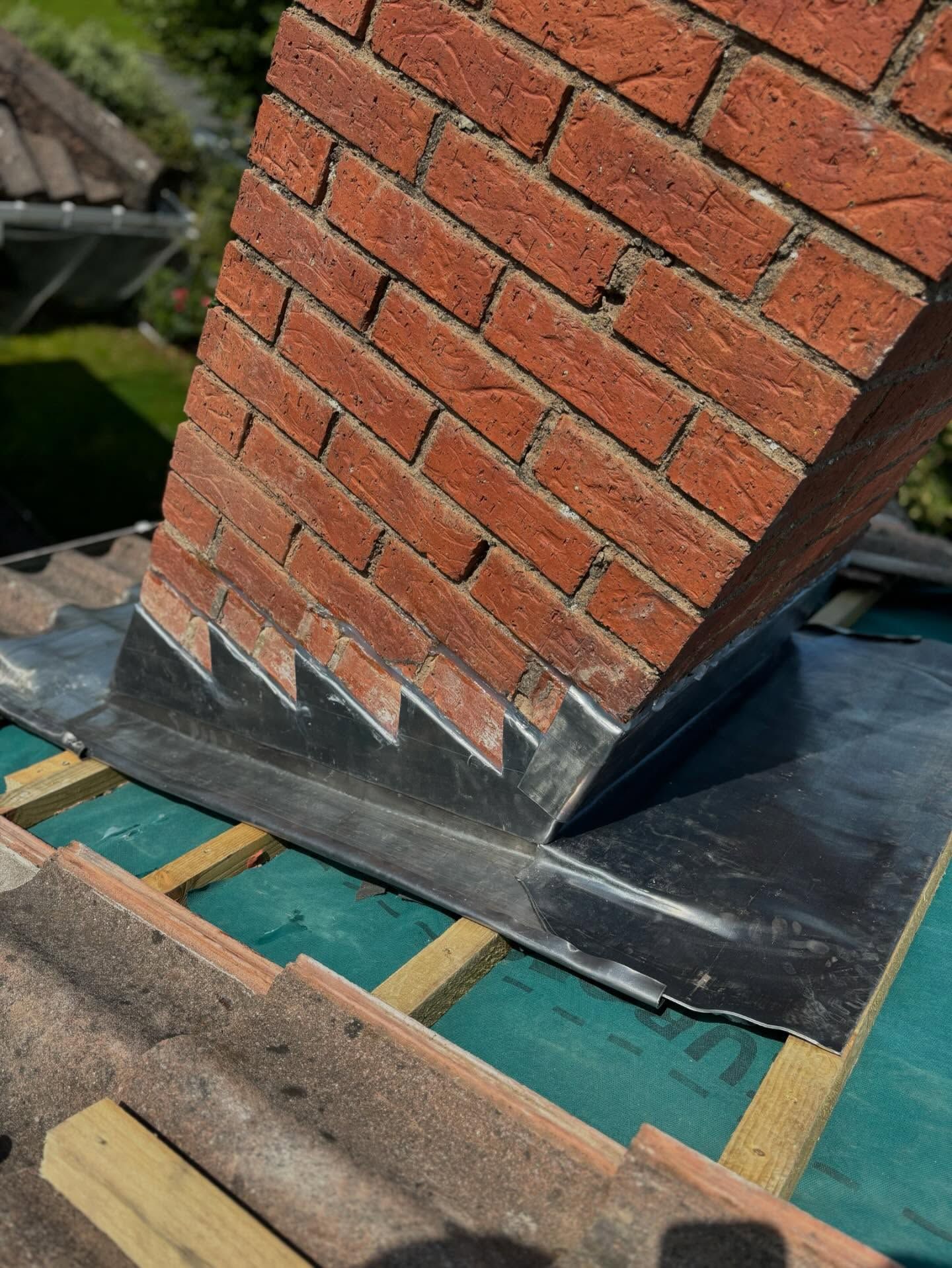
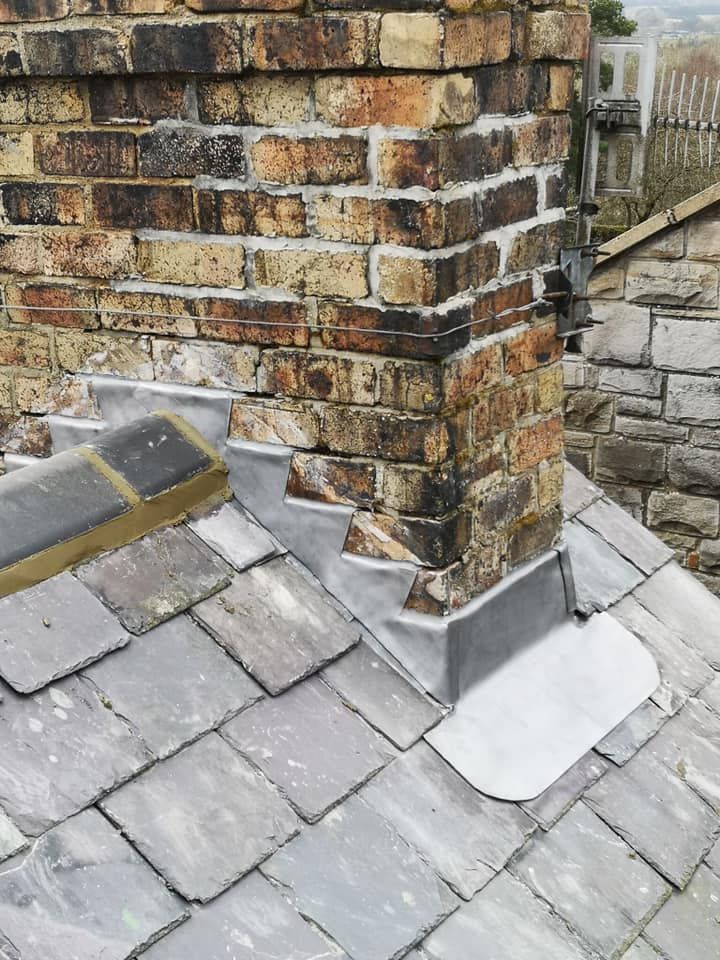
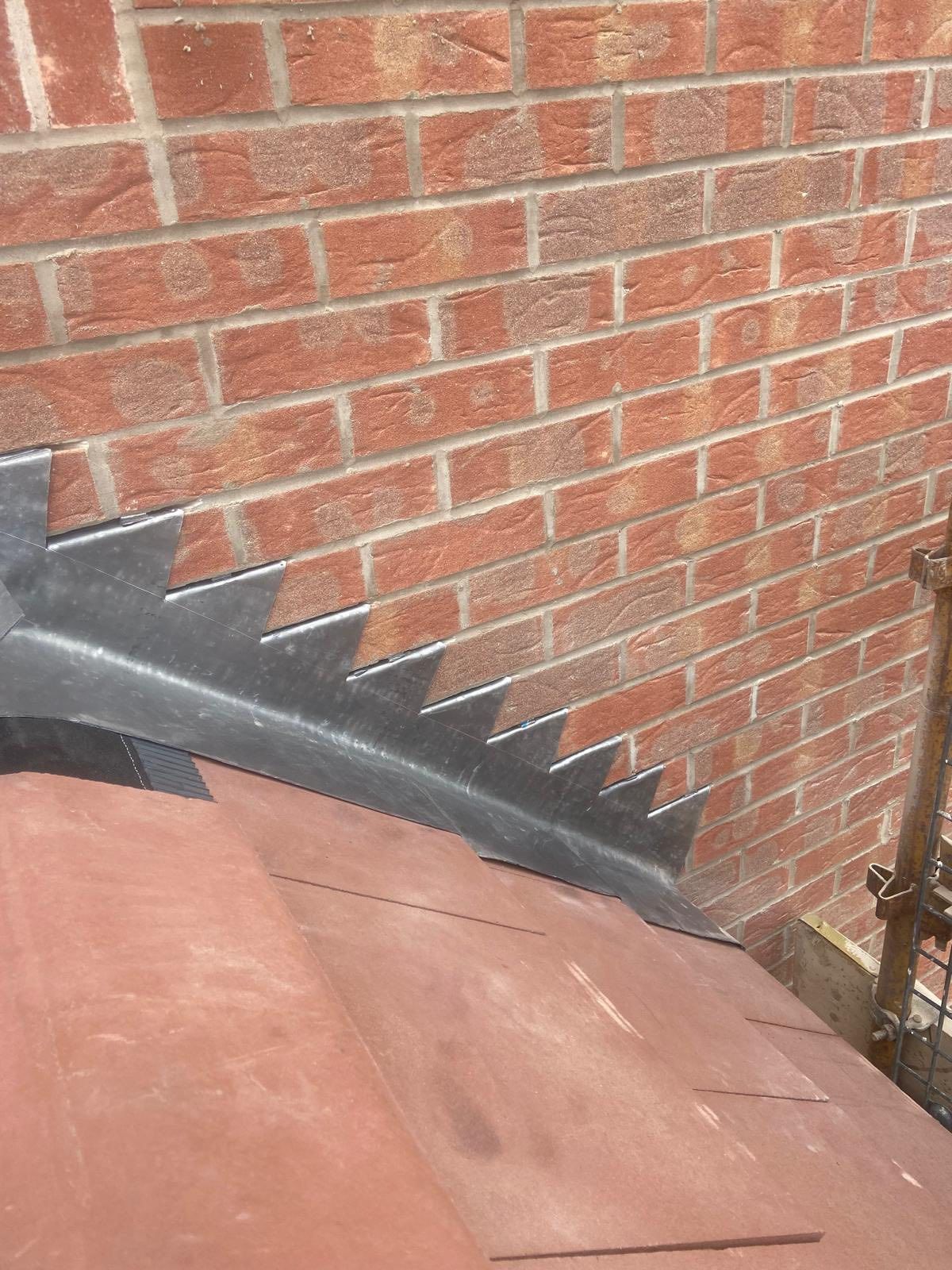
Lead flashing is a thin, shaped sheet of lead fitted around the base of a chimney stack, sealing the joint between the stack and the roof tiles or slates. It stops rainwater from running into the gap where the chimney meets the roof — one of the most vulnerable points on any property.
Without lead flashing, water would track straight into your roof structure every time it rains. Over time, this leads to:
- Wet and rotting roof timbers
- Damp patches on ceilings and walls
- Mould growth in the loft
- Plaster damage on chimney breasts
- Costly structural repairs if left too long
Lead has been the go-to material for chimney weatherproofing for generations. It is flexible, durable, and when fitted correctly to BS EN 12588 standards, it outlasts virtually every other option available.
How to Tell Your Chimney Lead Flashing Is Failing
Most chimney leaks in Nottingham do not announce themselves right away. Water works its way in slowly, and by the time you notice a damp patch on the ceiling, it has usually been getting in for a while. The earlier you catch it, the simpler the fix.
Look out for these warning signs:
- Damp stains on the ceiling near your chimney breast
- Peeling wallpaper or paint on the chimney wall
- A musty smell in the loft or top floor rooms
- Visible gaps, cracks, or lifted lead on the roof
- Mortar missing from the joint where the lead is fixed into the brickwork
- Water dripping into the loft during or after heavy rain
- Daylight visible around the chimney stack when viewed from inside the loft
- Lead that has pulled away from the brickwork chase
- Black staining or tide marks on chimney breast plasterwork
Nottingham has a large number of Victorian and Edwardian terraces — especially in areas like Sherwood and Mapperley. These properties often have original or ageing lead that has never been replaced. If your home was built before 1940, it is worth having your chimney flashing checked even if you have not spotted a leak yet.
We carry out free roof inspections across Nottingham and Nottinghamshire. Our team will check the condition of your lead and give you a straight answer on whether it needs repair or replacement.
Step Flashing, Apron Flashing, and Soakers — What Goes Where on a Chimney
If a roofer has told you that you need step flashing or an apron, it helps to know what those terms mean. A chimney is a high-risk area on any roof because it has multiple edges and changes of direction. Getting every part of the detail right is what keeps water out.
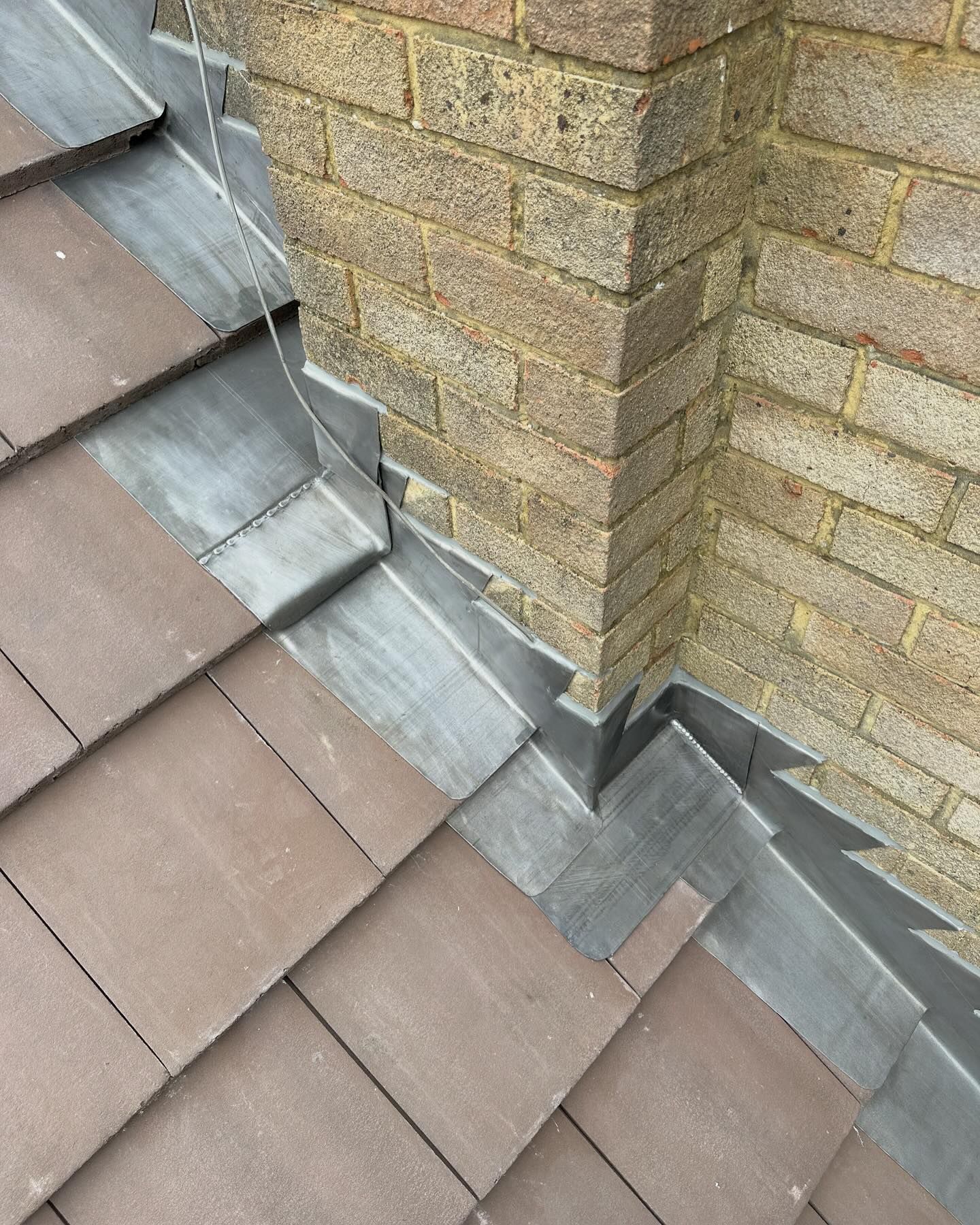
A correctly installed chimney lead flashing system has four key components:
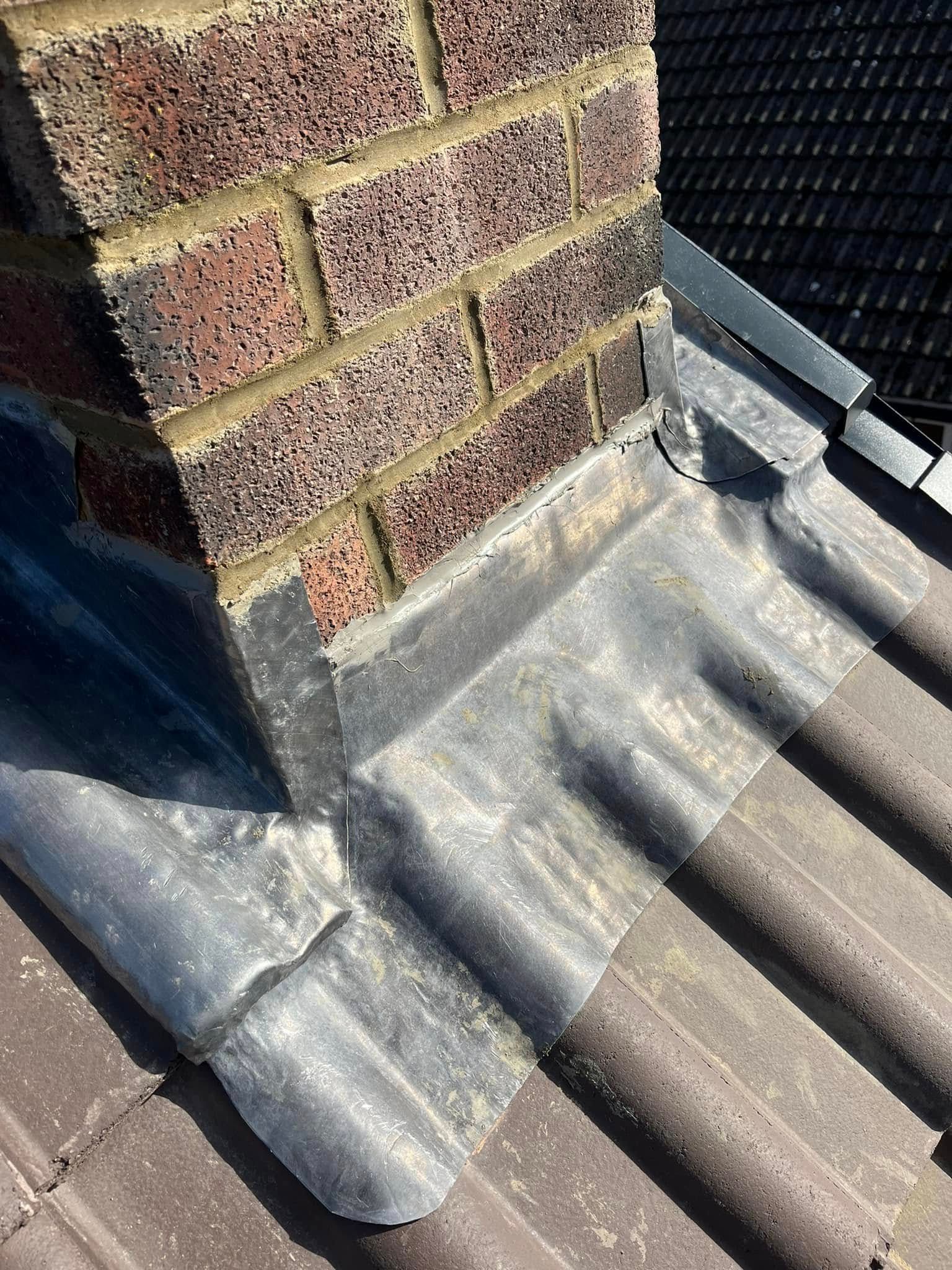
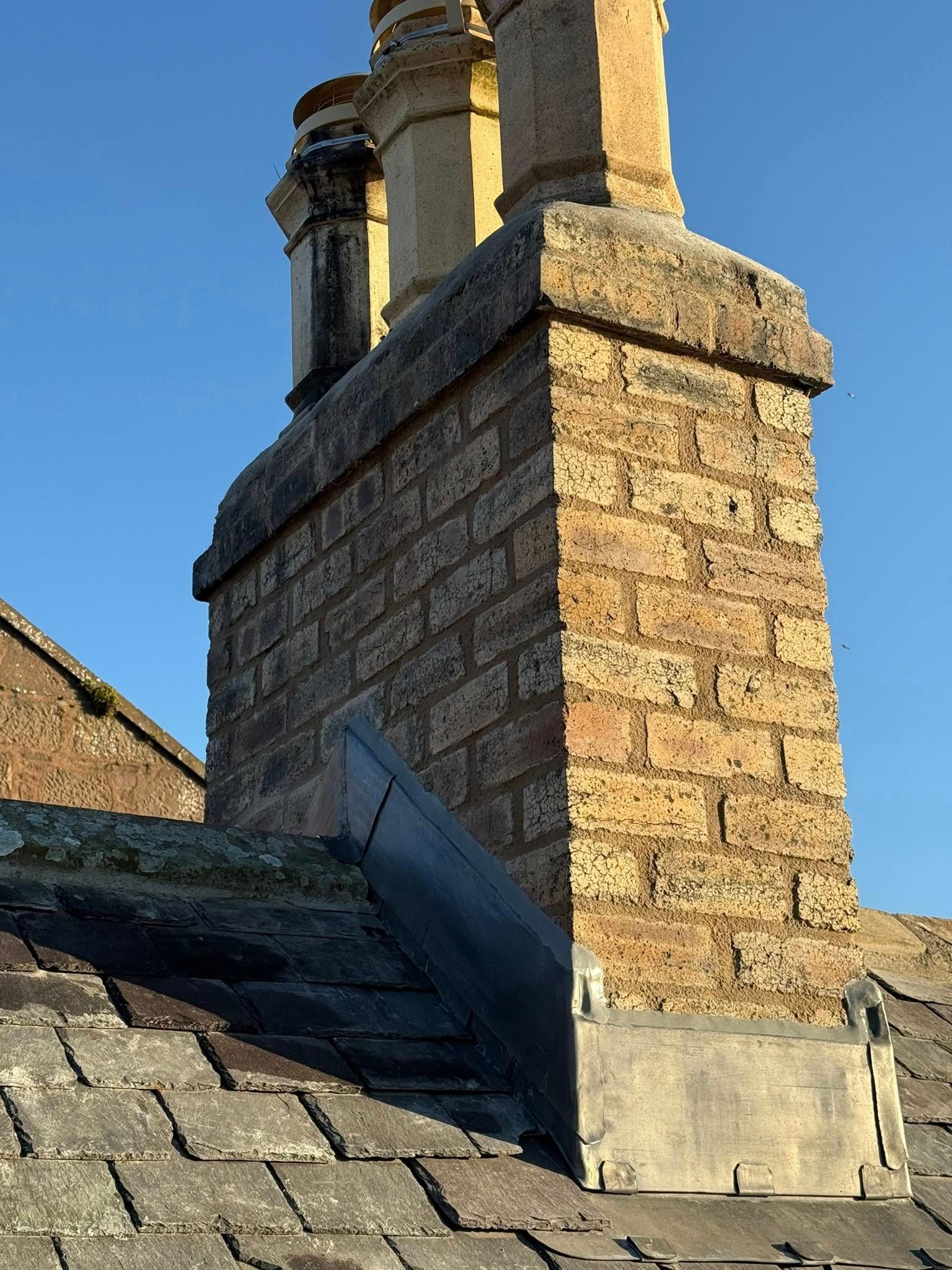
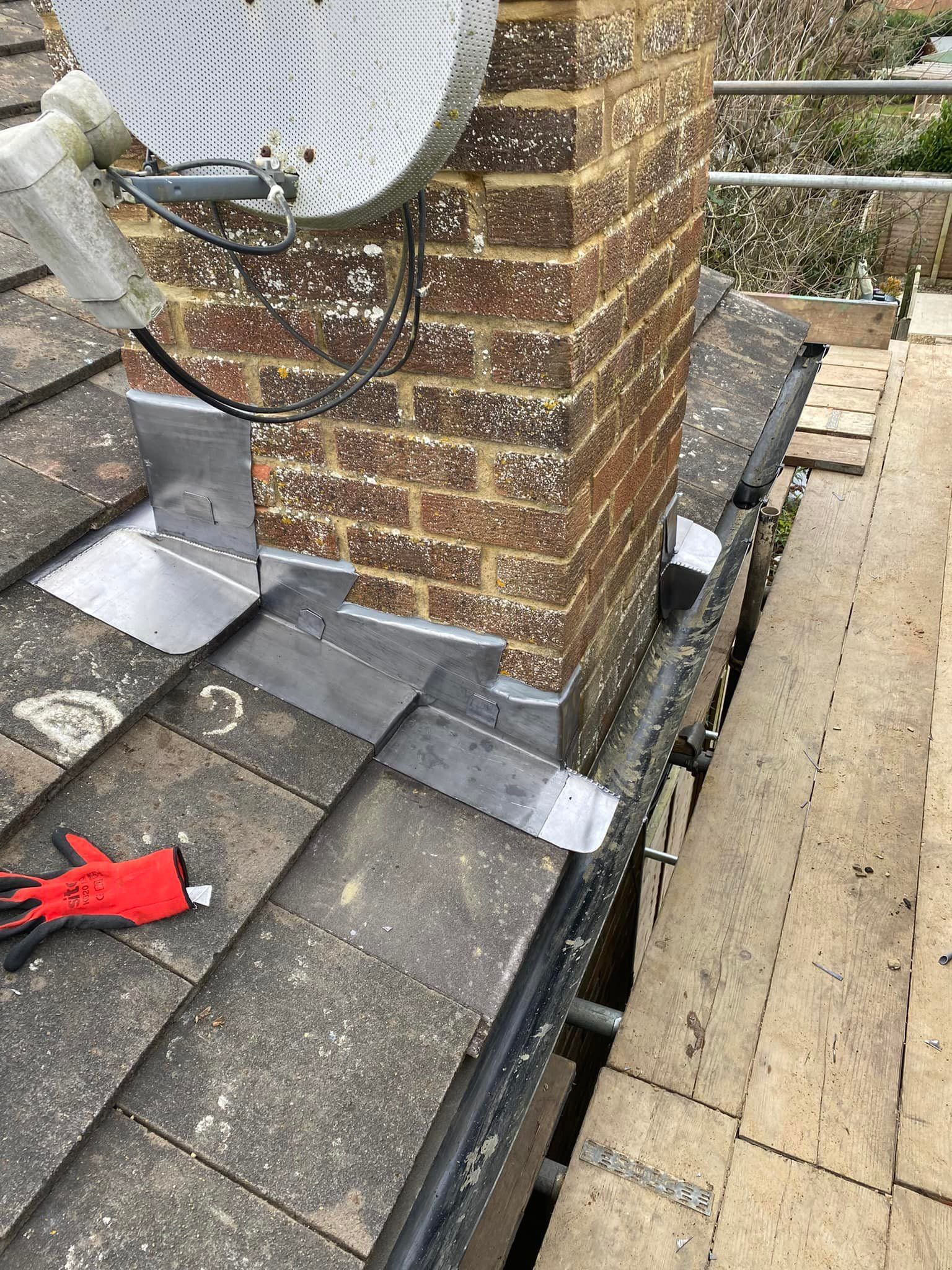
- Front apron flashing — sits at the front (downslope) face of the chimney. It laps over the tiles below and directs water away from the base of the stack.
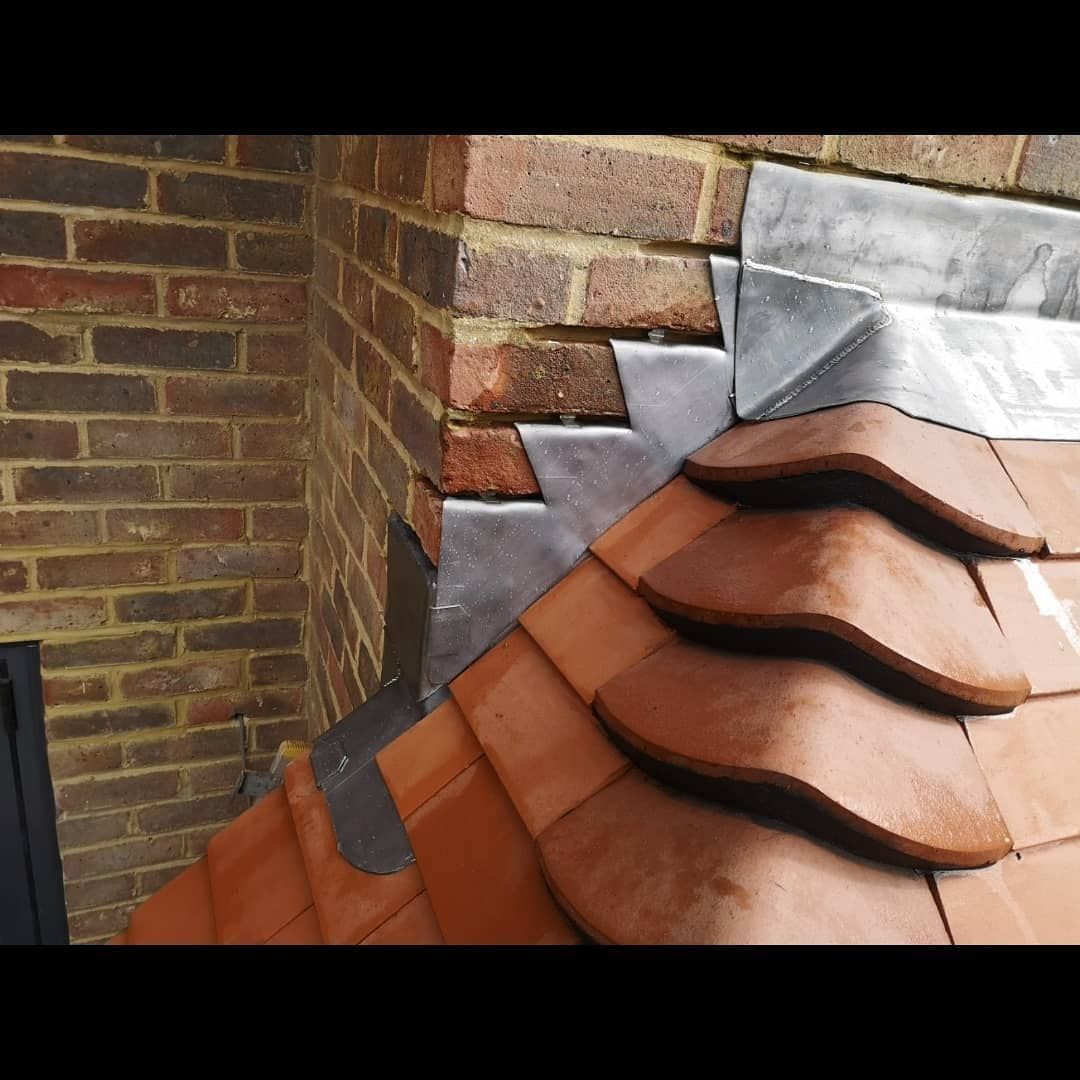
- Step flashing — runs up both sides of the chimney. Cut in a stepped pattern, it is fixed into the mortar joints between bricks, following the slope of the roof.
- Back gutter — sits behind (upslope of) the chimney. It collects water running down the roof above and channels it around the stack.
- Soakers — sit hidden underneath each tile or slate alongside the chimney. They work together with the step flashing to stop wind-driven rain getting behind the lead.
All four elements must be present and correctly installed for the chimney junction to be watertight. A common failure on Nottingham properties — particularly those with concrete roof tiles — is soakers that have been left out or installed too short. Without soakers, step flashing alone cannot do the job properly.
We also check the condition of the flaunching (the cement cap on top of the chimney stack) and chimney pots when we work on any chimney. These are often overlooked, but a cracked pot or failed flaunching can let water in independently of the flashing.
We fit every element to the correct specification. If you have had work done before and the leak has come back, it is worth asking us to check whether the full system is in place.
Which Lead Code Your Nottingham Chimney Actually Needs
Not all lead is the same. Lead sheet is graded by thickness, and using the wrong grade on a chimney is one of the most common causes of early failure. When you receive quotes for flashing work, always ask each roofer to confirm the lead code they plan to use.
Lead codes are defined by BS EN 12588 — the British Standard for milled lead sheet used in UK roofing:
- Code 3 — used for soakers only. Too thin for any exposed face of a chimney.
- Code 4 — the minimum standard for chimney aprons, step flashing, and back gutters. Suitable for most Nottingham properties.
- Code 5 — recommended for exposed chimney stacks, larger chimney faces, or properties in particularly open or elevated positions.
Code 4 is the most commonly used lead for chimney flashing across Nottinghamshire. Code 5 gives extra resilience where the stack is large, exposed, or sits in a wind-swept position.
Properties in open positions — such as those on higher ground around Beeston or Carlton — tend to face stronger wind-driven rain. Code 5 makes sense in these cases. If you are not sure what code your current flashing is, our team can check this during a free inspection and tell you exactly what is there and what we recommend before we start any work.
Browse our website for a full suite of roofing services: https://www.roofersnottinghamgrp.co.uk
What Happens During a Lead Flashing Replacement in Nottingham
Knowing what to expect makes the whole process straightforward. A chimney lead flashing replacement is a skilled job, but it follows a clear sequence of steps.
Here is exactly what we do:
- Inspection — We check the chimney stack, existing lead, mortar chase, soakers, and surrounding tiles from roof level before any work starts.
- Strip out — Old lead and failed mortar are removed from the chase. We also lift any tiles or slates needed to access the soaker positions.
- Chase preparation — The mortar joint is raked out or cut to a minimum depth of 25mm to accept the new lead correctly.
- Cut and dress — New lead is cut to size, dressed to shape, and fitted section by section — apron, soakers, step flashing, and back gutter in the correct order.
- Fix into chase — The lead is secured using lead wedges or stainless steel clips to the correct standard.
- Point up — The chase is pointed with fresh mortar to lock the lead in place and seal the joint.
- Reinstate tiles — Tiles or slates are re-laid, checked for correct lap, and any disturbed ridge tiles are re-bedded if needed.
- Final check — We inspect the full chimney junction on completion and clear all debris from the work area before leaving.
Whether we use a roof ladder or scaffolding depends on the pitch of your roof, the height of the chimney, and safe access to the stack. We will confirm this when we visit. Most jobs on standard Nottingham terraces and semis can be completed within a day.
Cement Around Your Chimney Instead of Lead — What to Do Next
Some Nottingham properties — particularly pre-war houses — have cement fillets around the chimney instead of lead flashing. This was once a common practice, but cement does not behave the same way as lead over time.
Lead expands and contracts with temperature changes without losing its seal. Cement does not. Once the cement cracks — through frost, building movement, or simply age — water tracks straight behind it and into the roof structure.
What to do if your chimney has cement fillets instead of lead:
- If there are no cracks and no signs of damp inside, monitor it closely — but it will not last indefinitely.
- If you can see cracking, lifting, or gaps in the cement, arrange a proper lead flashing installation before leaks develop.
- If you have already noticed damp patches near the chimney, the cement has likely already failed and water is getting in.
Replacing cement fillets with correctly installed lead flashing is a long-term fix, not a patch. Lead fitted to the right code will outlast any cement repair by many decades. We carry out this type of replacement regularly on older Nottinghamshire properties.
Why Sealant and Flashband Are Not a Proper Fix
This is worth covering because we see it on properties across Nottingham regularly. Homeowners — or sometimes cheap traders — apply mastic sealant, bitumen paint, or self-adhesive flashband over a failing chimney junction and call it done.
Here is why this does not work long-term:
- The chimney stack moves slightly throughout the year — through thermal expansion, freeze-thaw, and building settlement. Sealants cannot flex with this movement the way lead can.
- Bitumen and flashband products crack within a few years when exposed to UV light and temperature change.
- Applying sealant over a failing detail traps moisture and can accelerate rot in the roof timbers beneath.
If you have had sealant applied over your chimney flashing, it is worth having us inspect the underlying lead. The sealant may be masking a more serious problem.
How to Keep Your Chimney Flashing Watertight Through a Nottinghamshire Winter
Chimney flashing does not need a lot of attention, but a quick annual check keeps small issues from becoming leaks. Nottinghamshire winters bring a combination of frost, freeze-thaw cycles, and wind-driven rain that put real pressure on mortar joints and lead fixings.
Simple checks to carry out each autumn:
- Look at the chimney stack from ground level — check for any lifted or open sections of lead.
- Look inside the loft after the first heavy rain of autumn — damp timbers near the stack are an early warning sign.
- Keep moss and debris clear from around the base of the chimney — trapped moisture accelerates mortar decay.
- Check the mortar in the chase — if it looks cracked or recessed, it may need repointing before winter sets in.
- Check the flaunching on top of the chimney stack — cracks here allow water directly into the stack.
- Check chimney pots are secure — a loose or cracked pot is a common source of water entry independent of the flashing.
Properties in areas like Arnold and Carlton often have chimney stacks that face into prevailing westerly winds. These stacks take a harder battering than sheltered sides of the same roof.
We recommend a professional inspection every three to five years. If you book a roof survey with us, we include the chimney flashing as part of our standard roof assessment at no extra cost.
Areas We Cover For Lead Flashing Around Chimneys Across Nottingham & Nottinghamshire
Trust Roofing Services is based in Hucknall and covers a wide area across Nottingham city and the wider Nottinghamshire region. If your area is not listed below, call us — we are likely to cover it.
We cover all NG postcodes and several bordering areas.
- Nottingham City Centre — NG1
- The Meadows & Lenton — NG2
- Radford & Forest Fields — NG7
- Sherwood & Mapperley — NG3 / NG5
- Bulwell & Bestwood — NG5 / NG6
- Hucknall (our base) — NG15
- Arnold — NG5
- Carlton & Gedling — NG4
- West Bridgford & Edwalton — NG2 / NG12
- Beeston & Chilwell — NG9
- Wollaton & Bilborough — NG8
- Basford & Hyson Green — NG6 / NG7
- Kirkby in Ashfield — NG17
- Sutton in Ashfield — NG17
- Mansfield — NG18 / NG19
- Newark on Trent — NG24
- Eastwood & Kimberley — NG16
- Stapleford & Trowell — NG9 / NG10
Not sure if we cover your area? Call us on 0115-647-3275 and we will confirm straight away.
Frequently Asked Questions About Lead Flashing Around Chimneys
How long does lead flashing around a chimney last?
Correctly installed Code 4 or Code 5 lead flashing on a chimney can last between 60 and 100 years. Poor installation, the wrong lead code, or mortar that has not been properly pointed will shorten this considerably. Lead is genuinely one of the longest-lasting roofing materials available — the issue is almost always the quality of installation, not the material itself.
Why is my chimney leaking even though the flashing looks fine from the ground?
The most common reason is that the mortar in the chase has cracked behind the lead, allowing water to track in without the lead visibly lifting. It could also be a cracked chimney pot, failed flaunching on top of the stack, missing soakers beneath the tiles, or lead that has pulled away from the brickwork internally. A full inspection from roof level will identify the exact source — you cannot reliably diagnose a chimney leak from the ground.
Can I repair chimney lead flashing myself?
Applying sealant to a very small gap is possible as a short-term measure, but it will not fix the underlying problem and often masks a more serious issue. Full lead flashing replacement requires the correct materials, proper dressing of the lead, and secure fixing into the mortar chase. Working at height without the right equipment also carries serious safety risks. We recommend calling us on 0115-647-3275 for a free inspection before attempting any repair yourself.
Do I need scaffolding to replace lead flashing on my chimney?
It depends on the roof pitch and chimney height. Many jobs on standard Nottingham terraces and semi-detacheds can be carried out safely using a roof ladder and roof hook system. Taller or steeper roofs will require a scaffold platform. Our team assesses access when we visit your property and will confirm what is needed before we start.
What is the difference between chimney flashing repair and chimney flashing replacement?
A repair involves fixing a localised problem — re-seating lifted lead, repointing failed mortar in the chase, or addressing a small split. A full replacement involves stripping all old lead back to the brickwork, preparing the chase, and fitting entirely new lead in every position — apron, step flashings, soakers, and back gutter. We will always recommend repair where it is genuinely the right solution, and replacement only when the existing lead has reached the end of its useful life.
Is there a good alternative to lead flashing for chimneys?
Products such as Ubiflex, EPDM rubber, and flashband tape can be used in some situations, but they have a much shorter service life than properly installed lead. For a chimney stack — which takes direct exposure to wind, rain, and temperature change — lead remains the recommended material under UK industry standards. We use Code 4 lead as standard on all chimney flashing work across Nottingham.
My chimney has cement instead of lead flashing — is this OK?
Cement fillets were once common on older Nottinghamshire properties and can be adequate while the cement remains intact and uncracked. However, cement does not flex with building movement or temperature change the way lead does. Once cracking appears — which is inevitable over time — water will track behind the cement. If you see cracking, arrange a lead flashing replacement before damage starts.
How much does it cost to replace lead flashing around a chimney in Nottingham?
The cost depends on chimney size, lead code required, access, condition of the existing brickwork, and whether scaffolding is needed. What we can tell you is that catching a problem early and fixing it properly with lead is almost always less expensive than dealing with the water damage left behind by a failed repair or temporary patch. Call us on 0115-647-3275 for a free, no-obligation quote specific to your property.
Book Your Free Chimney Flashing Inspection Today
If you have spotted any of the warning signs on this page, or if you simply want peace of mind before winter arrives, the next step is straightforward.
Call us or use our contact form to arrange a free, no-obligation roof inspection. We will visit your property, inspect the chimney flashing from roof level, and give you an honest assessment of what is needed — whether that is a small repair, a targeted replacement, or a full new lead flashing system.
Trust Roofing Services is NFRC-registered and our operatives hold CSCS certification. We serve Nottingham, Hucknall, and the wider Nottinghamshire area. All our chimney flashing work is backed by a 10-year guarantee and carried out using BBA-approved materials.
Do not wait for the leak to get worse. A chimney flashing problem that is straightforward to fix today can lead to significant structural damage if left untreated.
Call Trust Roofing Services on 0115-647-3275 and get it sorted properly — first time.
Trust Roofing Services
Harrow Rd, Hucknall, Nottingham NG15 6JD, Nottinghamshire
Let’s talk about your lead flashing around your Chimney in Nottingham
Fill out the form, or call us to discuss your requirements
0115-647-3275