Claiming On Roof Insurance
Making Roof Insurance Claims — Your Complete Guide
Does Home Insurance Cover Roof Repairs in the UK?
Most standard buildings insurance policies in the UK cover roof damage caused by sudden, unexpected events. Storm damage, fire, falling trees, and vandalism are among the most common covered causes.
What buildings insurance does not cover is gradual wear and tear. If your tiles have been slipping for years or your flat roof felt has slowly deteriorated, your insurer is unlikely to pay out. The key distinction is whether the damage was sudden or gradual.
Your buildings insurance — not your contents insurance — covers the physical roof structure. If you are not sure which type of policy you hold, check your documents or call your insurer directly before filing a claim.
Is a Leaking Roof Covered by Buildings Insurance?
A leaking roof can be covered — but only if the leak was caused by an insured event. If a storm blew tiles off your roof in West Bridgford last winter and water came in, that is likely covered. If your roof has been slowly letting in moisture for months due to old felt or cracked mortar, it probably is not.
Your insurer will want to establish the cause of the leak before approving any payout. This is where having a professional roof inspection report makes a real difference. A written report from a qualified roofer documents the cause clearly and removes any room for dispute.
If you have a leaking roof in Nottingham or anywhere across the NG postcode area, call us on 0115-647-3275. We can carry out a free drone roof survey and produce a written report you can submit directly to your insurer.
What Counts as Storm Damage for a Roof Insurance Claim?
The Association of British Insurers defines storm conditions as including high winds, heavy rain, hail, snow, and lightning. Most UK insurers follow this definition, though the exact wind speed threshold varies between policies.
In Nottinghamshire, we see storm-related roof damage most often between October and March. Properties in exposed areas such as Kirkby in Ashfield, Mansfield, and Newark-on-Trent can be particularly vulnerable to wind uplift on ridge tiles and verge mortar.
Common storm damage we see across Nottingham properties includes:
- Lifted or missing ridge tiles
- Cracked or displaced plain clay or concrete tiles
- Failed mortar on verge and ridge lines
- Damaged lead flashing around chimneys
- Gutters torn away from fascia boards
- Felt deterioration caused by wind-driven rain penetration
If your insurer disputes whether damage was storm-related, ask us to provide a written inspection report. We can also pull Met Office weather data for your postcode to support your case.
Wear and Tear vs Storm Damage — Why the Difference Matters
This is the single biggest reason roof insurance claims get rejected in the UK. Insurers will pay for sudden storm damage. They will not pay for a roof that has gradually failed over time.
The grey area is where things get complicated. If your roof already had loose mortar or slipped tiles, and a storm then made the problem worse, your insurer may argue the pre-existing condition contributed to the damage. This is called apportionment — and it can reduce or eliminate your payout.
The best way to protect yourself is straightforward. Keep a record of any roof maintenance work carried out. Have your roof inspected periodically by an experienced contractor, particularly after harsh winters. If we have visited your Nottingham property for a previous inspection or repair, we will have a record on file. That maintenance history can be valuable when you come to make a claim.
A good roof does not need replacing every few years. A well-maintained roof on a Nottingham terrace or semi-detached will perform reliably for decades. The problems we are called to after storms are almost always visible well in advance — and small repairs carried out in time prevent large insurance disputes later.
What Should You Do First — Repair or Contact Your Insurer?
This question comes up often, particularly after emergency situations. Here is a plain and practical answer.
For emergencies — if water is actively entering your property or your roof has suffered structural damage — make it safe first. Place buckets, move valuables, and call us immediately. We offer fast-response emergency call-outs across all NG postcodes, including Arnold, Beeston, Hucknall, and Long Eaton. Insurers understand that emergency temporary repairs are necessary and will generally honour these costs.
For non-emergencies — stop, document, and then contact your insurer before any repair work begins. Do not have tiles replaced or flashing repaired before your insurer has seen the damage. If you alter the roof before an assessor visits, your claim may be reduced or denied.
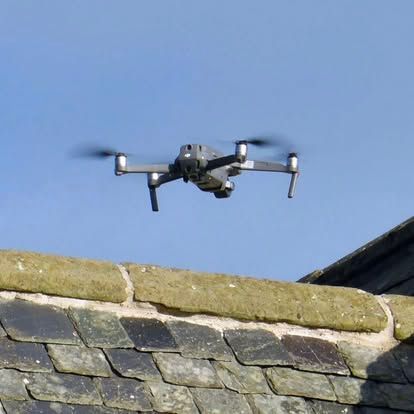
The one step you should always take before anything else is to photograph the damage. Take clear photos from ground level. Our free drone roof survey is perfect for this — it captures high-definition images of your entire roof from multiple angles, giving both you and your insurer a complete and accurate picture before any work begins.
How to Make a Roof Insurance Claim After a Storm — Step by Step
Follow these steps to give your claim the best possible chance of success.
Step 1 — Document the damage immediately Take clear photos and video from ground level as soon as it is safe to do so. Note the date and time. Do not go on the roof yourself.
Step 2 — Book a professional roof inspection Call us on 0115-647-3275 to arrange your free drone roof survey. We will produce a written inspection report detailing the damage, its likely cause, and a full repair estimate. This report forms the backbone of your claim.
Step 3 — Check your policy Locate your buildings insurance policy and check your excess, coverage for storm damage, and any time limits for reporting claims. Most UK insurers require you to report within a reasonable timeframe after the event.
Step 4 — Contact your insurer Report the damage to your insurer as soon as possible. Provide your inspection report, photos, and any supporting evidence such as Met Office weather data for your postcode and date.
Step 5 — Arrange a loss adjuster visit Your insurer may send a loss adjuster to inspect the damage in person. We recommend you ask us to be present during this visit. We can walk the adjuster through our findings, answer technical questions, and make sure nothing is missed.
Step 6 — Get the claim agreed in writing Do not begin repair work until your insurer has confirmed in writing what they will cover. Note the agreed scope of work and the payment terms, including your excess.
Step 7 — Proceed with repairs Once the claim is agreed, we carry out the repair or replacement work to the approved specification. We provide all necessary documentation, invoices, and completion evidence for your insurer's records.
Do I Have to Use My Insurer's Approved Contractors?
Not always — and this is worth checking before you accept any insurer-arranged repair.
Some UK insurers insist on using their own approved contractor panel. Others allow you to choose your own roofer, provided the quote and scope of work are approved first. Check your policy wording carefully. If it does not explicitly require you to use an insurer-appointed contractor, you may have the right to appoint your own.
There are real advantages to using your own local roofer.
- You know who is coming to your property
- You have a direct line of contact throughout the job
- A local roofer understands Nottingham's housing stock, typical tile types, and regional materials
- You can hold them accountable if something is not right after the work is done
At Trust Roofing Services, we work alongside insurers regularly. We provide detailed, itemised written quotes and a full remedial report. We attend loss adjuster visits and answer technical questions on your behalf. We have helped homeowners across Hucknall, Carlton, West Bridgford, and Beeston through exactly this process.
Call us on 0115-647-3275 or visit our roof repair page to find out how we can support your claim from start to finish.
Why Was My Roof Insurance Claim Rejected — And What Can I Do?
Claim rejections are more common than most homeowners expect. Here are the most frequent reasons and what you can do about each one.
Wear and tear — your insurer decides the damage was gradual, not storm-related. What to do: commission an independent inspection report and request a formal written explanation of the rejection. If your roof was recently inspected and in good condition, that maintenance record can support an appeal.
Pre-existing damage — the insurer argues the damage existed before the storm. What to do: provide any previous inspection reports or maintenance invoices that show the roof was in good condition prior to the event.
Insufficient evidence — your claim lacked photos, dates, or a professional report. What to do: gather all available evidence and ask for the claim to be reconsidered. A detailed drone survey report is one of the strongest pieces of supporting documentation you can submit.
Wind speed threshold not met — some policies require wind speeds to exceed a certain level. What to do: request Met Office weather records for your exact postcode on the date of the storm. These are publicly available and free to obtain.
Policy exclusions — the type of damage falls outside your specific policy. What to do: read the exclusion clauses carefully. If you believe the exclusion has been applied incorrectly, raise a formal complaint with your insurer.
If your insurer's final decision is still unsatisfactory, you have the right to escalate to the Financial Ombudsman Service (FOS) free of charge. This is an independent body that reviews disputed insurance decisions.
The Role of a Professional Roofer in Your Insurance Claim
Homeowners who work with an experienced roofer from the start consistently get better outcomes from insurance claims. Here is why.
We carry out the inspection before your insurer sends anyone. Our drone survey produces HD imagery of your full roof — every tile, every ridge line, every piece of flashing. You see exactly what we see. There is no room for the insurer to dispute what the damage looks like or where it is located.
We produce a professional written report with our findings, the likely cause of damage, and a detailed scope of repair. This is the document your insurer needs to process the claim quickly and fairly.
We attend the loss adjuster visit with you. Loss adjusters work on behalf of the insurer. Having your own roofer present means the technical detail is covered from your side. We make sure nothing is overlooked.
We carry out all repair work to the agreed specification and provide full completion documentation. Your insurer receives everything they need to settle the claim cleanly.
If you are dealing with roof damage anywhere in Nottingham or across the NG postcodes, call Trust Roofing Services on 0115-647-3275 or r today.
Will Making a Roof Claim Affect My Premium?
Yes — in most cases it will. Making any claim on your buildings insurance policy affects your no-claims history, which typically raises your renewal premium. The extent of the increase depends on your insurer, your claims history, and the size of the payout.
Before filing a claim, it is worth comparing the cost of the repair against your policy excess plus a realistic estimate of premium increases over the next two or three years. For minor roof repairs — a few slipped tiles or a small patch of pointing — paying out of pocket is often the more cost-effective option.
For significant damage — a section of roof requiring full re-tiling, storm-damaged ridge, or structural issues — the insurance route is almost always the right call. The cost of a major roof repair in Nottingham can run into thousands of pounds depending on the extent of damage and the materials involved.
If you are not sure whether to claim, call us first. We will carry out your free drone survey, give you an honest repair estimate, and let you make an informed decision before you notify your insurer. There is no cost, no pressure, and no obligation.
Does the Age of My Roof Affect a Claim?
Yes — roof age is one of the first things an insurer considers when assessing a claim. Older roofs are viewed as higher risk, and insurers may apply depreciation to reduce the payout on roofs beyond a certain age.
Many UK policies will not cover a roof over 15 to 20 years old for leak damage, classifying deterioration as wear and tear rather than insured damage. For storm damage, age may still be considered — if the insurer argues that a newer, well-maintained roof would have withstood the same conditions.
This does not mean older roofs cannot be covered. It does mean that maintenance records, inspection reports, and evidence of ongoing upkeep become even more important as your roof ages. If you own an older property — particularly the Victorian terraces in areas like Sherwood, Forest Fields, or The Meadows — keeping a maintenance record is practical and worth doing.
If you are unsure about the condition of your roof or its likely insurability, our free drone survey gives you an honest, documented picture of exactly where things stand. Call us on 0115-647-3275 to arrange yours.
Frequently Asked Questions About Roof Insurance Claims in Nottingham
Can Trust Roofing Services help me with my insurance claim?
Yes. We support homeowners across Nottingham and Nottinghamshire through the full claims process. We carry out a free drone roof survey, produce a professional written inspection report, and attend loss adjuster visits on your behalf. We have experience working alongside insurers and can help you present your claim clearly and accurately.
How quickly can you carry out an inspection after storm damage?
We aim to respond to storm damage enquiries across NG postcodes quickly, often on the same day or the following day depending on demand. If your property has active water ingress, call us on 0115-647-3275 and we will prioritise your inspection.
Do you provide written quotes for insurance purposes?
Yes. Every quote from Trust Roofing Services is provided in writing with a full itemised breakdown. This is exactly what your insurer needs to assess the scope of repair and approve the claim.
My insurer wants to send their own contractor. What are my options?
Check your policy wording first. Many policies allow you to appoint your own contractor as long as the quote is approved by the insurer. If you would like to use Trust Roofing Services, we are happy to liaise directly with your insurer and provide all documentation required.
What areas do you cover for insurance-related roof work?
We cover Nottingham city centre and all surrounding areas including Hucknall, Arnold, Beeston, Carlton, West Bridgford, Long Eaton, Mansfield, Newark-on-Trent, Kirkby in Ashfield, Sutton in Ashfield, and across all NG postcodes. Call us on 0115-647-3275 to confirm we cover your area.
Do you offer emergency call-outs for storm damage?
Yes. We offer fast-response emergency call-outs across Nottinghamshire for situations where your property needs to be made safe quickly. Temporary repairs carried out in an emergency are generally covered by your insurer — keep all receipts and notify your insurer as soon as possible after the work is done.
Need Help With a Roof Insurance Claim in Nottingham?
If your roof has been damaged and you are not sure where to start, we are here to help.
Trust Roofing Services is a family-run roofing company based in Hucknall, serving homeowners and businesses across Nottingham and Nottinghamshire. We carry out free drone roof surveys, produce professional inspection reports, and support our customers through the full insurance claims process — from first inspection to final sign-off.
Call us today on 0115-647-3275 or visit our roof repair page to find out more about our services.
Trust Roofing Services | Harrow Rd, Hucknall, Nottingham NG15 6JD | 0115-647-3275
Let’s talk about your roof insurance claim.
Fill out the form, or call us on
0115-647-3275 to arrange a free quote