Professional Moss & Algae Removal Nottingham
- Free Drone Survey
- Free Quote
- BBA-Approved Materials. 10-Year Guarantee.
Professional Moss & Algae Removal in Nottingham from Trust Roofing Services — the local roofing contractor Nottinghamshire homeowners trust. Safe soft-wash cleaning, biodegradable biocide treatment, free drone survey, and a full gutter clear included on every job.
In Nottingham, moss and algae grow fast. Clay and concrete roof tiles on our Victorian terraces, 1970s semis, and modern detached homes all face the same problem — a damp East Midlands climate that lets organic growth spread quickly and quietly.
This page covers moss and algae removal in Nottingham across roof tiles, patios, driveways, and all external hard surfaces. We also treat lichen, liverwort, and black algae streaking — common on Nottinghamshire properties and often confused with general dirt. We handle everything from a light algae film on a West Bridgford patio to years of heavy moss build-up on a north-facing roof in Hucknall.
Searching for "roof moss removal near me", "soft wash roof cleaning Nottingham", "algae removal Nottingham", or "roof cleaning Nottinghamshire"? You're in the right place.
Most jobs are booked within a few days of your free survey. Call us on 0115-647-3275 or request your free drone roof survey online — no obligation, no pressure.
We are trained roofers, not general cleaners. That means we assess the growth and the surface before we touch anything. You get a removal that lasts — not just a clean that washes off with the next shower.
What Moss and Algae Actually Do to Nottingham Roof Tiles Over Time
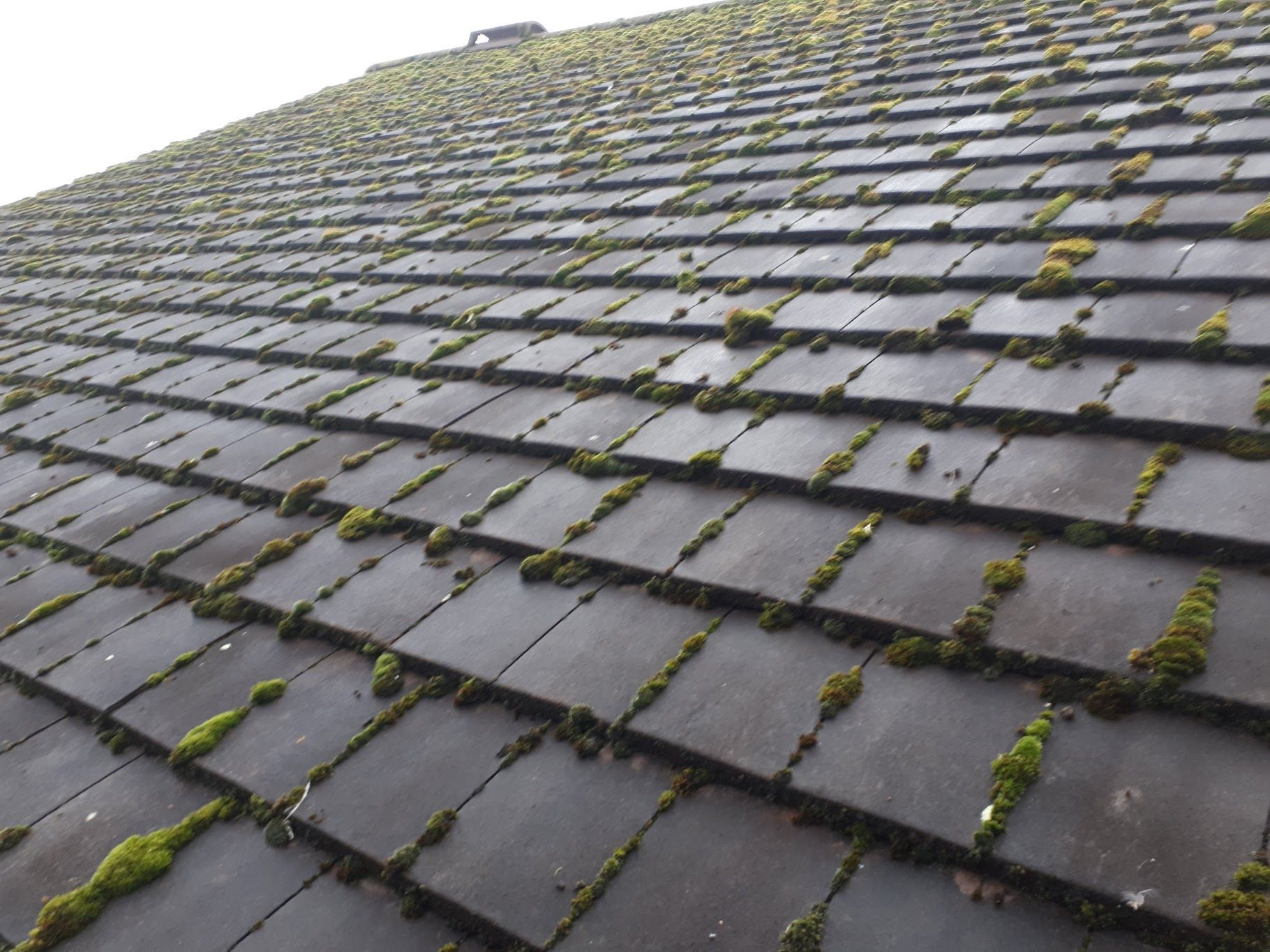
Most homeowners in Nottingham see the green patches and assume it's a cosmetic problem. It isn't — at least not for long.
Moss acts like a sponge. It pulls moisture into tile joints and holds it there long after the rain has stopped. When overnight temperatures drop below freezing — as they regularly do across Nottinghamshire from October through to March — that trapped water expands. It pushes tiles apart at the joints. It weakens pointing. Over time, it creates gaps that let water reach your timbers and insulation.
Older concrete tiles across Hyson Green, Radford, and St Ann's are particularly vulnerable. As concrete tiles age, their surface becomes more porous. Moss gets a stronger grip, retains more water, and causes faster surface erosion. Left for several years, the tile face begins to break down.
Algae causes different — and often overlooked — problems. A thin green or black film across your tiles changes how water runs off the roof. Instead of sheeting cleanly down to the gutters, water clings to the algae surface and finds its way into gaps. You may also notice dark vertical streaking running from ridge to eaves — this is black algae, one of the most common complaints from Nottingham homeowners, and it won't wash off with rain alone.
Both moss and algae block gutters. As the growth breaks free from tiles, it washes down into guttering runs and collects at downpipe joints. Blocked gutters overflow. That water runs down your external walls, soaks into brickwork, and — over time — works its way inside.
Signs you can spot from the ground:
- Green, yellow, or black patches on tiles — moss, algae, or lichen growth
- Dark vertical streaks running down tile faces — black algae
- Moss debris building up in gutters after rainfall
- Damp patches on ceilings or loft timbers after wet weather
- Uneven or patchy tile colouring where moss has lifted and fallen away
- Gutters overflowing during rain despite appearing intact
- A musty smell from your loft space after wet weather
In Nottingham's tree-lined areas — Sherwood, Mapperley, and Gedling — airborne spores are higher. Roofs near parks and river valleys in Burton Joyce and Calverton often show faster growth than city-centre properties. If your gutters are regularly clogged with green debris, your roof is telling you it needs attention now.
Left untreated, moss and algae growth can void your roof tile manufacturer's warranty, flag on a homebuyer's survey report, and accelerate the need for a full re-roof far sooner than necessary.
Why Nottingham Homeowners Choose Professional Moss Removal Over DIY
The appeal of doing it yourself is understandable. A pressure washer and a free afternoon feels like a practical solution. In practice, it creates more problems than it solves.
Pressure washing is the most common mistake we see. High-pressure water strips the protective surface from concrete tiles. Once that surface layer is gone, tiles become significantly more porous — and far more likely to grow moss and algae again, faster than before. We regularly inspect roofs that have been pressure washed by homeowners or cheap contractors and find tiles that are powdery, weakened, and in some cases cracked. High-pressure washing can also void your roof tile manufacturer's warranty — something most homeowners don't discover until it's too late.
Working at height without proper training and equipment is a serious safety risk. Roof tiles — especially those covered in damp moss — are extremely slippery. A domestic ladder against a fascia board is not a safe access solution for roof work.
DIY chemical treatments carry their own risks. Products sold in garden centres and supermarkets are not the same grade as professional biocides. They may kill visible surface growth without penetrating the tile to destroy root systems and spores. Moss returns quickly. Chemical runoff onto plants, lawns, and drainage is also a real concern with household products not designed for roof application.
We carry out a full tile inspection on every job. That is something a DIY clean will never give you. During a Trust Roofing Services moss removal job in Nottingham, we photograph and flag every cracked, slipped, or missing tile we find. As a full roofing contractor — not just a cleaning company — we can repair tiles on the same visit if needed. Catching a tile problem during a routine clean costs far less than discovering a leak months later.
Our free drone roof survey is something no homeowner with a domestic ladder can replicate. Before we begin, we survey your entire roof from multiple angles in high definition. You see what we see — every growth patch, every worn area, every potential problem. Then you decide how to proceed. No obligation.
How to Tell the Difference Between Moss, Algae, Lichen, and Liverwort
These four types of growth look similar from a distance but behave differently — and they respond to different treatments. Identifying what is on your roof or hard surface before treatment makes a real difference to the result.
Moss
Moss appears as soft, green cushions or dense mats. It grows in raised clumps, often between tiles and around ridge lines. On patios and driveways, it fills joints and spreads across textured surfaces. It has a spongy texture when pressed and can hold many times its own weight in water — making it particularly damaging during Nottinghamshire's freeze-thaw winters. It thrives in shade and moisture — making north-facing roofs in Beeston and West Bridgford particularly susceptible.
One important legal point for Nottingham homeowners: moss is classified as a protected species under UK legislation. You cannot legally apply a chemical moss killer directly to roof tiles. Professional physical removal followed by a biocide treatment for remaining spores is the correct and lawful approach.
Algae
Algae forms a thin film rather than a raised growth. On tiles, it appears as a green, yellow, or black stain — often with a streaky pattern running down from ridge to eaves. Black algae streaking is one of the most common search queries from Nottingham homeowners and is regularly mistaken for general dirt or mould. On patios and driveways, algae creates a slippery green coating — a real slip hazard, especially around steps and paths. Biocide treatments are effective against algae and are legal to apply.
Lichen
Lichen is the toughest of the four to shift. It forms flat, crusty patches — typically grey-green or pale yellow — bonded directly to the tile surface. Lichen roots penetrate tile pores and cannot be removed by scraping alone. It requires specialist biocide treatment and time. On older rooftops across Carlton and Arnold, heavy lichen coverage can be mistaken for natural tile colouring. It is not — and left in place, it traps moisture and stains tile surfaces permanently.
Liverwort
Liverwort is less common on roofs but appears frequently on patios, gravel drives, and planters. It forms flat, lobed mats — typically dark green with a slightly rubbery texture. It responds well to biocide treatment but regrows quickly on surfaces with standing water or poor drainage. If you have a north-facing patio or gravel drive in Nottingham that stays damp, liverwort is worth treating at the same time as any moss or algae work.
Getting the identification right before any treatment begins is part of what we do on every job. If you are unsure what you are looking at, send us a photo or book the free survey — we will tell you plainly what it is and what it needs.
Soft-Wash Roof Cleaning vs DIY Pressure Washing and General Cleaners
| What matters | DIY pressure washing | General cleaning company | Trust Roofing Services |
|---|---|---|---|
| Cleaning method | High-pressure jet wash | Often pressure-based, not tile-specific | Low-pressure soft-wash matched to tile type |
| Risk to tiles/warranty | Strips protective coating, can void manufacturer warranty | Varies — rarely assessed by tile type | BBA-approved approach designed not to strip coatings |
| Biocide treatment | Rarely used, or supermarket-grade product only | Sometimes offered as a paid extra | Professional-grade biocide included on every job |
| Tile inspection | None | Not usually included | Full inspection with photos on every visit |
| Gutter clearance | Not included | Often a separate charge | Full gutter and downpipe clear included as standard |
| Survey before quote | None — guesswork from the ground | Ground-level look, no drone | Free CAA-registered drone survey with HD footage |
| Insurance | None | Varies by company | Public liability and employer's liability insurance as standard |
| Can repair tiles same visit | No | No — cleaning only | Yes — full roofing contractor, same-visit repairs possible |
Our Safe Soft-Wash Moss & Algae Removal Process — No Pressure Washing, No Tile Damage
Soft-wash roof cleaning is the method recommended by leading UK roof tile manufacturers. It cleans effectively without the risk of tile damage, stripped coatings, or voided warranties — and it's the only method we use on the vast majority of Nottingham roofs.
Here is exactly what happens when you book moss and algae removal with Trust Roofing Services in Nottingham.
- Step 1 — Free drone roof survey
Before we quote or book a date, we survey your roof using professional UAV drone technology operated by our CAA-registered surveyor. You receive high-definition footage of the full roof surface, clear identification of all growth and any tile damage, and a written condition report. No ladder required. No obligation to proceed. - Step 2 — Safe access setup
We position ladders, tower scaffolds, or working platforms before any work begins. We do not walk across your tiles unnecessarily. All work is carried out from safe, stable access — protecting both your roof surface and our team. - Step 3 — Hand scrape and soft brush
Loose moss is removed carefully by hand using specialist contoured scrapers shaped to your tile profile. We work from ridge to eaves. This stage removes the visible bulk of growth without disturbing pointing or lifting tiles. All debris is collected — none is left to wash into your garden or block your gutters. - Step 4 — Soft wash matched to your tile type
Most Nottingham roofs — including concrete interlocking tiles, clay plain tiles, and natural slate — are cleaned using our soft-wash method. Low-pressure water combined with a biodegradable cleaning solution removes embedded algae and surface staining without stripping tile coatings or forcing water under the laps. We adapt the method to your specific tile type: clay, concrete, slate, or fibre cement — each is treated differently. - Step 5 — Professional biocide treatment
A professional-grade biocide is applied across the full roof surface after cleaning. This product is not available in supermarkets or DIY stores. It penetrates tile pores and kills remaining spore systems and root structures left after physical removal. This is the step that prevents rapid regrowth — most treated roofs in Nottingham stay clean for three to five years. The treatment is biodegradable and safe for plants, garden drainage, and wildlife. - Step 6 — Tile inspection
Every visible tile is checked. Cracked, slipped, or missing tiles are photographed and reported to you — with an honest repair quote if needed. There is no obligation to proceed. We are a full roofing contractor, so if you do want tiles repaired while we are on site, we can do it in the same visit. Ridge tiles, hip tiles, valley flashings, and pointing are all checked — not just the main tile field. - Step 7 — Gutter and downpipe clear (included as standard)
A full gutter clear is included on every roof cleaning job — not offered as an extra. All guttering runs are cleared of moss debris, leaves, and silt. Downpipes are flushed and checked for blockages. Water flow is tested where accessible. Fascias and soffits are checked for signs of overflow staining or rot. - Step 8 — Full site tidy
We remove all green debris from drives, paths, and garden areas before we leave. Your property will be cleaner than when we arrived — not covered in moss cuttings.
This process applies to all NG postcodes we cover — from city-centre properties in NG1 and NG7 to suburban homes across NG4, NG5, NG9, and out to Mansfield, Newark, and Kirkby in Ashfield.
The Right Time of Year to Treat Moss and Algae in Nottinghamshire
Timing matters. The treatment works better at certain points in the year — and booking at the right time gives you longer-lasting results.
Spring — April and May — is our most popular booking window. Growth is actively developing after the winter months, conditions are dry enough to work safely, and temperatures are consistently above 5°C. Biocide treatments activate properly in mild, dry conditions. Getting the roof treated in spring means it goes into summer clean, with the biocide working through the growing season to suppress regrowth.
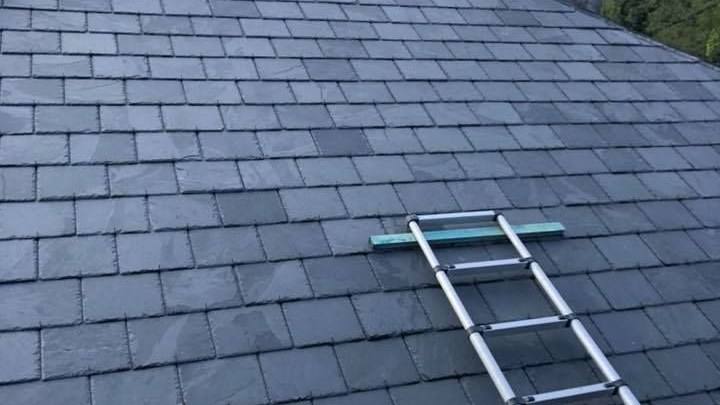
Early autumn — September and October — is the second best window. Treating before winter removes the organic material that traps moisture during Nottinghamshire's coldest months. A clean, biocide-treated roof enters winter with far less risk of freeze-thaw tile damage.
What to avoid: Treatment applied during frost, or at surface temperatures below 5°C, does not work effectively. Biocide products need mild temperatures to activate. January and February bookings are best avoided unless the job is urgent — and even then, we will advise accordingly.
One practical note for Carlton and Arnold homeowners: if your roof slopes north or is shaded by mature trees, spring treatment is particularly worthwhile. North-facing tiles in these areas stay wet longer into spring and show new moss growth earlier than south-facing slopes.
For most Nottingham properties, a treatment every three to five years is sufficient. Homes near Nottingham's parks, river valleys, and woodland corridors — such as those in Gedling, Burton Joyce, and Calverton — benefit from checking every two to three years.
How to Stop Moss and Algae Coming Back After Removal
Removal solves the immediate problem. Prevention reduces how often you need to repeat it.
Biocide treatment is the single most important step. Without it, moss and algae spores remain embedded in tile pores and regrow within one to two seasons. With a professional-grade biocide applied after cleaning, most Nottingham roofs stay clean for three to five years.
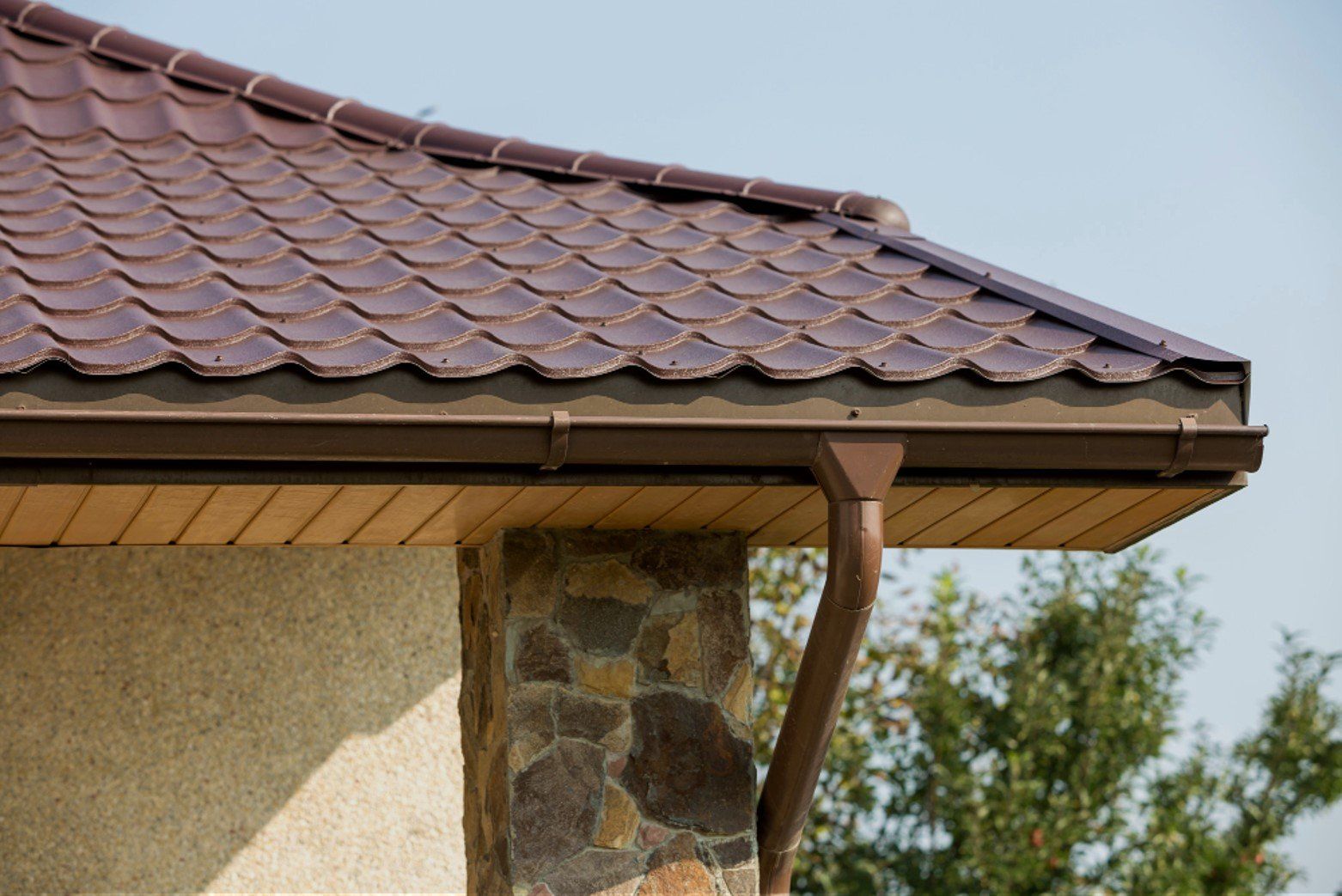
Zinc or copper strips fitted near the ridge provide ongoing passive protection. When rain falls on the metal strip, it carries trace metal ions down the roof surface. These ions prevent moss and algae from establishing on the tiles below. They work best on steeper-pitched roofs where water runs freely. If you live in a tree-lined street in Wollaton or Mapperley, this is worth discussing when we survey your property.
Trim overhanging branches. Overhanging trees drop organic debris onto your roof, deposit sap and pollutants onto tile surfaces, and keep your roof shaded and damp long after rain has stopped. Shade is the primary reason moss grows where it grows.
Keep your gutters clear. Blocked gutters back water up onto the lowest tile courses. That pooled water creates damp conditions where moss and algae establish fastest. We offer standalone gutter cleaning across Nottingham and Nottinghamshire if you want to maintain them between full roof cleans.
Annual visual checks matter. You do not need to book a clean every year — but checking your roof and gutters visually each spring takes minutes and can catch early regrowth. Our free drone survey is available to all customers at any time.
Does Moss & Algae Removal Add Value to Your Nottingham Property?
Yes — and it can protect the value you already have.
A moss-covered roof is one of the first things a potential buyer, estate agent, or surveyor notices. Black streaks, green patches, and grimy tiles signal neglect — even when the rest of the property is immaculate.
A professionally cleaned roof can:
- Remove a common reason buyers negotiate down on price
- Reduce the risk of a RICS surveyor flagging roof condition as a maintenance defect
- Improve kerb appeal before sale, letting, or remortgage
- Signal to buyers that the property has been actively maintained
- Help satisfy home insurance requirements for routine property upkeep
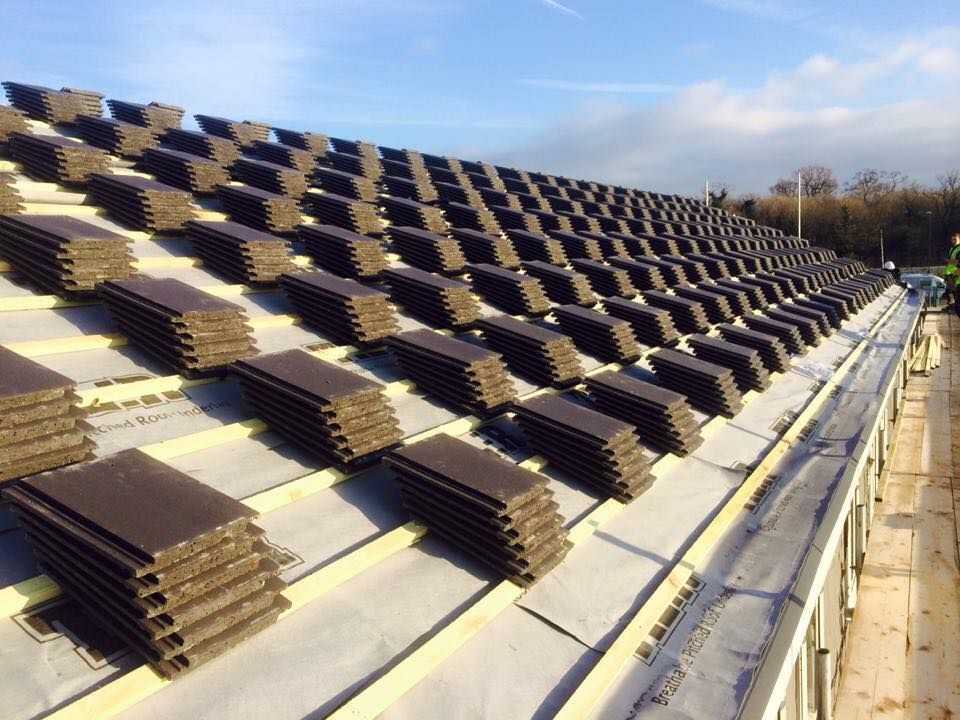
In competitive Nottingham neighbourhoods like West Bridgford, Arnold, and Mapperley, where buyers compare properties closely, kerb appeal at the point of listing matters. A clean roof is one of the most visible improvements you can make to the outside of your home.
Maintenance is always less expensive than emergency repair. Regular cleaning extends tile life, reduces the likelihood of leaks, and delays the cost of a full re-roof.
What's Included in a Moss & Algae Removal Visit — And What Costs Extra
What's Included
- A free CAA-registered drone roof survey with HD footage and a written condition report before any work is recommended
- Hand scraping of loose moss using contoured scrapers matched to your tile profile, working ridge to eaves
- A low-pressure soft-wash clean matched to your tile type — concrete interlocking, clay plain, natural slate or fibre cement
- A professional-grade biocide treatment to kill remaining spores and root systems after cleaning
- A full tile inspection with photos of any cracked, slipped or missing tiles found during the visit
- A full gutter and downpipe clear, with water flow tested where accessible
- A check of fascias and soffits for overflow staining or rot
- Full removal of moss and algae debris from drives, paths and garden areas before we leave
- Soft-wash treatment of patios, driveways, paths, decking and garden walls where requested
- Low-pressure biocide treatment of asbestos cement outbuilding roofs, where it's safe to do so
Not Included / Costed Separately
- Tile, ridge, hip or valley flashing repairs — these are photographed and quoted separately, though we can often carry them out on the same visit as a full roofing contractor
- Zinc or copper anti-moss strip installation — an optional passive-protection add-on discussed at survey stage, not part of a standard clean
- Chemical moss killer applied directly to roof tiles — not legally permitted under UK protected-species rules, so it is never offered as an option
- Work carried out during frost or when surface temperatures sit below 5°C — biocide will not activate properly, so this is avoided or rescheduled
- Full re-roofing or structural timber repair — a separate service, though the same team can survey and quote for it
- Standalone gutter cleaning outside of a moss or algae job — available, but priced as its own visit rather than bundled in
What Drives the Price of Moss & Algae Removal in Nottingham
There's no single fixed price for moss and algae removal because no two roofs present the same job. The main factors that move the cost are the size and pitch of your roof, the tile type (clay, concrete, slate or fibre cement each take a different approach), how heavy the growth is — a light algae film clears faster than years of built-up moss — and how easily we can access the roof safely. Adding patios, driveways or other hard surfaces to the same visit, or finding tile damage that needs repair alongside the clean, will also change the figure. A small bungalow in Hucknall with a light algae film costs less to treat than a large detached roof in West Bridgford with heavy moss coverage and restricted access. Because of that, we don't give estimates over the phone. Every quote starts with the free, no-obligation drone roof survey, which gives us an accurate picture of the roof before we put a figure to it. What you get back is a written, itemised quote — not a verbal ballpark — so you know exactly what's covered and there's nothing added on afterwards. A full, accurate price for your specific roof always needs that site visit first.
Why Choose Trust Roofing Services for Moss & Algae Removal in Nottingham?
We are a family-run roofing company based in Hucknall, NG15, with over 15 years of hands-on experience across Nottinghamshire. We are not a national cleaning franchise — we are local roofers who understand Nottingham's housing stock, tile types, and climate.
Here is what sets us apart:
- Free drone roof survey — no charge, no obligation, full HD condition report
- Fully insured — public liability and employer's liability insurance as standard
- Gutter clean included — not charged as an extra
- No high-pressure washing on unsuitable tiles — we inspect first, always
- Tile inspection included — cracked or missing tiles flagged at no extra cost
- Eco-friendly, biodegradable products — safe for plants, pets, and drainage
- Family-run local team — no subcontractors; the same experienced crew on every job
- Transparent pricing — no hidden costs, no surprise fees on completion
- BBA-approved materials — on all roofing work
- 10-year workmanship guarantee — on all roofing repairs carried out on the same visit
- Full roofing contractor — if we find tile damage, we can fix it the same day
📞 Call Trust Roofing Services on 0115-647-3275 to book your free roof survey.
Areas We Cover for Moss & Algae Removal in Nottingham
Trust Roofing Services carries out moss and algae work across Nottingham city and the wider Nottinghamshire region.
We cover all NG postcodes and several bordering areas.
Nottingham City & Inner Suburbs
Nottingham City Centre — NG1, The Meadows & Lenton — NG2, Radford & Forest Fields — NG7, Sherwood & Mapperley — NG3 / NG5, Bulwell & Bestwood — NG5 / NG6, Hucknall (our base) — NG15, Arnold — NG5, Carlton & Gedling — NG4, West Bridgford & Edwalton — NG2 / NG12, Beeston & Chilwell — NG9, Wollaton & Bilborough — NG8, Basford & Hyson Green — NG6 / NG7.
Greater Nottinghamshire
Kirkby in Ashfield — NG17, Sutton in Ashfield — NG17, Mansfield — NG18 / NG19, Newark on Trent — NG24, Eastwood & Kimberley — NG16, Stapleford & Trowell — NG9 / NG10.
Not sure if we cover your area? Call us on 0115-647-3275 and we will confirm straight away.
Frequently Asked Questions — Moss & Algae Removal Nottingham
Can you remove moss from my roof without walking on the tiles?
Yes — in most cases, all roof cleaning work is carried out from ladders, towers, or working platforms. Our contoured scrapers attach to extension poles, allowing us to reach ridge areas safely from stable access positions. The free drone survey also means we assess the full roof condition before anyone approaches the surface.
Is it illegal to use moss killer on roof tiles in the UK?
Yes — under current UK legislation, moss is classified as a protected species. Applying a chemical product specifically designed to kill moss on roof tiles is not lawful. The correct approach is physical removal by hand scraping, followed by a professional biocide treatment that targets remaining spores and suppresses regrowth. This is the process we follow on every job.
Will moss and algae removal show on a homebuyer's survey?
Moss itself is not a structural failure, but surveyors routinely flag visible moss growth as a maintenance issue on RICS home buyer reports across Nottingham. A professional clean and written condition report from Trust Roofing Services gives you and any buyer or surveyor clear evidence of the roof's current state — useful whether you are selling, buying, or remortgaging.
How much does moss and algae removal cost in Nottingham?
Every job is different. The cost depends on the size of your roof, tile type, the level of growth, and access. A bungalow costs less than a large four-bedroom detached. We never give blind quotes. We offer a free drone roof survey and no-obligation written quote before any work begins — so you know exactly what you're paying for with no surprises.
How long will my roof stay clean after treatment?
Most professionally cleaned and biocide-treated roofs in Nottingham stay clean for three to five years. Roofs near trees, on north-facing slopes, or in areas like Gedling, Sherwood, and Burton Joyce may need attention every two to three years due to faster moss regrowth.
Is soft washing safe for all roof tile types?
Soft washing is safe and recommended for the majority of UK roof tile types — including concrete, clay, slate, and fibre cement. It uses low-pressure water combined with biodegradable cleaning solutions, so there is no risk of tile surface damage or stripped coatings. We always assess your specific tile type before recommending any method. If your tiles are unsuitable for soft washing, we will tell you plainly.
How long will my patio or driveway stay clean after algae treatment?
Most treated hard surfaces stay clean for 12 to 18 months. Shaded patios in north-facing gardens may need retreatment sooner. A follow-up biocide application extends the clean significantly. We will advise you based on your specific surface and conditions.
Can moss and algae damage my roof permanently?
Yes, over time. Moss retains moisture against tile surfaces, causing freeze-thaw cracking in colder months. Algae changes how water runs off, increasing the risk of water ingress. Lichen bonds directly to tile surfaces and stains them permanently if left long enough. All three accelerate tile erosion and can lead to costly structural repairs if ignored for several years.
My outbuilding has an asbestos cement roof — can you treat it safely?
Yes. We use low-pressure soft-wash application on asbestos cement surfaces. We do not pressure wash or physically abrade the surface. Our biodegradable biocide is applied gently and left to work. If you are unsure about the surface type on any of your outbuildings, we will assess it during the free survey before recommending any treatment.
Do you remove algae from patios and driveways as well as roofs?
We treat all external hard surfaces across Nottingham — including patios, driveways, paths, decking, and garden walls. The method varies by surface type, but the process is the same: assess first, choose the right treatment, apply professionally, leave it clean and safe. If you have both a mossy roof and a slippery patio, we can often treat both in a single visit.
Ready to Book Moss & Algae Removal in Nottingham?
Your roof is working hard every single day — and moss, algae, and lichen are working against it. Every season without treatment means deeper root penetration, more porous tiles, and greater risk of water getting in where it shouldn’t.
The good news is that this is a straightforward job when it’s done right, by the right team. Trust Roofing Services has been protecting Nottingham rooftops for over 15 years. We are local, we are fully insured, and we will give you an honest assessment — not a sales pitch.
Here’s what happens next:
- Call us on 0115-647-3275 or fill in our contact form
- We book your free drone roof survey — no charge, no commitment
- We provide a clear, written quote — no hidden costs, no pressure
- We carry out the work at a time that suits you — leaving your property clean and treated
Whether you’ve spotted green tiles, slippery paving, blocked gutters, or a survey has flagged moss as a concern — we’re ready to help. Don’t put it off until the damage is done.
Get in Touch
Trust Roofing Services
📍 Based in Hucknall, NG15 — serving all of Nottingham and Nottinghamshire
📞 Call Trust Roofing Services today: 0115-647-3275
office@roofersnottinghamgrp.co.uk
Free drone survey. No-obligation quote. Fully insured. Family-run local roofing contractor.
🏠 Trust Roofing Services
Moss & Algae Removal · Contact Us Now
- Free Drone Survey
- Free Quote
- BBA-Approved Materials. 10-Year Guarantee.
Let’s talk about your moss & algae removal project
Fill out the form, or call us to discuss your requirements
Call: 0115-647-3275