
Trust Roofing Services
Professional Pitched Roofs
FREE Drone Survey
Free Quote
BBA-Approved Materials. 10-Year Guarantee.
Call: 0115-647-3275
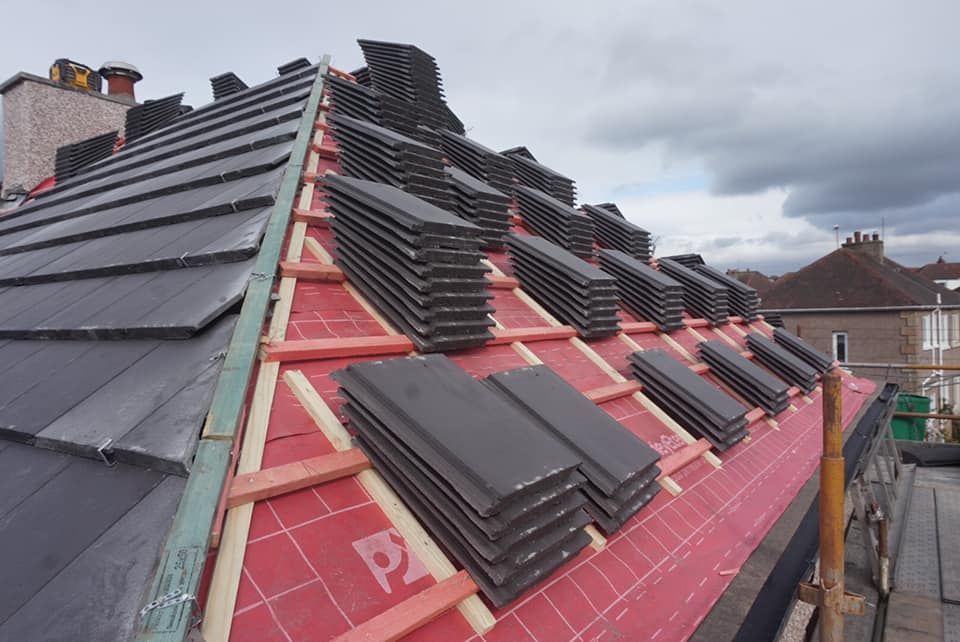
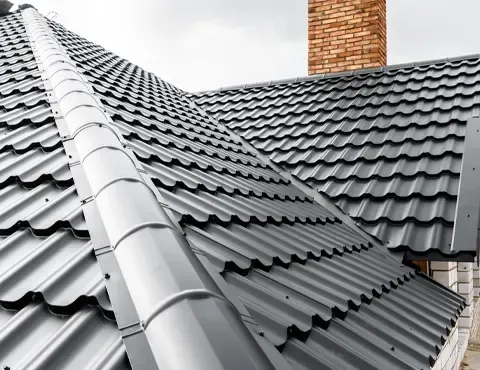
Pitched Roof Construction Nottingham — Built Right, Built to Last
At Trust Roofing Services, we specialise in pitched roof construction across Nottingham and Nottinghamshire. We are a family-run roofing contractor based in Hucknall, and we have been building, replacing and repairing pitched roofs on homes and commercial properties across the region for over 15 years. Whether you need a brand-new roof on an extension, a full re-roof on a period terrace, or a flat-to-pitched conversion on a garage, our team handles every stage from the first timber to the final tile.
Call us today on 0115-647-3275 for your FREE, no-obligation drone roof survey and quote.
What Is Pitched Roof Construction?
A pitched roof is a sloped roof structure where two or more angled surfaces meet at a central ridge. It is the most common roof type on homes across Nottingham, and for good reason. The slope sheds rainwater quickly and efficiently — something that matters a great deal in Nottinghamshire, where wet and windy conditions throughout autumn and winter put roofs under real pressure year after year.
A correctly designed and installed pitched roof does far more than keep out the rain. It:
- Protects the structural integrity of your home for decades
- Improves thermal performance and lowers heating bills
- Creates usable loft space for storage or future conversion
- Adds long-term value and kerb appeal to your property
- Outperforms a flat roof in longevity and weather resistance
If your current roof is ageing, failing, or simply no longer fit for purpose, a new pitched roof is one of the best investments you can make in your property.
Pitched Roof Services We Offer in Nottingham
We cover the full range of pitched roof construction work across Nottingham and Nottinghamshire, including:
- New pitched roof construction on new builds and extensions
- Full re-roofing — complete strip and replacement to current standards
- Flat-to-pitched roof conversions on garages, extensions, and bungalows
- Pitched roof repairs — from individual tiles to structural timber work
- Loft conversion roof work — attic trusses and cut roof builds
- Velux and rooflight installation within pitched roof structures
- Dry ridge and dry verge system installation
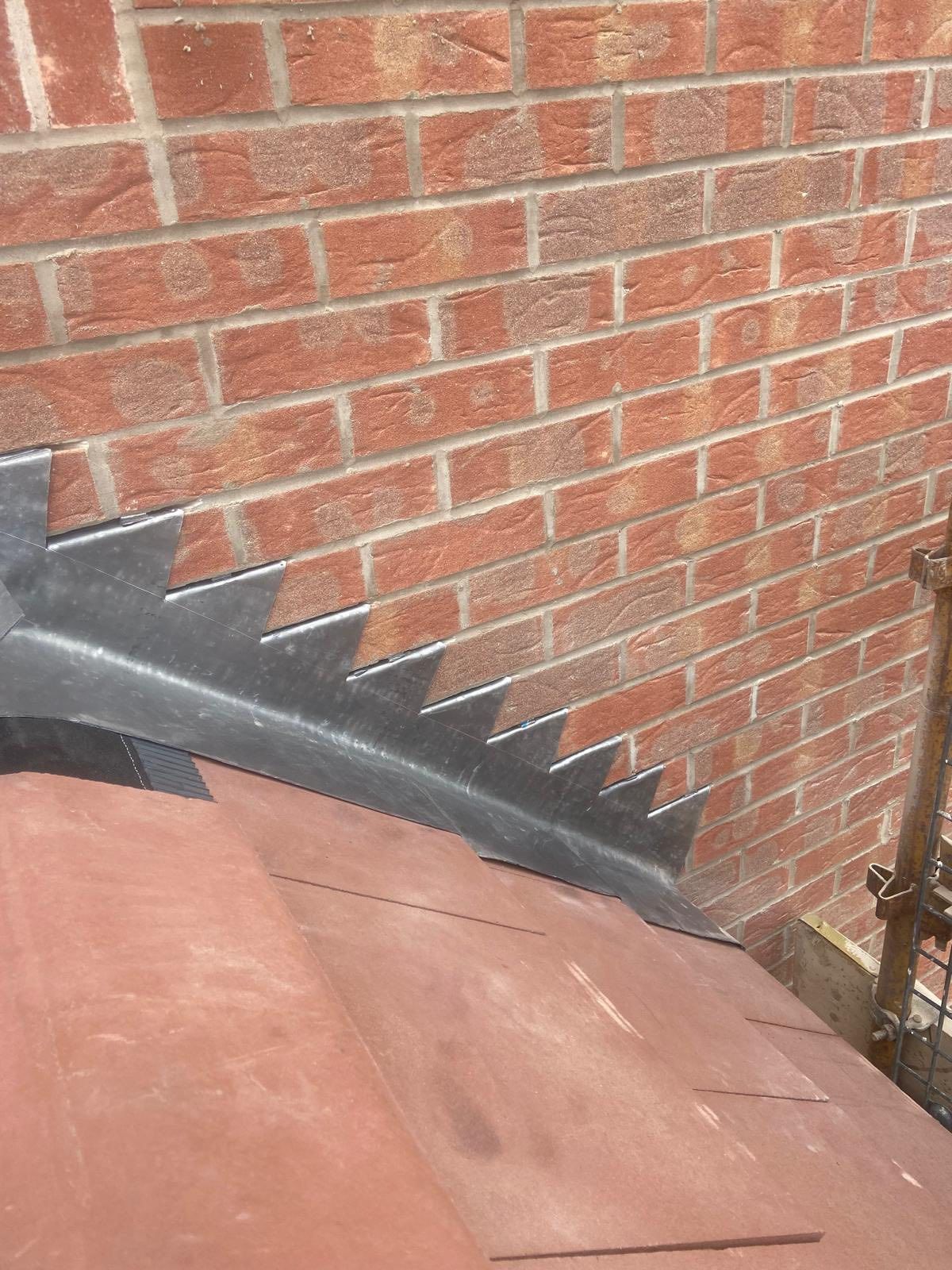
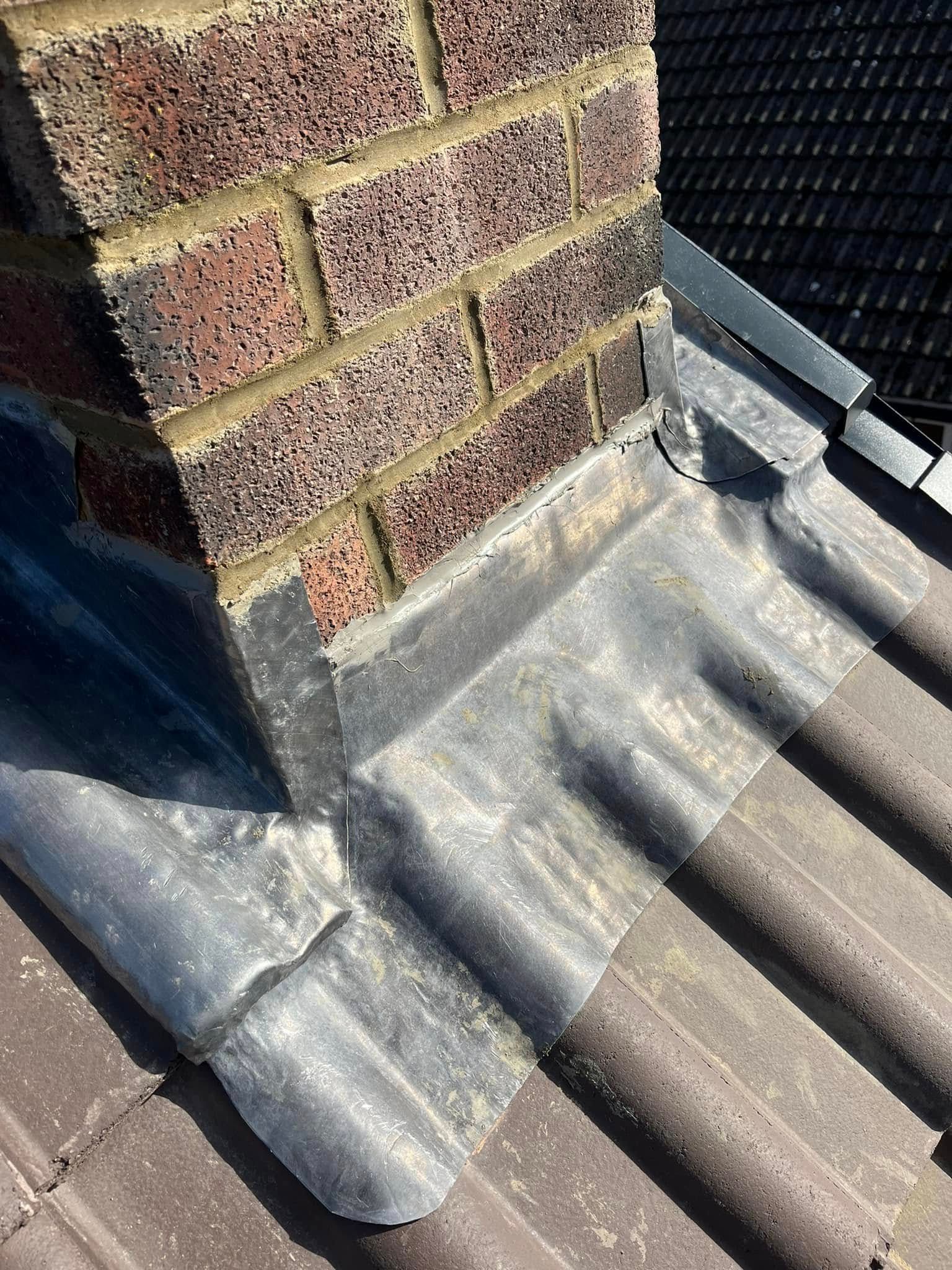
- Lead flashing at chimneys, valleys, and roof abutments
- Fascias, soffits, and guttering as part of a complete roofline package
Types of Pitched Roof — Which One Suits Your Nottingham Property?
Not every roof style works on every home. The right choice depends on your property's shape, the character of your street, planning requirements, and whether you plan to use the roof space.
Gable Roof
Two equal slopes meet at a central ridge, with a flat triangular gable wall at each end. This is the standard design on most Nottingham semis and detached homes — from Arnold to West Bridgford. It is straightforward to build, drains well, and is easy to insulate. Planning departments in Nottingham City and the surrounding boroughs generally accept like-for-like gable replacements readily.
Hip Roof
Four slopes meet at the ridge, with no vertical gable ends. Hip roofs are common on older detached properties across Mapperley, Gedling, and West Bridgford. They handle wind uplift well and are a solid choice for more exposed positions across Nottinghamshire. Hip roofs also tend to look more traditional, which can help with planning on older streetscapes.
Mono-Pitch (Lean-To) Roof
A single slope running from one wall to another. This is the standard design for single-storey rear extensions, garages, and outbuildings across Nottingham. It keeps costs down on smaller projects and is widely used across estates in Hucknall, Bulwell, and Bestwood.
Mansard Roof
Steep lower slopes and a shallower upper section. You find this on larger Victorian and Edwardian properties in areas like Sherwood, The Meadows, and The Park Estate. A mansard roof maximises internal headroom and is the right choice if loft conversion is on the agenda. More complex to build, but the extra usable space often justifies the investment.
Not sure which roof type is right for your home? We will give you a straightforward recommendation at the free survey — no jargon, no pressure.
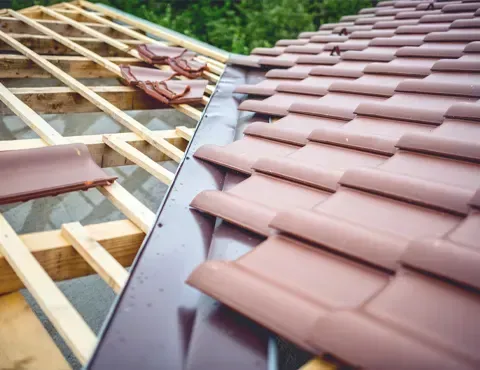
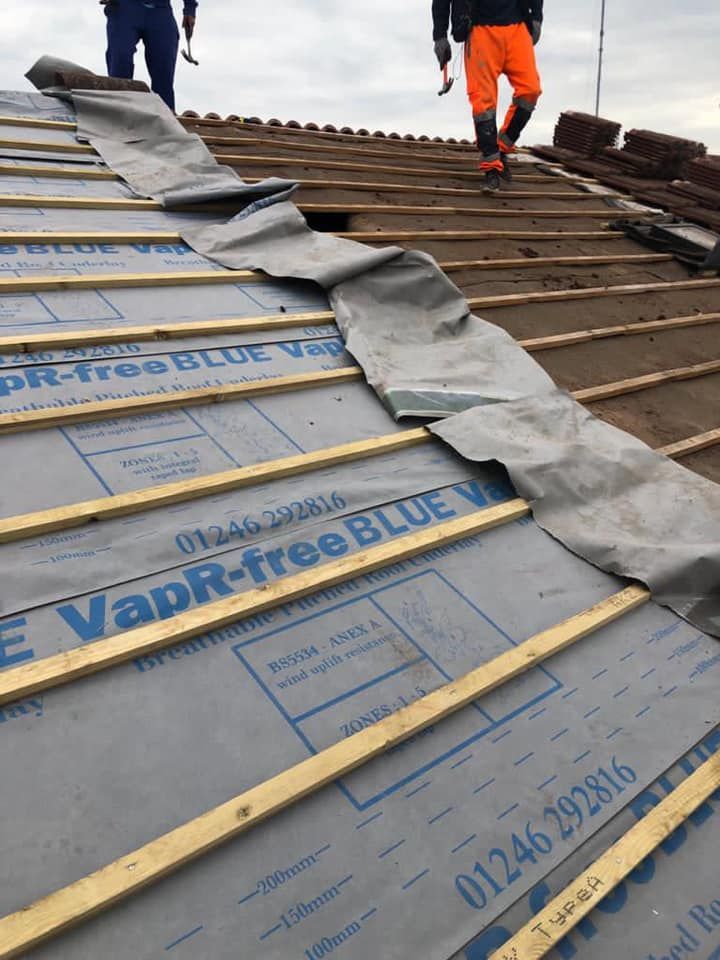
Browse our website for a full suite of roofing services: https://www.roofersnottinghamgrp.co.uk
Cut Roof vs Trussed Roof — What Is the Difference?
This is one of the most common questions we are asked, and the answer directly affects the future flexibility of your home.
Site-Cut Roof (Traditional Cut Roof)
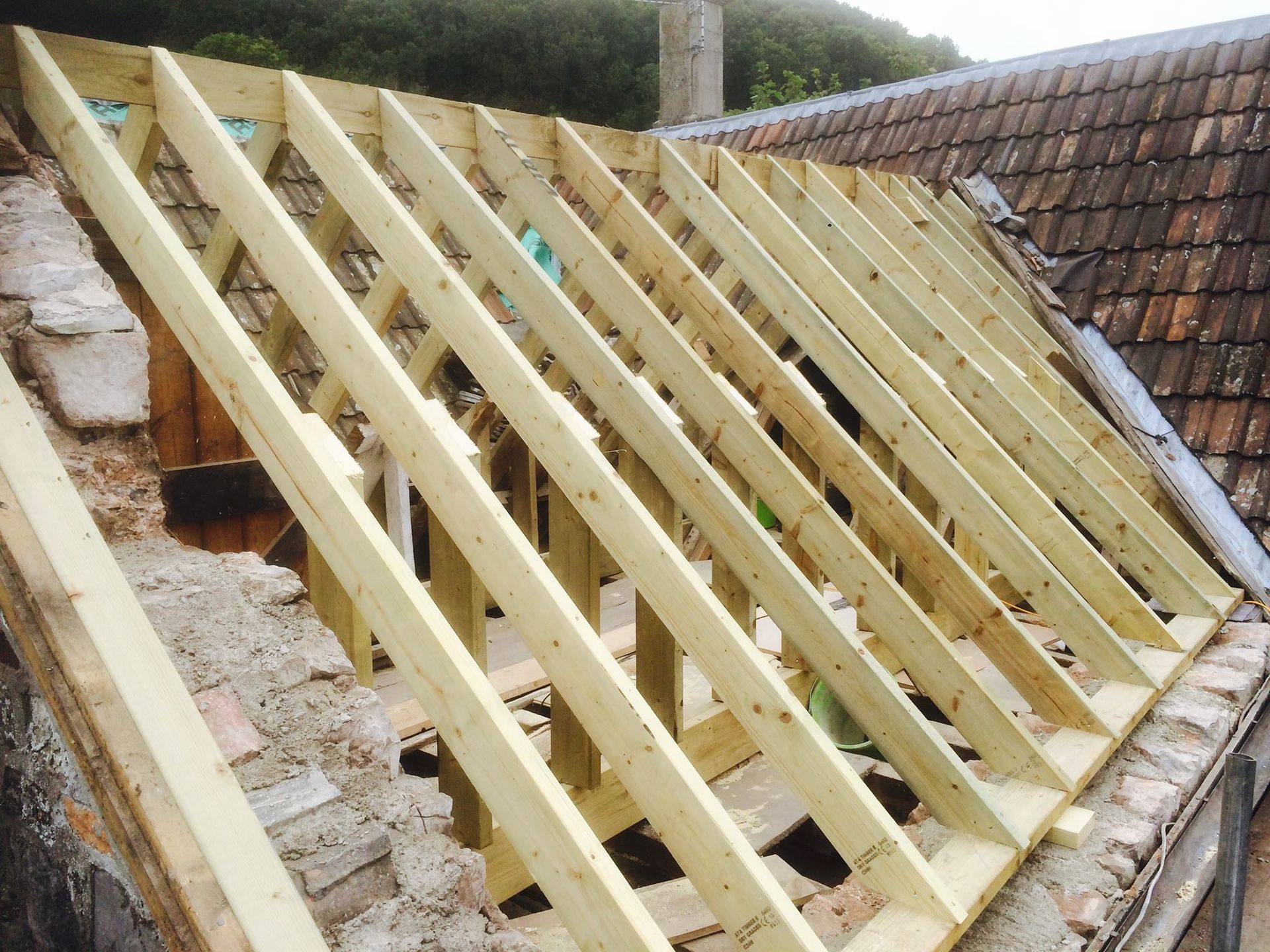
Rafters, ridge board, purlins, and ceiling joists are measured, cut, and assembled on site by our carpenters. Every component is tailored to the exact dimensions of your property.
A cut roof is the right choice when:
- Your roof has an irregular shape, multiple angles, or projections like dormers or chimneys
- You want to convert the loft space now or at any point in the future
- You are repairing or extending an older Nottingham property that already has a cut roof
- Matching an existing roof profile is required for planning approval
- You want a bespoke finish on a custom or period property
Trussed Roof
Pre-fabricated timber trusses are manufactured to specification off-site and craned or lifted into position on the day of installation. They go up faster and typically cost less on straightforward rectangular spans.
A trussed roof suits:
- New builds and extensions with a simple rectangular footprint
- Projects where programme speed is important
- Properties where loft conversion is not planned
One critical point: standard Fink trusses fill the loft space with a web of timber members. If there is any chance you will want to convert your loft in the future, tell us before we specify the roof. We can design attic trusses or a site-cut roof from the outset — saving you significant cost and disruption later.
Roofing Materials — Tiles, Slates, and Coverings for Nottingham Homes
The pitch of your roof determines which materials are suitable. Using the wrong tile on the wrong angle causes leaks. We always match the material to the pitch — and we factor in Nottinghamshire's exposure conditions when making our recommendation.
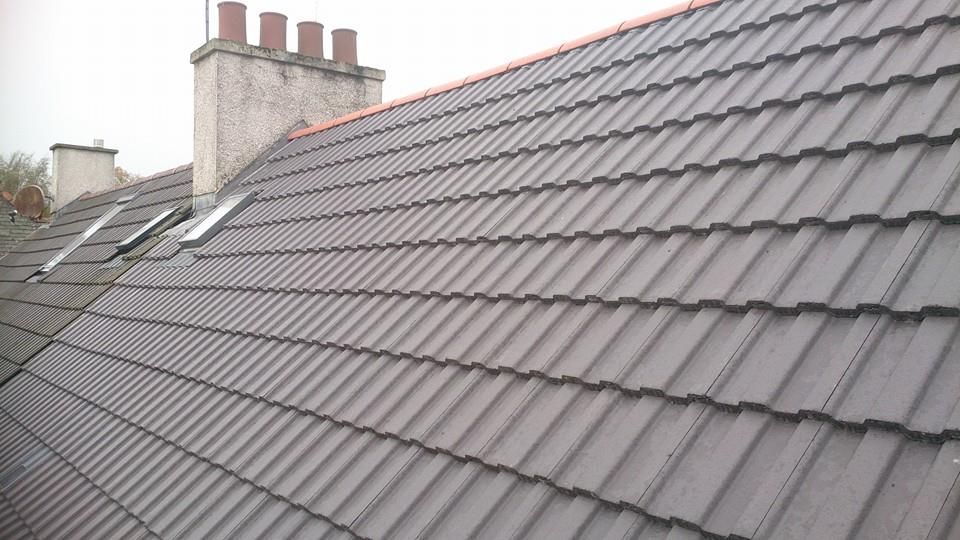
Concrete Interlocking Tiles
The most widely used tile on mid-20th century Nottingham housing estates. Cost-effective, durable, and available in a wide range of profiles and colours. Minimum pitch: 15°–17.5° depending on manufacturer. Excellent for re-roofing post-war semis in areas like Clifton, Bestwood, and Bulwell where matching the original profile matters.
Clay Roof Tiles
Traditional, long-lasting, and the correct choice for Victorian and Edwardian properties where planning departments often require materials that reflect the original character of the building. Minimum pitch: 35°. Common on older terraced properties in Arnold, Carlton, Hyson Green, and Radford.
Natural Slate
Welsh and Spanish slate offer a premium look and a very long lifespan. Often specified on larger detached homes, heritage projects, and properties in Nottingham's conservation areas including The Park Estate. Minimum pitch: 20°–25° with correct lap for Nottinghamshire's exposure rating.
Fibre Cement Slate
An affordable alternative to natural slate that performs well in the Midlands climate. Minimum pitch: 15°–20° depending on grade. Popular on loft conversion projects and extensions where a slate finish is desired without the cost of natural material.
Artificial / Reconstituted Slate
Lightweight, low-maintenance, and increasingly popular on modern extensions across Nottingham. Check manufacturer specification for minimum pitch — typically 15°–20°.
We also install:
- Breathable sarking membranes as standard on all pitched roofs
- Dry-fix ridge systems — removing the mortar-bedded ridge detail that fails first on most Nottinghamshire roofs
- Dry verge systems — mechanically fixed verge caps that eliminate open mortar joints at roof edges
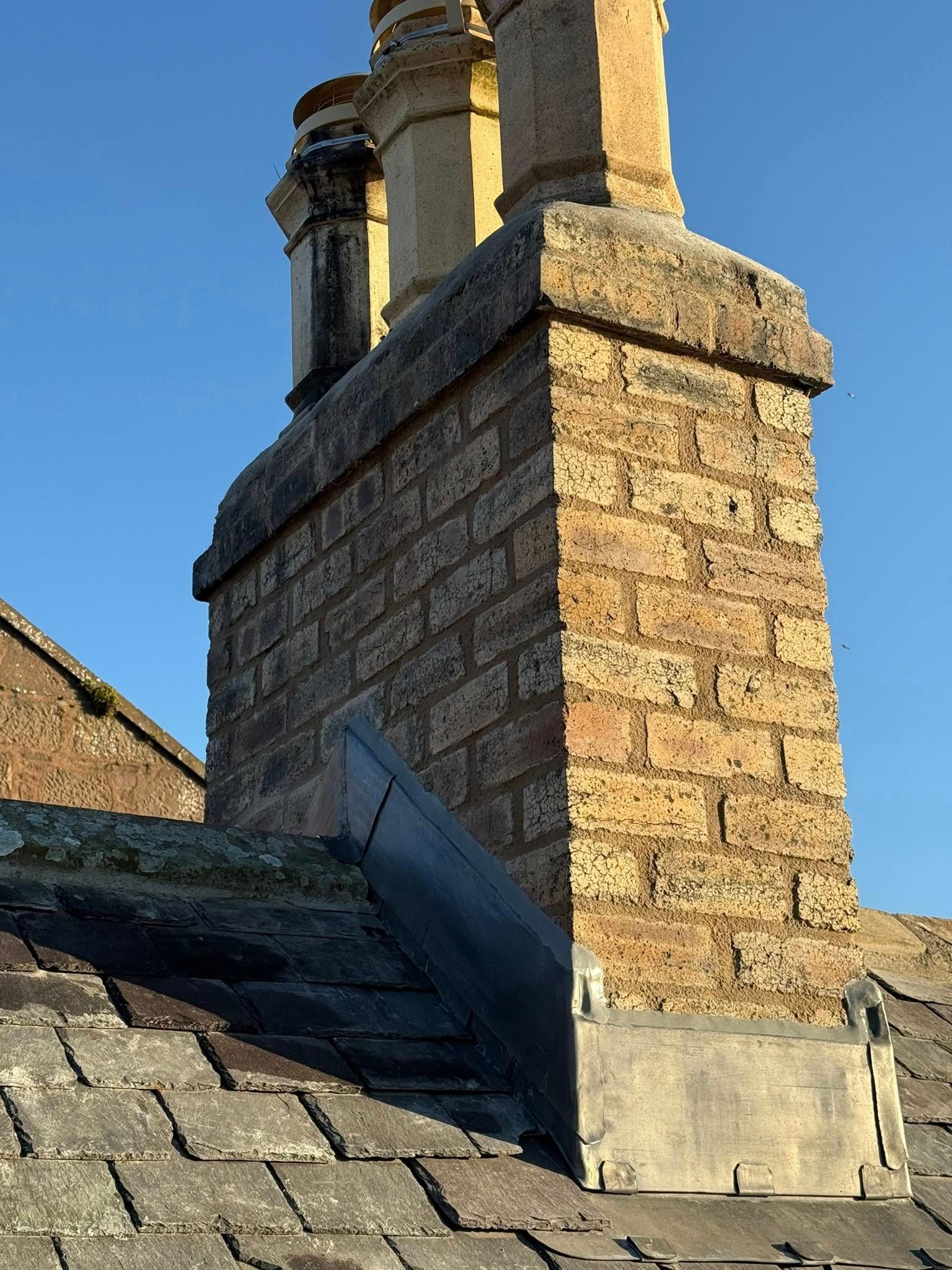
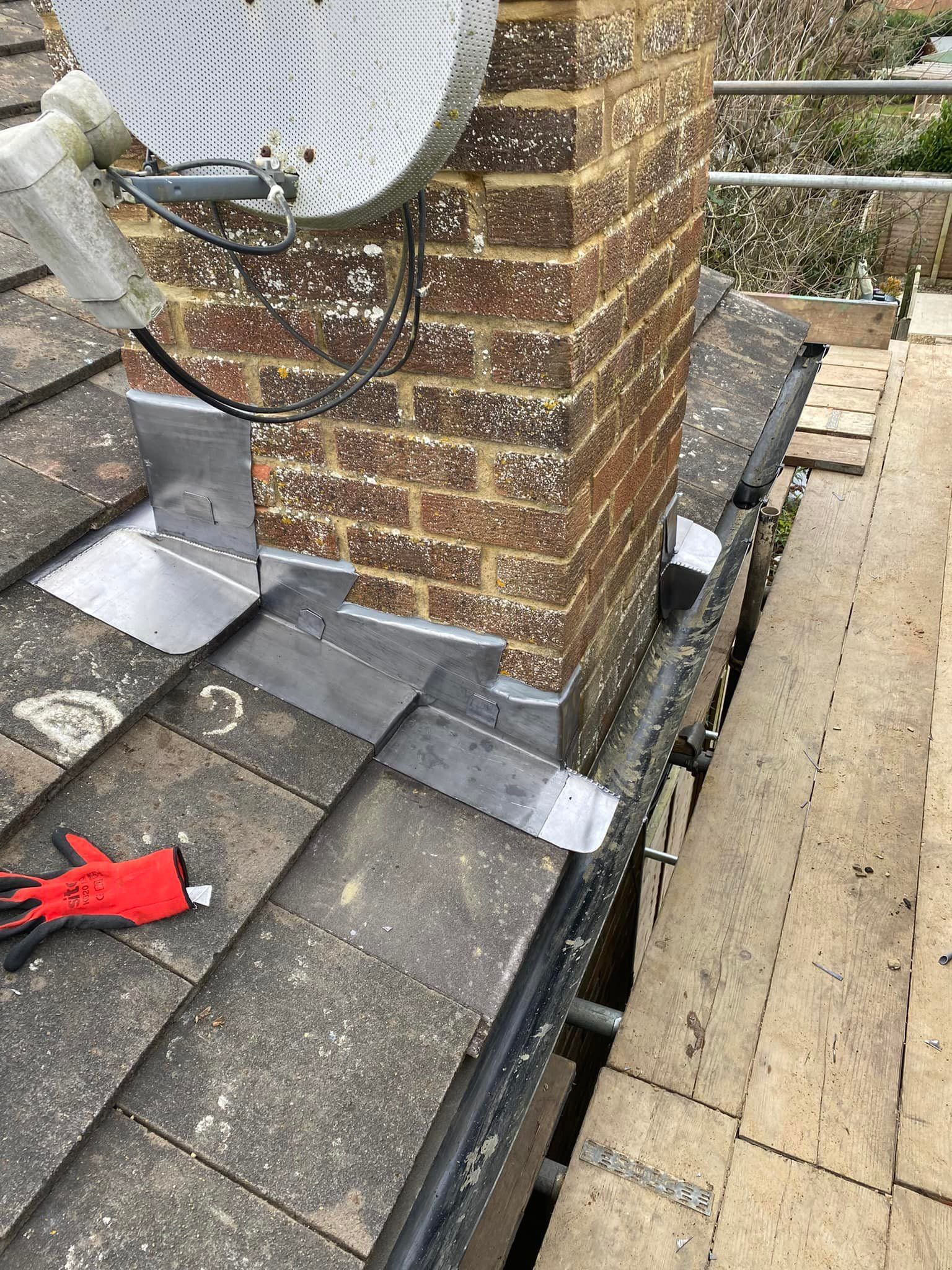
- Lead soakers and code lead flashings at all chimney stacks, valleys, and abutments
Dry-fix systems are now required under BS 5534:2014+A2:2018 — the UK code of practice for slating and tiling. All our installations comply as standard.
How We Build a Pitched Roof — The Construction Process
Understanding the process helps you know what to expect when we are on site. Here is what happens on a typical Nottingham re-roof or new roof build from start to finish.
Step 1 — Free Drone Survey and Quote
We use our drone survey equipment to inspect your roof safely before any work starts. This gives us accurate measurements, identifies any hidden structural issues, and means you receive a fully informed quote — not a number we adjust later.
Step 2 — Scaffold Erection
Safe access scaffolding is erected around the property. We do not start work without it. Your safety and the safety of our team are non-negotiable on every site.
Step 3 — Strip and Inspection (Re-Roofs)
Old tiles, battens, and felt are removed carefully. We inspect every rafter, wall plate, and purlin for rot, damage, or movement before a single new component goes on. Any defective timber is replaced at this stage.
Step 4 — Structural Timber Work
Wall plates are checked or replaced. Rafters are cut and positioned (cut roof) or trusses are lifted and fixed (trussed roof). Ridge board, purlins, and any bracing are installed. All timber sizing is calculated to meet current Building Regulations Part A load requirements.
Step 5 — Breathable Membrane
A BS-compliant breathable underlay is laid across the full rafter run from eaves to ridge. This acts as a second line of defence against wind-driven rain and moisture, and allows the roof structure to breathe.
Step 6 — Battens
Treated and graded timber battens are fixed horizontally across the rafters over the membrane. Batten spacing is set precisely to the requirements of your chosen tile or slate.
Step 7 — Tiles or Slates
Your chosen covering is fixed in courses from the eaves to the ridge, with all verge, valley, and abutment details completed to manufacturer specification and BS 5534 standards.
Step 8 — Dry Ridge and Dry Verge
Ridge tiles are mechanically fixed using a dry-fix system. Verge edges are capped with interlocking dry verge units. No open mortar joints — no cracking, no lifting, no future maintenance headaches.
Step 9 — Lead Flashing and Junctions
All chimney stacks, roof windows, and abutments are flashed with the correct code lead, properly dressed and sealed. Poorly fitted flashings are one of the most common causes of roof leaks on Nottingham properties — we do not cut corners here.
Step 10 — Final Inspection and Clean-Down
We inspect the completed roof from scaffold before it is struck, check all details, clear all waste from site, and leave your property as tidy as we found it. You receive a full handover including details of your workmanship guarantee and any building control sign-off documentation.
Insulation, Ventilation and Building Regulations
Every new pitched roof in Nottingham must meet current Building Regulations. We manage compliance as part of our service — you do not need to chase building control or navigate the technical requirements alone.
Building Regulations — What Applies to Your Roof
Part A — Structure: The roof must support its own weight plus wind and snow loads. Timber sizes must be calculated to meet these requirements. For non-standard designs, structural engineer calculations are submitted to building control.
Part B — Fire Safety: Roof materials must resist fire spread. This is particularly relevant on terraced and semi-detached properties — which make up a large proportion of Nottingham's housing stock across Hyson Green, Forest Fields, Lenton, and Radford.
Part L — Energy Efficiency: New roof constructions must achieve a maximum U-value of 0.15 W/m²K. Insulation must be specified and installed correctly to meet this standard. The Future Homes Standard, coming into effect soon, will tighten these requirements further — specifying now to current or better standards is the sensible approach.
BS 5534:2014+A2:2018: The UK code of practice for slating and tiling. Dry-fix systems are required. All our installations comply.
Cold Roof vs Warm Roof — Which Do You Need?
Cold roof: Insulation sits at ceiling joist level. The loft space above is unheated and ventilated. This is the standard approach when loft conversion is not planned. Cost-effective, straightforward, and compliant when the correct insulation depth is used.
Warm roof (ventilated): Insulation is placed between and below the rafters with an air gap above. Used when the roof space will be habitable or when converting an existing roof space without disturbing the tiles.
Warm roof (full fill / unventilated): The full rafter depth is filled with insulation, with counter battens creating ventilation outside the insulation layer. The highest thermal performance — used on new-build loft rooms and energy-conscious projects.
A vapour control layer is required on the warm side in all warm roof build-ups. We specify the correct system for your project at the survey stage.
Planning Permission — What Nottingham Homeowners Need to Know
This is one of the most searched questions about roof work, so here is a clear, practical answer.
Like-for-like tile or slate replacement on an existing roof is usually permitted development — you do not need planning permission and you do not need to notify Nottingham City Council, as long as the materials are similar and the roof profile does not change.
You are likely to need planning permission if:
- You are changing the shape or height of the roof
- You are converting a flat roof to a pitched roof
- You are adding a dormer window or increasing loft headroom
- Your property is in a Nottingham conservation area — including The Park Estate (NG1/NG7), parts of The Meadows (NG2), and areas of Sherwood (NG5) — where tighter controls on materials and appearance apply
- Your property is a listed building
Building regulations approval is separate from planning permission and applies to most structural roof work regardless of whether planning consent is needed.
We advise on what applies to your specific project at the free survey stage — and we can liaise with Nottingham City Council Building Control on your behalf.
When Do You Need a Structural Engineer?
Most standard pitched roof replacements on Nottingham homes do not require a structural engineer. Building control will tell you if calculations are needed for your specific project. However, engineer sign-off is required when:
- Roof spans fall outside standard timber span tables
- A chimney stack is being removed and load paths are changing
- A load-bearing wall beneath the roof is being altered
- You are adding a dormer, attic room, or large rooflight that changes structural loading
- Building control requests calculations as a condition of approval
When engineer calculations are required, we work with experienced structural engineers in Nottinghamshire to get the work produced and submitted. You do not need to manage this yourself. Truss manufacturers often supply calculations for standard truss designs as part of the product package. Site-cut roof calculations are referenced to BS EN 1995-1-1 and produced by a Chartered Structural Engineer (MIStructE or ICE-registered).
Flat-to-Pitched Roof Conversions in Nottingham
Converting a flat roof to a pitched roof is one of the most popular enquiries we receive — and one of the most effective ways to solve a recurring flat roof problem permanently.
Many Nottinghamshire homeowners with garages, extensions, or bungalows find themselves repeatedly repairing a failing felt flat roof. Converting to a pitched structure gives you a long-lasting, low-maintenance roof that matches the main property and dramatically reduces the risk of future water ingress.
This type of project typically requires:
- Planning permission — as it changes the roof's height and profile
- Building regulations approval — for structural and thermal compliance
- Structural assessment — to confirm existing walls can carry the new roof loads
We handle the full process from survey to sign-off. If you are based in areas like Bestwood, Bulwell, Clifton, or Hucknall where post-war flat-roofed extensions are common, this is a project we carry out regularly.
Why Choose Trust Roofing Services for Pitched Roof Construction in Nottingham?
There are a lot of roofing contractors operating across Nottinghamshire. Here is what makes us different.
- Family-run business — personal service, real accountability, and genuine care about the quality of our work
- Over 15 years of local experience — we know Nottingham's housing stock, its planning requirements, and its weather
- Free drone roof survey — we assess every project properly before recommending a solution
- CSCS-certified roofers — all site operatives are card-carrying qualified professionals
- Fully insured — public liability and employer's liability insurance, available to view on request
- BS 5534 and Building Regulations compliant installations — as standard on every project
- Workmanship guarantee — we stand behind the quality of every roof we build
- Honest, transparent pricing — no hidden costs, no surprise invoices, no upselling
We treat every Nottingham property as if it were our own. That is not a slogan — it is how we have built our reputation across Nottinghamshire over the past 15 years.
Frequently Asked Questions — Pitched Roof Construction in Nottingham
What is a pitched roof and why is it common in Nottingham?
A pitched roof is a sloped roof structure where two or more angled surfaces meet at a central ridge. It is the most common roof type across Nottingham because the slope efficiently sheds the heavy rainfall and wind-driven rain typical of the East Midlands climate. Pitched roofs also offer better insulation potential, longer lifespan, and loft space compared to flat alternatives. Most domestic properties across Nottinghamshire — from Victorian terraces in Arnold to post-war semis in Clifton — have a pitched roof as standard.
How much does a new pitched roof cost in Nottingham?
The cost of a new pitched roof depends on the size of the property, the materials chosen, and the complexity of the build. A full re-roof on a standard Nottingham semi-detached property typically ranges from around £5,000 to £12,000 depending on the tile type, access requirements, and whether any structural timber work is needed. Flat-to-pitched conversions involve additional structural work and planning, so costs are higher. We provide fully itemised, no-obligation quotes — call 0115-647-3275 to arrange your free drone survey.
Do I need planning permission to replace my pitched roof in Nottingham?
A like-for-like replacement using similar materials is usually permitted development and does not require planning permission. However, if you are changing the shape of the roof, raising the ridge height, converting a flat roof to a pitched roof, or your property is in a Nottingham conservation area, you will need to apply to Nottingham City Council for planning consent before work starts. We advise on what applies to your project at the survey stage.
What is the difference between a cut roof and a trussed roof?
A cut roof is built on-site from individual timber components — rafters, ridge board, and purlins — all cut to measure. A trussed roof uses pre-fabricated timber frames manufactured off-site and craned or lifted into position. Cut roofs are more flexible and better suited to loft conversion, irregular shapes, and heritage properties. Trussed roofs are faster to erect and cost less on straightforward new builds. The key difference for homeowners: standard trusses block loft conversion — if you ever want to convert your loft, specify a cut roof or attic trusses from the outset.
What is the minimum roof pitch for tiles in the UK?
The minimum pitch depends on the tile or slate type. Concrete interlocking tiles: 15°–17.5°. Plain clay tiles: 35°. Natural slate: 20°–25° with correct lap. Fibre cement slate: 15°–20°. Using a material below its minimum pitch causes rainwater to back up under the covering and leads to leaks. All minimum pitch requirements in the UK are governed by BS 5534:2014. We confirm the correct pitch for your chosen material at the survey stage, taking Nottinghamshire's local exposure conditions into account.
How long does pitched roof construction take in Nottingham?
A full re-roof on a standard Nottingham semi-detached property typically takes three to five working days. Larger roofs, roofs with multiple valleys, dormers, or chimney stacks, and new-build roof structures on extensions take longer. Flat-to-pitched conversions also require additional time for structural work. We give you a realistic programme at the quote stage and keep you informed if anything changes on site.
Does a new pitched roof need building regulations approval in Nottingham?
Yes — new roof construction and full structural re-roofs require building regulations approval under Parts A (structure), B (fire), and L (energy efficiency). A minor like-for-like tile repair does not require approval. Building control sign-off is important — it protects you legally and is required documentation when you sell the property. We can liaise with Nottingham City Council Building Control or an approved inspector on your behalf.
Can I convert my garage flat roof to a pitched roof in Nottingham?
Yes — flat-to-pitched conversions on garages, extensions, and bungalows are one of the most common projects we carry out across Nottinghamshire. You will normally need planning permission (as the height of the structure changes) and building regulations approval. A structural assessment is also required to confirm the existing walls can support the new roof. We manage this entire process — from initial survey through to final building control sign-off.
How do I insulate a pitched roof correctly?
There are two main approaches. A cold roof places insulation at ceiling joist level, leaving the loft space unheated — the right choice when loft conversion is not planned and the most cost-effective option. A warm roof places insulation between and below the rafters, bringing the roof void inside the thermal envelope — required when creating a habitable loft room. All new pitched roofs must meet a maximum U-value of 0.15 W/m²K under Building Regulations Part L. We specify the correct insulation build-up for your project at survey stage.
What are the signs that my pitched roof needs replacing rather than repairing?
A repair makes sense for isolated problems — a few slipped tiles, a failed flashing, a small section of ridge pointing. A full replacement is the right call when:
- The breathable membrane (felt) beneath the tiles has failed and is letting water through
- Multiple tiles are cracked, broken, or slipping across a large area
- The timber structure shows signs of rot, sagging, or significant movement
- The roof is more than 40–50 years old and repeatedly needing repairs
- The ridge and verge are mortar-bedded and failing in multiple places
Our free drone survey gives you an honest, evidence-based assessment with photographs — so you can make an informed decision rather than guessing.
Areas We Work — Pitched Roof Construction Across Nottingham and Nottinghamshire
Trust Roofing Services carries out pitched roof construction and replacement across a wide area of Nottingham and Nottinghamshire. Our base is in Hucknall (NG15), and we regularly work throughout the following areas:
Nottingham City and Inner Areas
- Nottingham City Centre — NG1
- Hucknall — NG15 (our base)
- Arnold — NG5
- Carlton — NG4
- Sherwood — NG5
- Bestwood — NG5
- Bulwell — NG6
- Hyson Green — NG7
- Radford — NG7
- Forest Fields — NG7
- Lenton — NG7
- Beeston — NG9
- West Bridgford — NG2
Greater Nottinghamshire
- Mapperley — NG3
- Gedling — NG4
- Netherfield — NG4
- Long Eaton — NG10
- Stapleford — NG9
- Clifton — NG11
- Ruddington — NG11
- Kirkby in Ashfield — NG17
- Sutton in Ashfield — NG17
- Mansfield — NG18 / NG19
- Newark-on-Trent — NG24
- Eastwood — NG16
- Ilkeston — DE7
Not sure if we cover your area? Call us on 0115-647-3275 and we will confirm straight away.
Ready to Get Your Pitched Roof Built or Replaced? Let's Talk.
Your roof is one of the most important parts of your home or business. A failing, ageing, or poorly built roof does not just let in the rain — it costs you money in heat loss, drives up repair bills, and reduces your property's value.
Trust Roofing Services is Nottingham's local, family-run roofing contractor. We have built, replaced, and repaired pitched roofs across Nottinghamshire for over 15 years. We know the housing stock, we understand the local planning requirements, and we take real pride in the quality of every roof we build.
Here is how easy it is to get started:
- Call us on 0115-647-3275 or use our online contact form
- We arrange a FREE drone roof survey at a time that suits you
- You receive a fully itemised, no-obligation written quote — clear, honest, no hidden costs
- We agree a start date and programme and keep you updated throughout
- Your new roof is built to last — with a workmanship guarantee and full building regulations compliance
If you are based in Nottingham, Hucknall, Arnold, Beeston, West Bridgford, Mansfield, or anywhere else across Nottinghamshire — we are your local pitched roof specialists.
📞 Call 0115-647-3275 today. Your free drone survey is waiting.
Trust Roofing Services | Harrow Rd, Hucknall, Nottingham NG15 6JD | Residential & Commercial | Fully Insured | Free Drone Surveys
Let’s talk about your pitched roof construction in Nottingham
Fill out the form, or call us to discuss your requirements
0115-647-3275