
Trust Roofing Services
Professional Ridge Tile Repairs, Including Rebedding
FREE Drone Survey
Free Quote
BBA-Approved Materials. 10-Year Guarantee.
Call: 0115-647-3275
Ridge Tile Repairs & Rebedding Nottingham — Fix It Before It Gets Worse
If you've spotted loose mortar crumbling away, a rocking ridge tile, or a damp patch appearing near the top of your loft, your roof is giving you a warning. Ridge tile repairs and rebedding in Nottingham is one of the most common — and most important — jobs we carry out at Trust Roofing Services.
Ignoring failing ridge tiles doesn't make the problem go away. It makes it bigger. Once the mortar fails, rainwater gets in, timbers rot, and what started as a straightforward rebed can become a much costlier roof repair.
We are a family-run roofing contractor based in Hucknall, serving homeowners and landlords across Nottingham and Nottinghamshire. We offer a free no-obligation drone roof survey so you know exactly what you're dealing with before any work begins.
📞 Call us now on 0115 647 3275 — or read on to understand exactly what's involved.
What Are Ridge Tiles and Why Do They Matter?
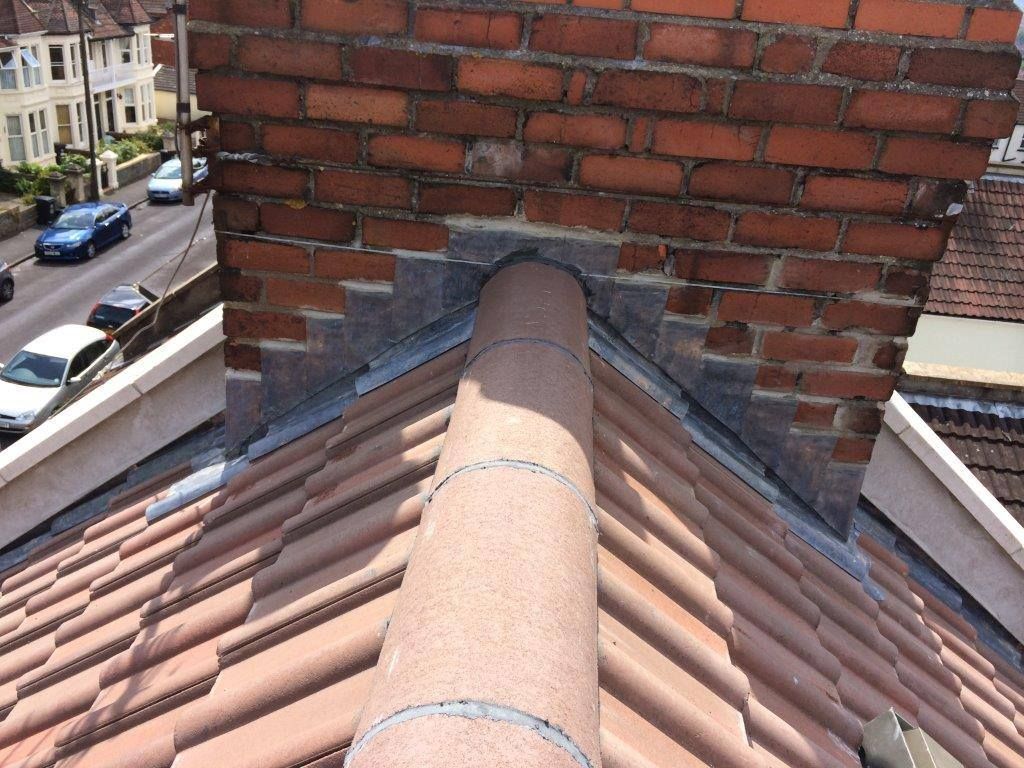
Ridge tiles sit along the very apex of your pitched roof — the highest point where the two roof slopes meet. Their job is to seal that joint, keeping out rain, wind, and pests, and protecting the entire roof structure beneath.
Because they sit at the highest and most exposed point of your roof, ridge tiles take a constant battering from the weather. Over time, the mortar that beds them in place cracks, shrinks, and crumbles — particularly in Nottinghamshire where freeze-thaw cycles during winter put repeated stress on roofing mortar.
When that mortar fails, ridge tiles loosen. And loose ridge tiles are a problem that won't wait.
Warning Signs Your Ridge Tiles Need Attention
You don't always need to get up on the roof to spot trouble. Here are the most common signs we see on Nottingham homes that tell us the ridge tiles need work:
- Mortar falling away or landing in the gutters and on pathways below
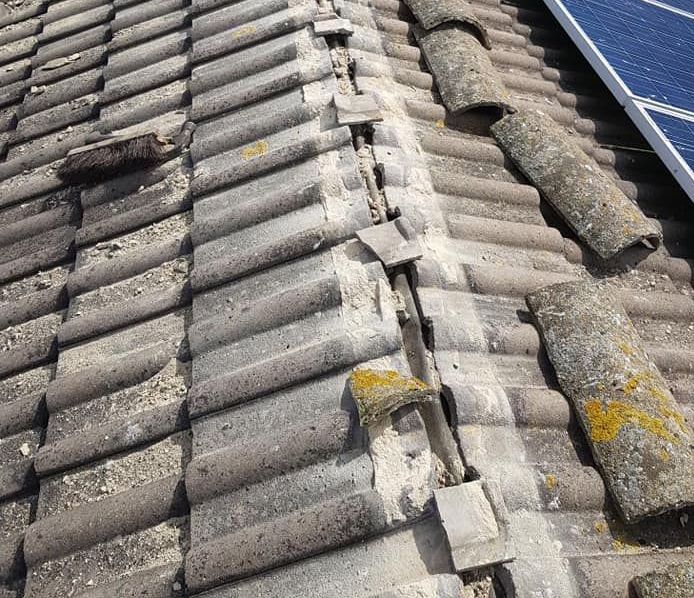
- Cracked, crumbling, or missing pointing along the ridge line
- White powdery residue (efflorescence) on tiles just below the ridge — a sign water is tracking through a failed bed
- Damp patches or water staining in the loft, especially near the roof apex
- Visible gaps between the tiles and the ridge
- Tiles that rock or shift when gently touched — the clearest sign the mortar bed has failed
- Storm damage — tiles displaced or fallen after high winds
If any of these apply to your property, don't wait. A small repair job today can prevent a large and expensive one next year.
Ridge Tile Rebedding vs Repointing — What's the Difference?
This is the question we get asked most often — and getting the answer right matters, because the wrong fix won't last.
What Is Ridge Tile Repointing?
Repointing means applying fresh mortar to the outer joint along the ridge line — the visible surface between and around the tiles. It targets cracks, gaps, and weathered mortar at the surface level.
Repointing works well only when the tiles themselves are solid and not moving. If the tiles are stable and the problem is surface-level cracking, repointing can seal the joint and extend the life of the ridge.
What Is Ridge Tile Rebedding?
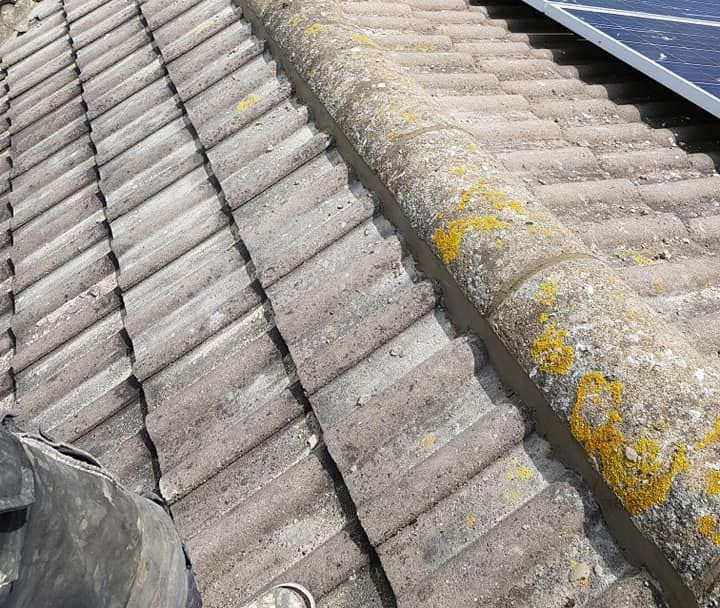
Rebedding is a full repair. The ridge tiles are lifted completely, all the old failed mortar is stripped back to a clean surface, and a fresh mortar bed is laid before the tiles are re-laid, aligned, and pointed.
Rebedding is the correct fix when tiles are moving. If a tile rocks — even slightly — the base mortar has failed. Applying fresh pointing over a loose tile achieves nothing. The tile moves, the new pointing cracks, and within months you're back to square one.
The Simple Rule
Push gently on a ridge tile. If it moves at all — rebed, don't repoint.
We see a lot of Nottingham properties where a previous roofer has repointed over a failed bed. The pointing looks tidy for a season, then falls away and the problem returns. A proper rebed done once lasts far longer and costs less over time.
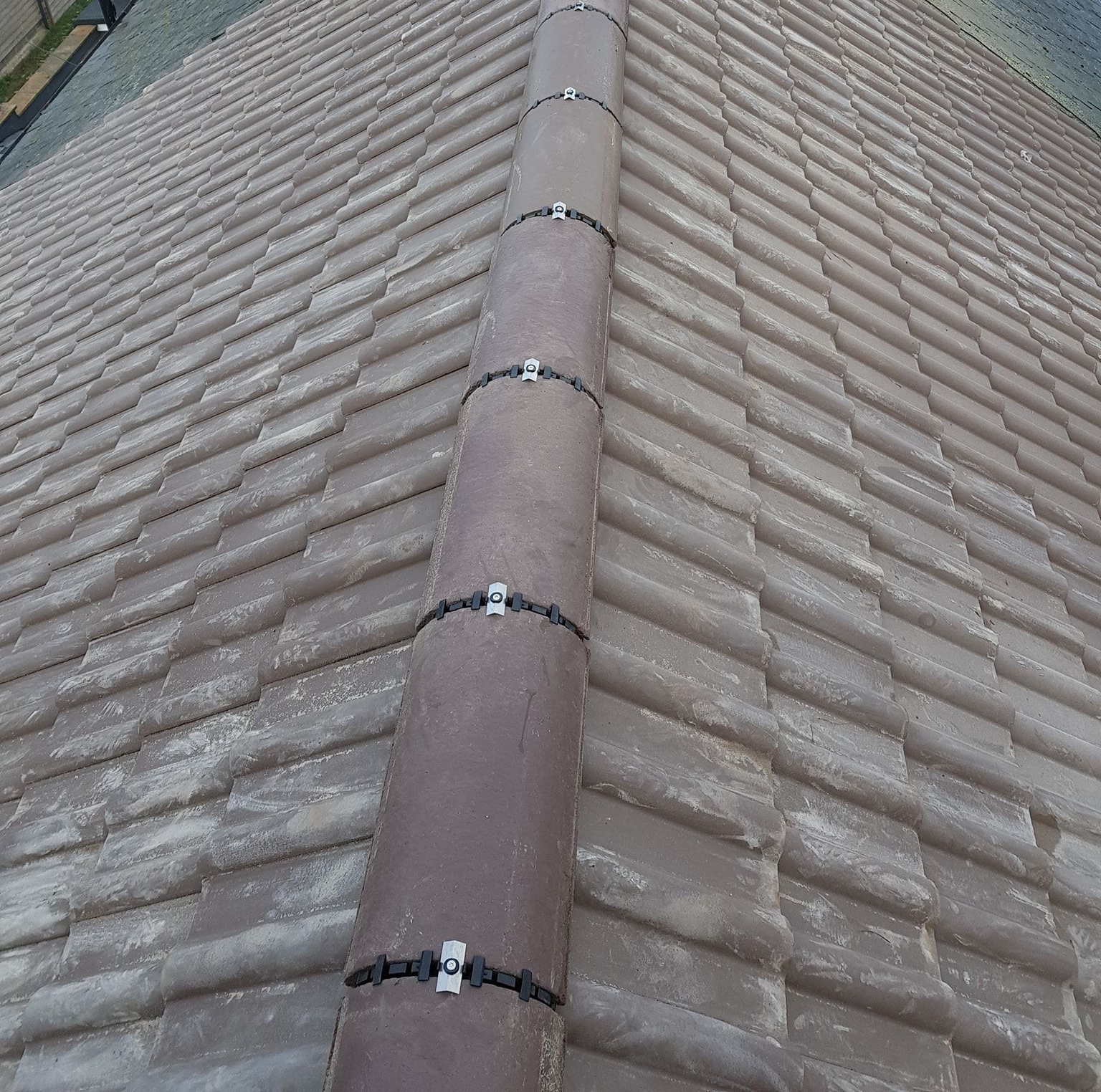
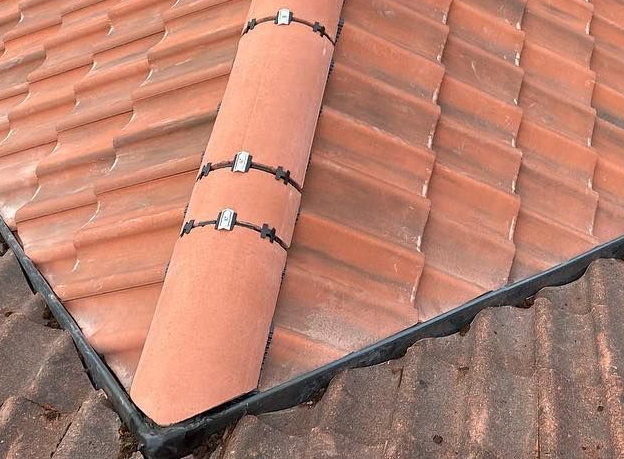
Dry Ridge Systems — The Modern Alternative
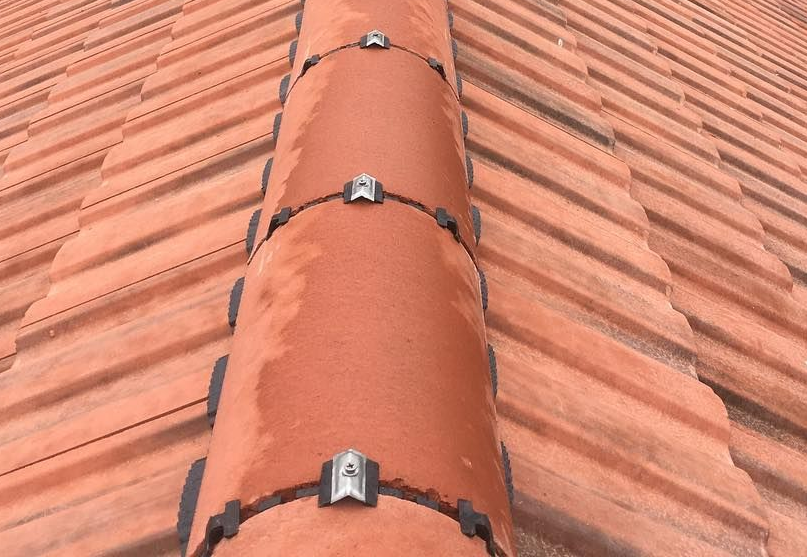
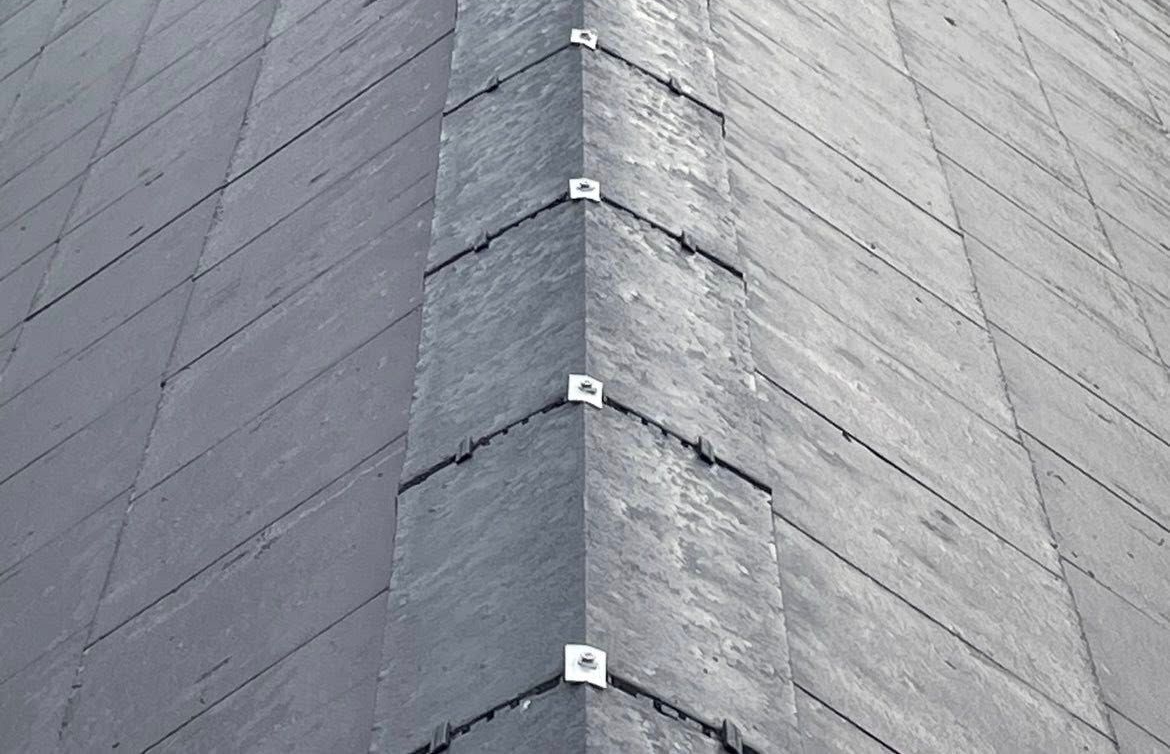
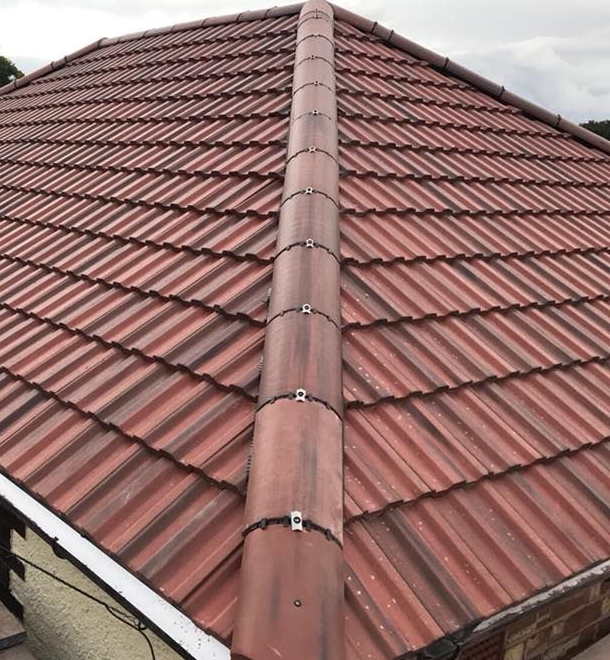
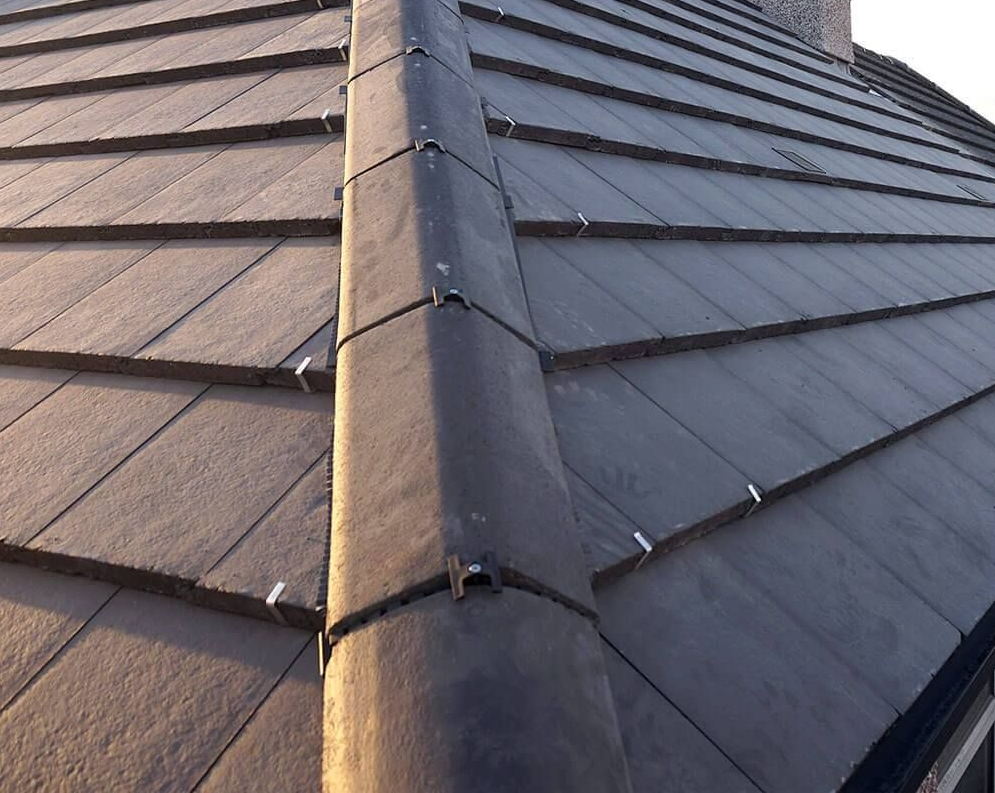
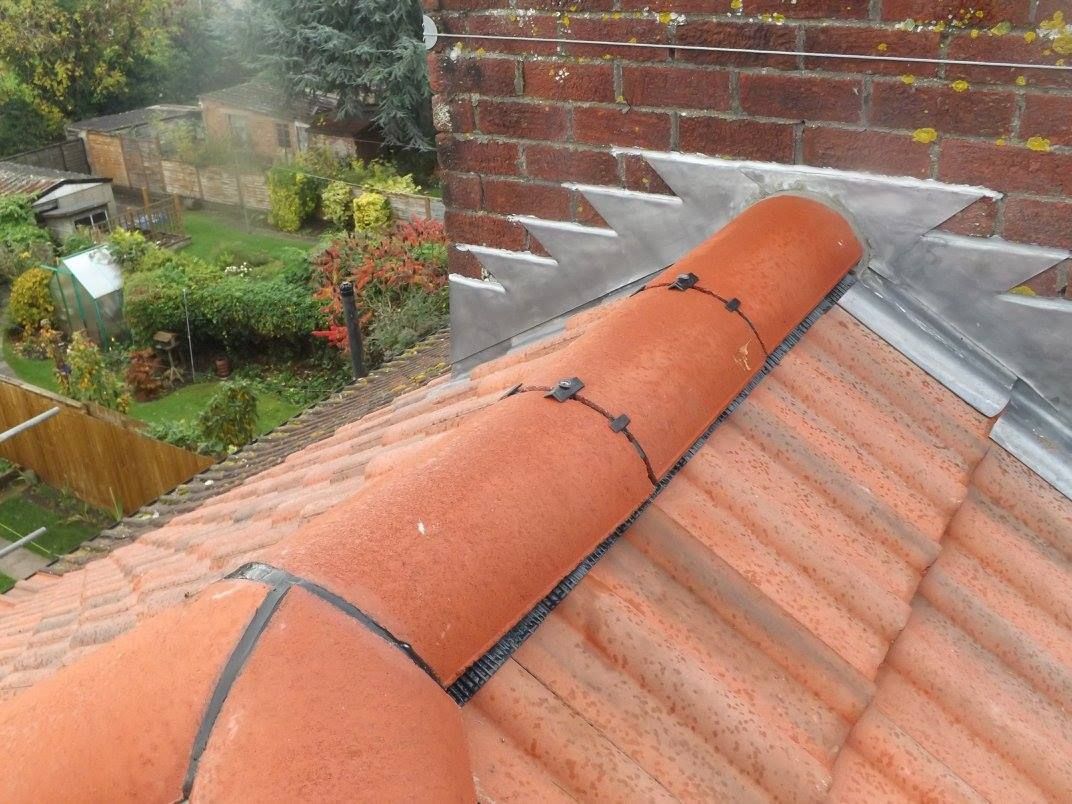
A dry ridge system is a mortar-free alternative to traditional rebedding. Instead of a sand and cement bed, ridge tiles are secured using mechanical fixings — stainless steel screws and clamps that lock the tiles to the roof structure directly.
Why Choose a Dry Ridge System?
- No mortar to crack, crumble, or fail — eliminates the root cause of most ridge tile problems
- Longer lifespan — a well-installed dry ridge system can last well over 25 years with minimal maintenance
- Better ventilation — built-in airflow channels help reduce loft condensation and protect roof timbers
- Wind resistant — mechanical fixings hold firm even in severe storms
- Low maintenance — once installed, there is very little ongoing attention needed
- Compliant with BS 5534 — the current British Standard for slating and tiling requires mechanical fixing on all new roofs
BS 5534 applies to all new-build roofs. If you are repairing or maintaining an existing roof, mortar rebedding is still a perfectly valid option — it is not a legal requirement to upgrade. However, many Nottingham homeowners choose to upgrade to dry ridge at the point of repair, as it removes the need for repeat mortar maintenance down the line.
We install both systems and will give you an honest recommendation based on your specific roof after a survey — not based on which earns us more.
How We Carry Out Ridge Tile Rebedding — Step by Step
Here is exactly what happens when Trust Roofing Services carries out a ridge tile rebed on a Nottingham property:
1. Free Survey We assess the ridge from ground level or via our drone survey first. This lets us identify exactly how many tiles are affected, the condition of the hip tiles, and whether any underlying timber needs attention.
2. Safe Access Setup We set up the right access for your property — a scaffold tower, roof ladder, or both. No work begins until access is safe and secure.
3. Tile Removal Ridge tiles are carefully lifted and set aside for reuse where possible. Older concrete tiles — common on Nottingham properties built in the 1960s to 1980s — can sometimes crack during removal. We factor in replacements if needed and source matching tiles wherever we can.
4. Full Mortar Strip All old mortar is chipped back to a completely clean surface. We never rebed over old, weak mortar — it is the single most common shortcut that causes ridge repairs to fail prematurely.
5. Surface Preparation The ridge and tile surfaces are cleaned of dust and debris. Tiles are dampened before re-laying to improve adhesion with the fresh mortar mix.
6. Relaying and Pointing A fresh mortar bed is applied, tiles are re-laid and carefully aligned, and the joints are pointed and shaped to a clean, weather-tight finish.
7. Final Check and Clean Up Every tile is checked for security before we come off the roof. All debris is bagged, lowered, and removed. We leave your property tidy.
Most Nottingham ridge rebed jobs are completed in a single day.
Hip Tiles — Don't Forget the Hips
Hip tiles run along the angled edges of a hipped roof and use the same mortar bedding system as ridge tiles. They face the same freeze-thaw stress and deteriorate at a similar rate.
If your ridge mortar has failed, the hip mortar is often not far behind. We always check both during our survey and can carry out hip and ridge rebedding in one visit — saving you the cost of a second access setup.
Do You Need Scaffolding for Ridge Tile Repairs?
Ridge work is always at height, and safe access is planned before any work begins — not treated as an afterthought.
On a two-storey Nottingham house, a scaffold tower or roof ladder is standard. On a bungalow, a secured ladder is often sufficient. We carry out a pre-job risk assessment on every visit, covering roof height, pitch, and access requirements.
Our drone survey means we can often fully assess the ridge without anyone going up at all first — useful if you want a clear picture of the problem before committing to anything.
Insurance Claims and Storm Damage
Home insurance may cover ridge tile damage caused by a sudden storm. The key is the word "sudden" — most policies cover specific weather events but exclude gradual wear and mortar deterioration over time.
If you have storm damage, here is what to do:
- Contact us before any repair work begins — we can document the damage with photographs and a written report to support your claim
- Check your policy wording for "gradual deterioration" exclusions
- We provide clear photographic evidence to insurers on request
Planning Permission and Building Regulations
You do not normally need planning permission or building regulations approval to repair or rebed ridge tiles on a standard Nottingham property. Like-for-like repairs are exempt.
Exceptions include:
- Listed buildings — any external work requires listed building consent
- Conservation areas — check with Nottingham City Council before changing ridge profiles or materials
- Large-scale works — if more than 25% of the roof area is being replaced, building regulations sign-off is required
If you are in West Bridgford, The Meadows, or another area with conservation or heritage designations, we are happy to advise before work is booked.
Frequently Asked Questions About Ridge Tile Repairs & Rebedding in Nottingham
What is ridge tile rebedding?
Ridge tile rebedding is the process of completely removing ridge tiles from the roof apex, stripping away all the old failed mortar, and re-laying the tiles on a fresh mortar bed before repointing the joints. It is the correct repair when tiles are moving or the base mortar has failed — unlike repointing, which only addresses the surface joint.
How do I know if my ridge tiles need rebedding or just repointing?
The simplest test is movement. Gently push a ridge tile — if it rocks or shifts at all, the mortar bed beneath it has failed and the tile needs rebedding. If the tiles feel completely solid and only the surface joint is cracked or weathered, repointing may be sufficient. A free drone survey from us will give you a clear and honest answer.
How long does ridge tile rebedding last?
A properly carried out mortar rebed typically lasts between 12 and 15 years, depending on weather exposure and the quality of the mortar mix used. A dry ridge system, using mechanical fixings instead of mortar, can last well over 25 years with minimal maintenance needed.
Can loose ridge tiles cause a leak?
Yes. Once a ridge tile loosens, gaps open at the roof apex that allow wind-driven rain to enter the roof void. Water can then saturate insulation, soak into timber rafters, and eventually cause rot and internal damp — often before you notice anything from inside the house.
Do I need scaffolding to repair ridge tiles?
It depends on the height and pitch of your roof. On a two-storey house, a scaffold tower or roof ladder is typically required. On a bungalow, a secured ladder is often sufficient. We assess this before every job and use the appropriate access for your specific property.
What is a dry ridge system and is it better than mortar?
A dry ridge system uses stainless steel clamps and mechanical fixings to secure ridge tiles to the roof without any mortar. It eliminates the most common cause of ridge tile failure — mortar cracking over time — and typically lasts far longer than a traditional rebed. It also improves loft ventilation. Whether it is the right choice for your property depends on your roof type and tile profile. We will advise you honestly after a survey.
Will my home insurance cover ridge tile repairs?
Possibly, if the damage was caused by a specific storm or sudden weather event. Most policies exclude gradual wear and mortar deterioration. If you have storm damage, contact us before any repair begins — we can document the damage for your insurance claim.
Do I need planning permission to replace ridge tiles in Nottingham?
No, in most cases you do not. Like-for-like repairs are exempt from planning permission and building regulations. Exceptions apply to listed buildings, properties in conservation areas, and any works involving structural changes or replacing more than 25% of the roof area. If you are unsure, call us and we will advise.
Can I repoint or rebed ridge tiles myself?
Ridge work involves working at height on a pitched surface — it is genuinely dangerous without the right training, equipment, and safe access setup. We strongly recommend using a professional roofer. The cost of a proper rebed is far less than the cost of a fall or an incorrectly completed repair that fails and causes water damage.
How much does ridge tile rebedding cost in Nottingham?
The cost depends on the length of the ridge, the number of tiles affected, the access requirements, and whether hip tiles are included. We provide free, no-obligation quotes for all ridge work. Call us on 0115 647 3275 or request a free drone survey and we will give you a clear, itemised price before any work begins.
Areas We Cover for Ridge Tile Repairs & Rebedding
We carry out ridge tile repairs and rebedding across Nottingham and the wider Nottinghamshire area. Below are the main towns and areas we serve:
Nottingham City & Inner Areas
- Nottingham City Centre — NG1
- Hucknall — NG15 (our base)
- Arnold — NG5
- Carlton — NG4
- Sherwood — NG5
- Bestwood — NG5
- Bulwell — NG6
- Hyson Green — NG7
- Radford — NG7
- Forest Fields — NG7
- Lenton — NG7
- Beeston — NG9
- West Bridgford — NG2
Greater Nottinghamshire
- Mapperley — NG3
- Gedling — NG4
- Netherfield — NG4
- Long Eaton — NG10
- Stapleford — NG9
- Clifton — NG11
- Ruddington — NG11
- Kirkby in Ashfield — NG17
- Sutton in Ashfield — NG17
- Mansfield — NG18 / NG19
- Newark-on-Trent — NG24
- Eastwood — NG16
- Ilkeston — DE7
Not sure if we cover your area? Call us on 0115 647 3275 and we will confirm straight away.
Ready to Get Your Ridge Tiles Sorted? Let's Talk.
Loose or failing ridge tiles are not something to leave and hope for the best. Every week you wait, the mortar deteriorates further, water finds new paths in, and the repair bill grows. A ridge tile rebed is a fast, affordable job when caught in time. Left too long, it becomes a much bigger problem.
At Trust Roofing Services, we are a family-run team based in Hucknall, with over 15 years of hands-on roofing experience across Nottingham and Nottinghamshire. We will give you a straight answer about what your roof needs — and a clear, honest quote with no pressure and no upselling.
Here's how to get started:
- 📞 Call us on 0115 647 3275 for a quick chat about your roof
- 🚁 Book a free drone roof survey — we assess the ridge without anyone going up first
- 📋 Get a free, no-obligation quote — itemised, transparent, no hidden costs
Don't wait for a small repair to become a big one. Call Trust Roofing Services today on 0115 647 3275 and let's get your roof sorted.
Let’s talk about your Ridge Tile Repairs on your Nottingham Home.
Our FREE Drone Service can reveal and and show you any problems that you can see for yourself.
Fill out the form, or call us to discuss your requirements
0115-647-3275