Trust Roofing Services Nottingham
Chimney Removal in Nottingham
Call Now To Arrange A FREE Drone Survey & Consultation
0115-647-3275
Chimney Removal Nottingham — Safe, Compliant & Fully Managed by Local Experts
Thinking about chimney removal in Nottingham or across Nottinghamshire? You're not alone. Thousands of homeowners across the NG postcode area have chimneys that no longer serve any purpose. They take up room, let in damp, and quietly drain money in maintenance year after year.
If your chimney is unused, deteriorating, or simply in the way, removing it is one of the most practical home improvements you can make. Done correctly, it frees up floor space, stops water ingress, improves your home's energy efficiency, and removes the long-term cost of upkeep for good.
This page explains everything you need to know about chimney removal in Nottingham: what the job actually involves, how we manage the structural work, what planning and building regulations apply locally, and when removal makes more sense than repair. We cover all NG postcodes across Nottinghamshire.
Trust Roofing Services is a Nottingham-based roofing and chimney specialist with over 15 years of experience serving homeowners across the region. We handle every stage — from the initial free survey and structural planning through to building regulations sign-off, roof weatherproofing, and full site clearance.
Call us on 0115-647-3275 to book your free, no-obligation survey.
Why Nottingham Homeowners Are Removing Their Chimneys
Nottingham's housing stock is full of character — but a large proportion of it was built before central heating became standard. Victorian and Edwardian terraces in areas like Sherwood, Mapperley, Lenton, and Basford — as well as 1930s semis across Arnold, Carlton, Hucknall, and Beeston — all tend to carry chimneys that have been blocked off for decades.
The most common reasons Nottingham homeowners call us include:
- The chimney stack is leaking or causing damp patches on internal walls or ceilings
- The stack is visibly deteriorating — crumbling mortar, spalling brickwork, or a visible lean
- They want to reclaim floor space for a fitted wardrobe, media wall, or more open-plan layout
- Repair quotes keep coming in and the chimney is never used
- They are renovating to sell and want a cleaner, more modern interior
- The chimney is causing water ingress into the roof or loft space
Nottingham's wet winters and repeated freeze-thaw cycles are harder on chimney stacks than many homeowners realise. Mortar deteriorates faster on exposed stacks in the East Midlands than in sheltered southern regions. If your chimney is already showing wear, it will get worse — not better — without intervention.
What Chimney Removal in Nottingham Actually Involves
Not every job is the same. Before any work starts, we visit your property and confirm exactly what the removal requires. There are three main types:
Chimney Stack Removal (Above the Roofline Only)
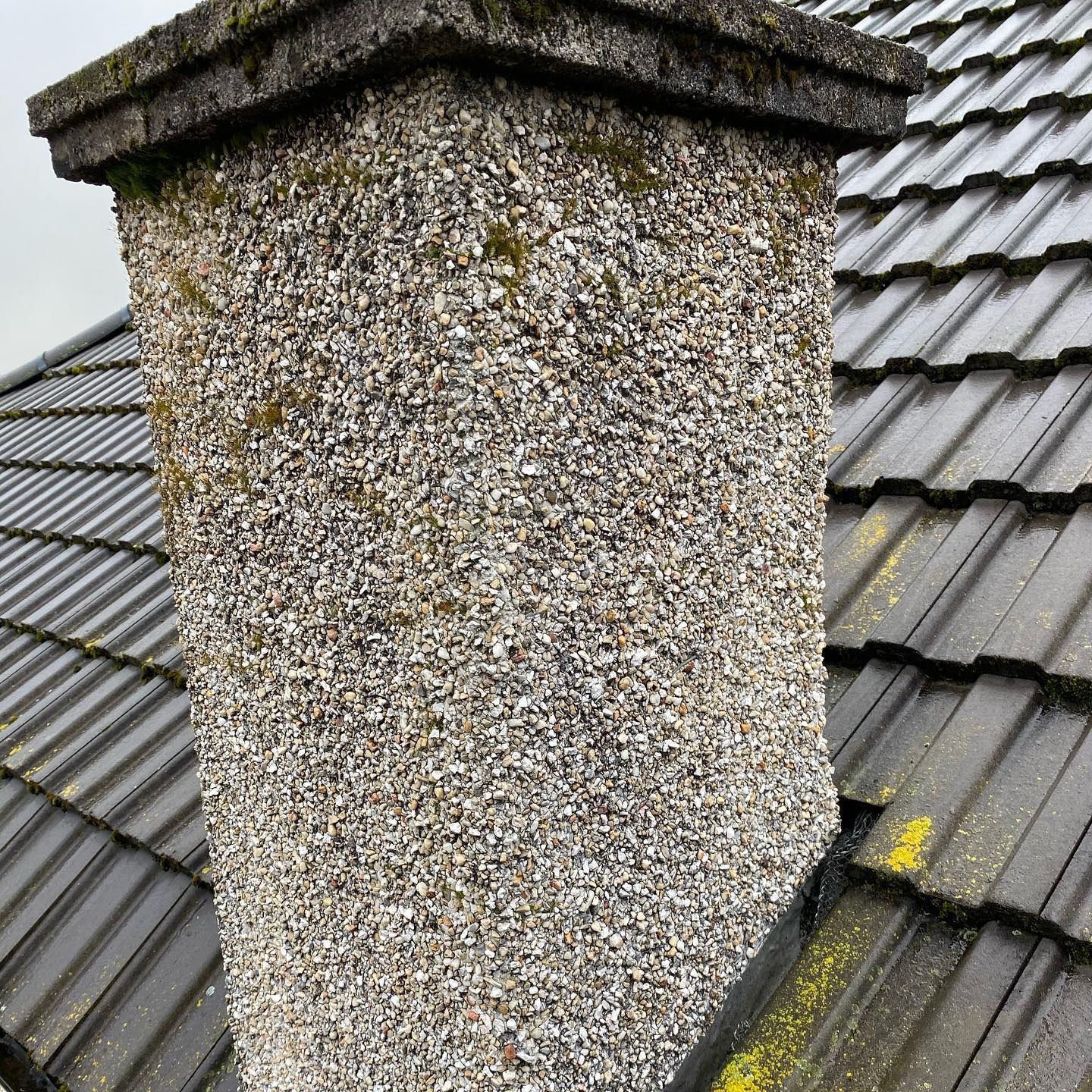
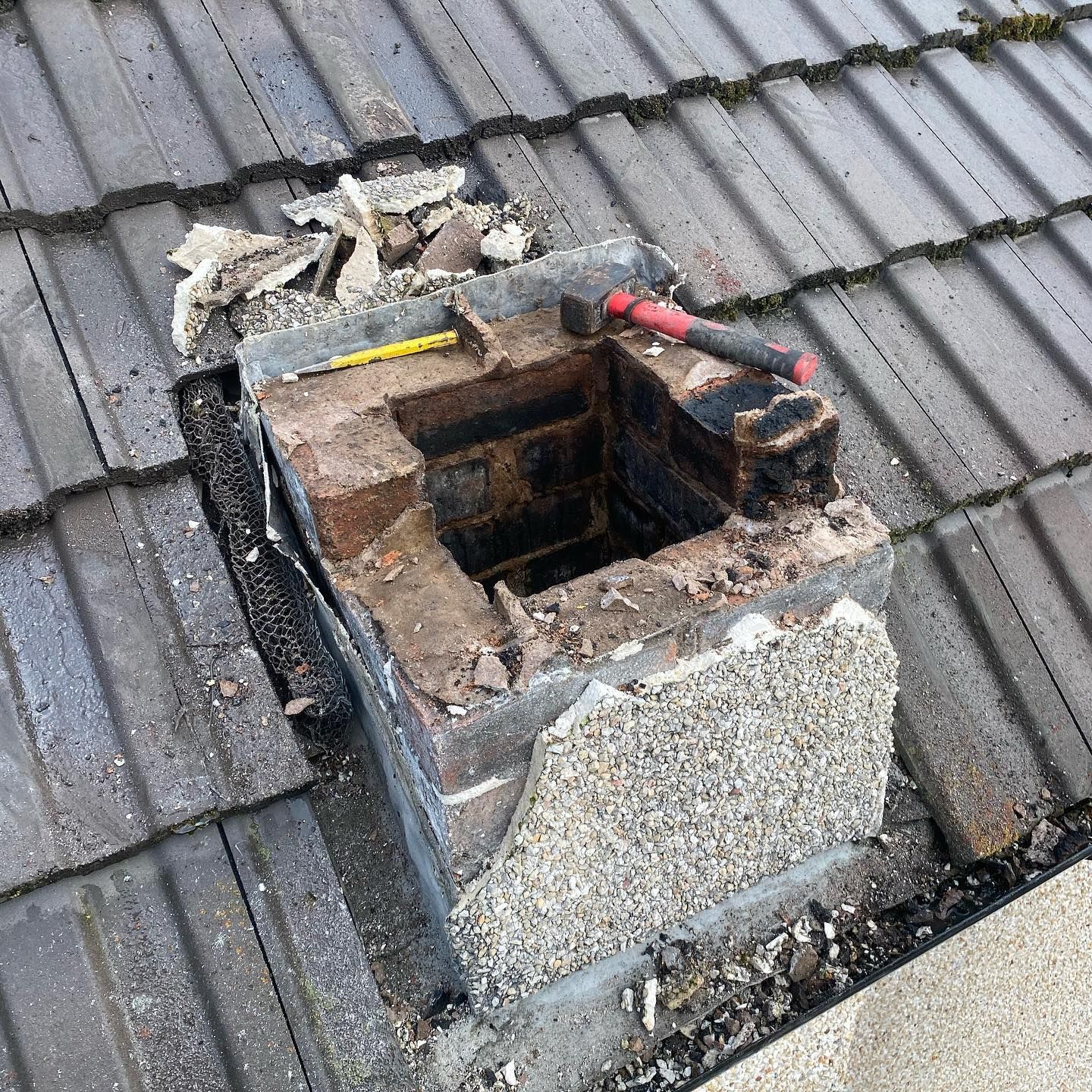
This takes down the external brickwork above the roof but leaves the internal breast in place. It is the least disruptive option, and it works well when:
- The stack is leaking, unstable, or crumbling
- You want to stop water ingress but keep the fireplace below as a feature
- The breast is not causing a space problem inside
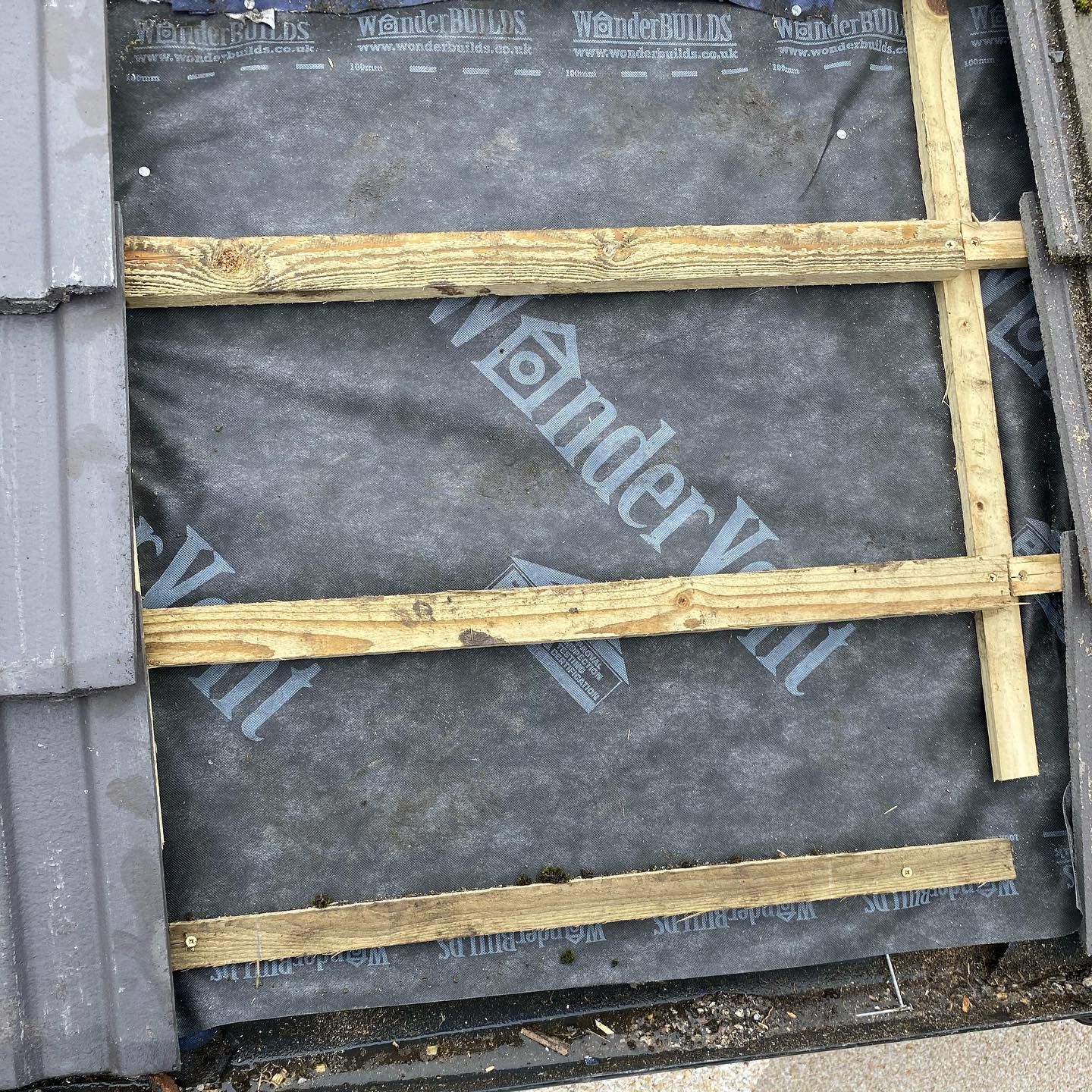
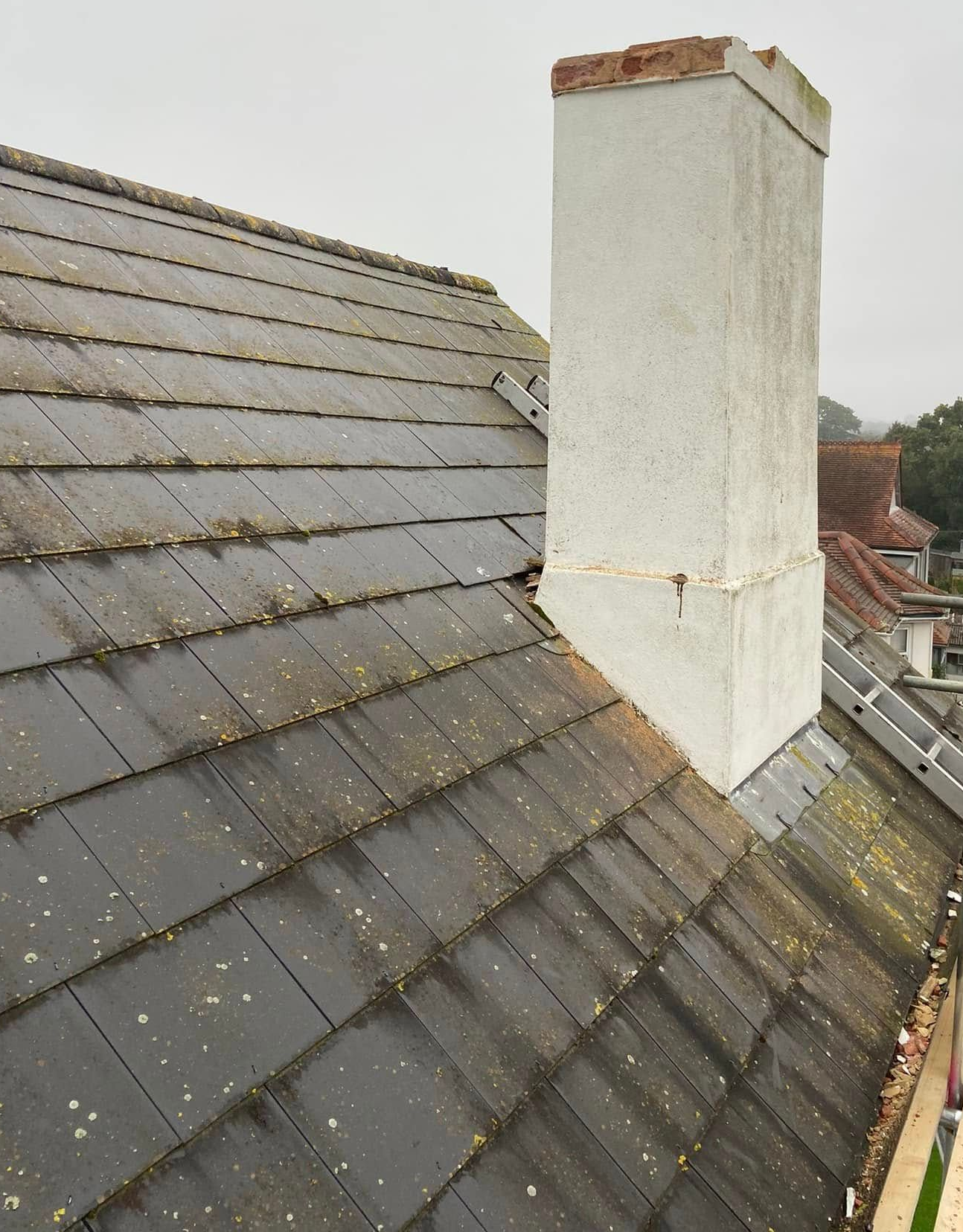
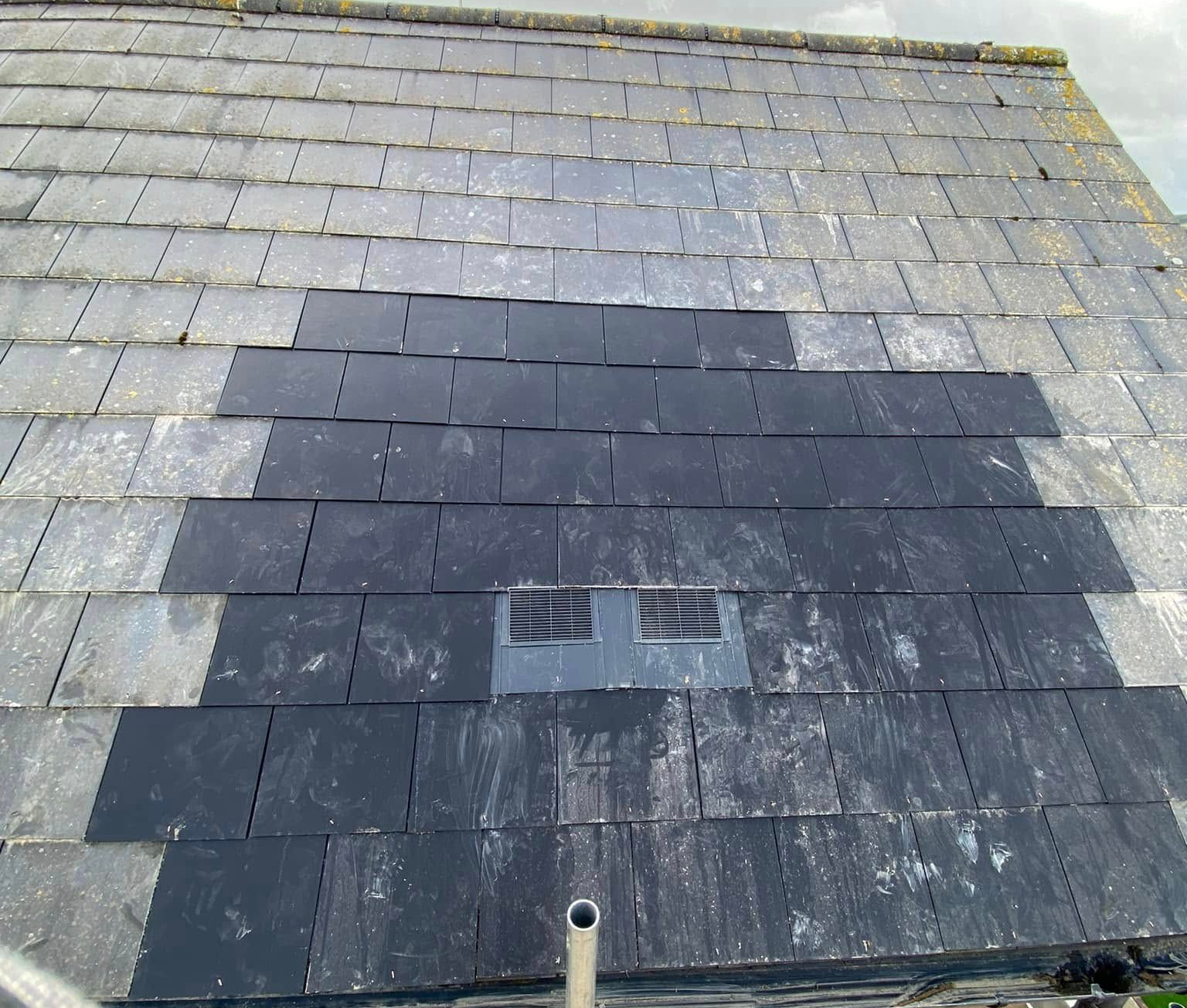
Once the stack is removed, we make the roof fully weathertight — matching replacement tiles or slates, new lead flashing, and ridge tile repairs. As roofing specialists as well as chimney contractors, this is work we carry out on every job, not as an add-on.
Chimney Breast Removal (Internal, One or More Floors)
This removes the protruding section of the chimney inside your room — the part that takes a chunk out of your wall and limits how you use the space. It is a structural job. A structural engineer must confirm what support is needed before any brickwork comes down.
The space you gain is significant. In the Victorian and Edwardian terraces common across Nottingham's inner suburbs, removing a chimney breast can add enough floor area for a built-in wardrobe, a larger bed, or a proper media wall setup.
Full Chimney Removal (Breast and Stack, Ground to Pot)
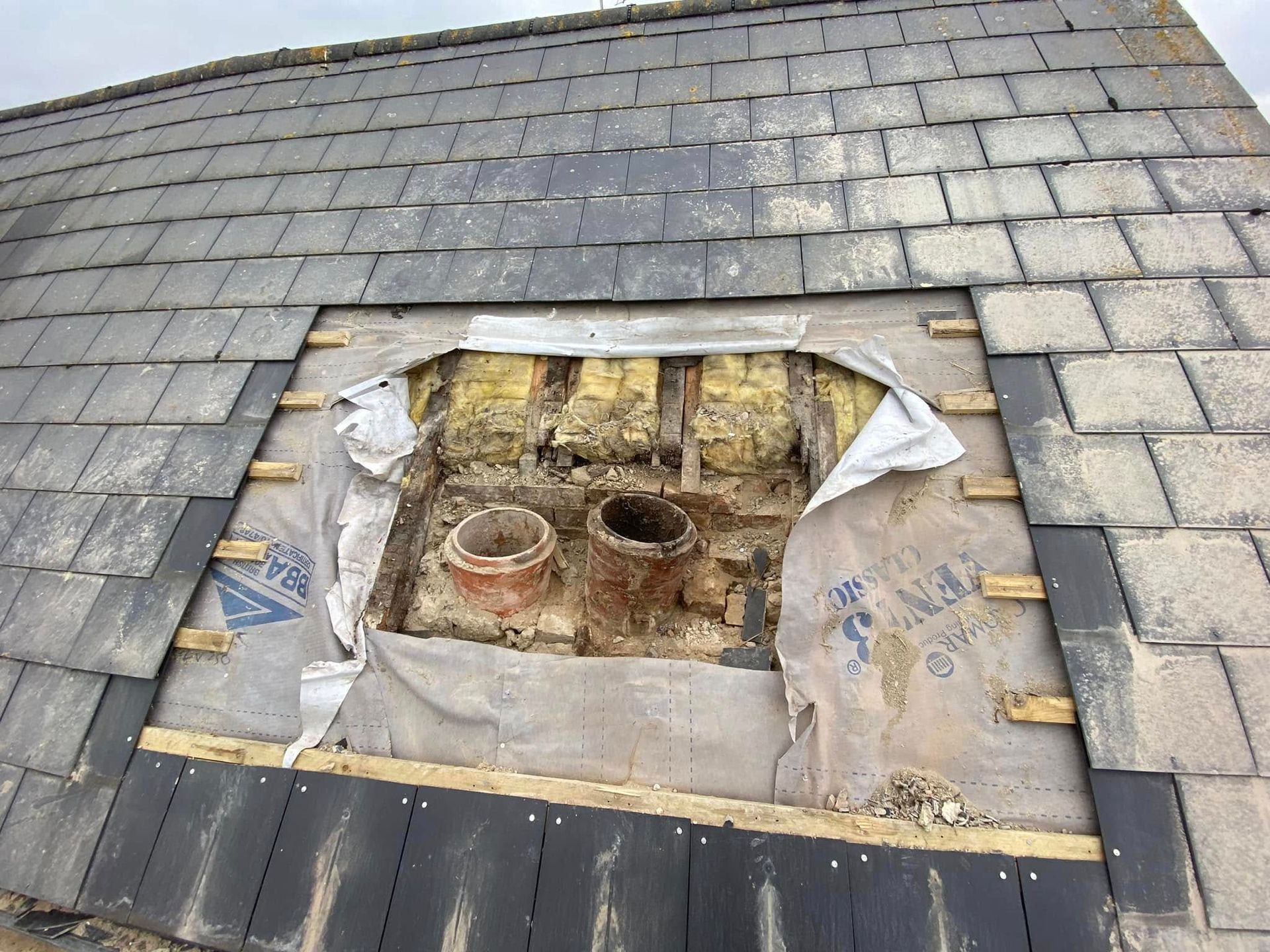
This removes the entire structure — breast on every floor, the stack above the roof, and all associated masonry — from the ground floor right through to the chimney pot. It is the most complete option and involves the most structural and roofing work.
Once finished:
- Walls, ceilings, and floors are all made good
- The roof is weatherproofed and tiled to match the surrounding area
- A building regulations completion certificate is issued
- The property is left clean and ready to redecorate
One important note for Nottingham terraces: some properties in the city have cross-over flues, where the flue from one property runs through the chimney breast of a neighbouring one. We check for this at survey stage. If cross-over flues are present, partial removal may not be possible and a different approach will be needed.
Gas or electric services connected to a fireplace must be isolated and signed off by a registered engineer before structural work begins. We coordinate this as part of the project.
Your Chimney Breast Is Load-Bearing — Here Is What That Means
This is the part most homeowners don't know until it goes wrong. In most Nottingham homes built before the 1970s, the chimney breast is not just decorative brickwork. It provides structural support to the floors above it, the walls around it, and the stack sitting on top. Remove it without the correct support in place and the structure above can move or drop.
This is why a structural engineer must assess the job before any brickwork is touched. The engineer will confirm:
- Whether temporary support props are needed during removal
- Whether a permanent RSJ steel beam is required to carry the load once the breast is gone
- Whether gallows brackets can be used as an alternative — and whether that is appropriate for your specific property
Gallows brackets are steel supports fixed into the party wall to carry the weight of a remaining chimney stack after the breast below has been removed. They are common in two-storey Nottingham terraces, but they cannot be used in every situation. They are not suitable where:
- Lime mortar has been used in the party wall
- The neighbour's chimney breast has already been removed on their side
- The chimney breast is wider than a certain measurement
In areas like Lenton and Basford, where back-to-back terraces share party walls, the neighbour's structure is directly relevant to what we can and cannot do on your side. We always check before work starts — and before you spend any money.
Once the structural engineer has designed the support solution, those plans go to building control before any brickwork is removed. This protects you, your property, and your'e neighbours.
Why Nottingham Roofs Benefit From Aerial Inspection
Nottingham has a wide mix of housing types — from Victorian terraces in Sherwood and Carrington to post-war semis in Clifton and newer builds in Gedling. Different roof styles and ages present different problems, and many of them are hard to spot from the pavement.
Nottingham also sits in one of the wetter parts of the East Midlands. There is a greater than 27% chance of rainfall on any given day, and the windiest months run from October through to April. That persistent cycle of wet and wind takes a real toll on roofing materials — particularly on older properties across the city.
Our drone reaches the areas that matter most:
- Back slopes and rear pitches hidden completely from street view
- Chimney stacks on Victorian and Edwardian terraces — a common fault point in older Nottingham homes
- Valley gutters and hip junctions on complex roof shapes where water pools and causes damage
- Flat roof edges and parapet walls on extensions and commercial buildings
- Loft conversion roof sections where the internal framework is concealed and external defects are harder to trace
Working at height carries real risk. A drone survey removes that risk entirely. Nobody climbs onto your roof, so there's zero chance of accidental tile damage during the inspection itself.
We hold NFRC membership, and our team hold CSCS cards — the same professional standards we apply to our repair and installation work apply to every survey we carry out.
Who Should Book a Free Drone Roof Survey?
Our free drone survey is relevant to more situations than most people realise. Here's who it's designed for:
Homeowners Who've Spotted a Problem
Damp patches on ceilings, daylight visible in the loft, cracked or missing tiles, or a musty smell in the upper floors — these are all signs your roof may need attention. A free drone survey gives you a clear diagnosis before you spend anything.
Homeowners Who Haven't — But Should Check
Many roof problems develop slowly and show no internal signs until significant damage is done. Mortar decay, slipping tiles, and flashing failure can all go unnoticed for months. A survey gives you a baseline — and catches small issues while they're still small.
People Buying or Selling a Property in Nottingham
A pre-purchase drone survey is one of the smartest steps a buyer can take. It reveals roof condition before you commit to a purchase — and gives you evidence to negotiate on price if faults are found. Estate agents across Nottingham increasingly recommend a drone survey before a full RICS report is commissioned, saving buyers time and money.
Homeowners After Storm or Wind Damage
After a period of strong winds or heavy rain, your roof may have sustained damage that's invisible from the ground. A post-storm drone survey documents the damage quickly — giving you the evidence you need to act and, where relevant, to support an insurance claim.
Landlords and Property Managers
If you manage rental properties across Nottingham or Nottinghamshire, regular aerial roof inspections help you stay ahead of maintenance costs and comply with your duty of care to tenants.
What Happens After the Survey — Your Next Steps
Once we've completed the drone flight and reviewed the footage, you'll have a clear picture of your roof's condition. What happens next is entirely your decision.
Three common outcomes:
- No faults found — we confirm your roof is in good order. You have peace of mind, and no further action is needed.
- Minor faults found — we explain what needs attention and provide a no-obligation quote for small repairs. Many Nottingham customers book straightforward work off the back of the survey.
- More significant issues found — we walk you through what we've identified, what the repair or replacement options are, and what it would cost. No upselling. No jargon.
In Hucknall and Bulwell, we regularly find that post-war terraced roofs have deteriorating mortar at the ridge and around chimney flashings. The drone footage pinpoints exactly where the problem is — so any repair work is targeted rather than broad.
The survey findings belong to you. You're free to act on our quote, seek comparison quotes from other contractors, or do nothing at all. That's your right, and we respect it.
How Drone Survey Footage Supports Insurance Claims
If your roof has been damaged by a storm, high winds, or heavy rainfall, drone footage gives you solid evidence to support an insurance claim. Timestamped 4K aerial imagery clearly shows the exact location and extent of the damage — something a ground-level description simply cannot provide.
Nottingham experiences its windiest and wettest months from October through April. Post-storm drone surveys help homeowners across the city act quickly — before water ingress causes further internal damage.
Drone footage can help you:
- Document new storm damage clearly and accurately
- Show the difference between existing wear and fresh impact damage
- Share evidence directly with your insurer or loss adjuster
- Support a faster, smoother claims process with clear visual proof
- Provide a permanent timestamped record of your roof's condition
Our footage is provided in a format you can save, share, and forward to your insurance company. We're happy to explain the findings in plain terms if you need to describe the damage to your insurer.
One important note: A drone survey is a visual inspection carried out by a roofing contractor. For complex insurance claims requiring a formal, RICS-accredited condition report, we'll tell you clearly if that's what your insurer needs.
When a Free Survey Is Enough and When You Need More
A free drone roof survey from Trust Roofing Services is the right starting point for most Nottingham homeowners. It's fast, it's thorough, and it costs you nothing.
A free drone survey is the right choice when:
- You want to know the current condition of your roof
- You've noticed a potential problem and want an honest assessment
- You've had storm or wind damage and need to know what's affected
- You're planning maintenance and want to know where to start
- You want evidence before requesting repair quotes from any contractor
A more detailed or formal inspection may be needed when:
- You're buying a property in Nottingham and your solicitor or mortgage lender requires a formal report
- You're selling a property and want a documented RICS-accredited record of roof condition
- Your insurer requires a RICS sign-off for a complex structural claim
- You're converting, extending, or planning significant works and need measured survey data
In those cases, we'll point you in the right direction. Either way, the free survey gives you the facts first. You decide what to do next.
Building Regulations and Planning Rules for Nottingham Homeowners
Does chimney removal in Nottingham need building regulations approval?
Yes — in most cases. Chimney breast removal is classed as a structural alteration and Part A of the UK Building Regulations applies. A building control officer or approved inspector must sign off the work.
You have two routes:
- Notify Nottingham City Council's building control department and be assigned an officer to oversee the work
- Hire a private approved inspector — usually the faster route if you want work to begin quickly
Once the job passes inspection, a completion certificate is issued. You will need this document if you sell or remortgage. Without it, buyers' solicitors will flag the alteration, and your sale can stall or fall through.
Do you need planning permission?
In most cases, no. Chimney removal falls under permitted development for standard residential properties in Nottingham. The exceptions are:
- Listed buildings — listed building consent is required
- Conservation areas — conservation area consent may be needed, particularly if removing the external stack changes the appearance of the property
- Leasehold properties — written permission from your freeholder is required before any structural work starts
Parts of Nottingham city centre and areas around The Park Estate carry conservation area designations. If you are unsure whether your property is affected, we check this at survey stage and advise on the correct route before anything is booked.
The Party Wall Act — What You Must Do Before Work Starts
If your chimney sits on or touches the wall shared with your neighbour, the Party Wall etc. Act 1996 applies. This is a legal requirement — not a formality. You must serve written notice on your neighbour before structural work begins.
The Act applies where:
- The chimney breast is built against or into a party wall
- New structural supports such as steel beams will bear onto the party wall
- You intend to remove a shared chimney stack — which requires both homeowners to agree
Your neighbour has the right to appoint their own party wall surveyor once notice is served. If they do, you cover that surveyor's fees. The process typically takes several weeks, so it is worth starting this step early — ideally before you book the structural engineer.
Shared stacks are particularly common across Arnold and Carlton — and failing to serve the correct notice is one of the most frequent reasons a chimney removal project gets delayed or disputed.
We advise all clients on the Party Wall Act at survey stage. We confirm whether notice is required and help you understand what you need to do before any commitment is made.
Chimney Removal or Chimney Repair — Which Is the Right Call?
Not every chimney needs to come down. Some are genuinely worth repairing. The right answer depends on the condition of the chimney, whether you use it, and what the ongoing cost of maintenance looks like.
When Repair Makes More Sense
Repair is the right route when the chimney is structurally sound and you use — or plan to use — the fireplace or log burner. Jobs like repointing, replacing a cracked chimney pot, fixing flaunching, or renewing lead flashing are cost-effective ways to extend the life of a chimney that is still useful.
Repair also makes sense when the chimney is a genuine period feature — an original Victorian fireplace or inglenook hearth adds character and value to the right property. In those cases, removing it can reduce kerb appeal and buyer interest, particularly in areas of Nottingham and West Bridgford where period properties attract a premium.
When Removal Makes More Sense
Removal is the right call when:
- The chimney is unused and repair bills keep returning
- The stack is leaning, cracking, or structurally failing
- Brickwork is spalling and becoming a falling hazard at roof level
- Damp is tracking down from the stack into rooms below
- You want to reclaim meaningful floor space in a bedroom or living room
- You are renovating to sell and a cleaner wall line improves the property
Nottingham's wet winters and freeze-thaw cycles accelerate mortar deterioration in exposed stacks. If you are paying for repointing every few years on a chimney that never gets used, the numbers usually favour removal over the medium term.
One important check before any decision: asbestos. Older flue liners and some fire-back materials in Nottingham homes built before the 1980s can contain asbestos. If it is identified during the survey, licensed removal is required before any other work proceeds. We flag this if we find it and coordinate the appropriate licensed contractor.
Roof Weatherproofing After Chimney Stack Removal
This is the step that separates a good chimney removal from a poor one — and it is where many contractors cut corners.
When a chimney stack comes down, the roof is open. That opening must be made fully weathertight before the job can be considered finished. When it is not done correctly, water gets in — sometimes immediately, sometimes gradually over months.
As a roofing company as well as a chimney specialist, this is work we carry out as standard on every stack removal. Our team handles:
- Cutting and fitting new lead flashing where the stack met the roof slope
- Replacing or reinstating ridge tiles displaced during the removal
- Fitting matching replacement tiles or slates to the surrounding roof covering
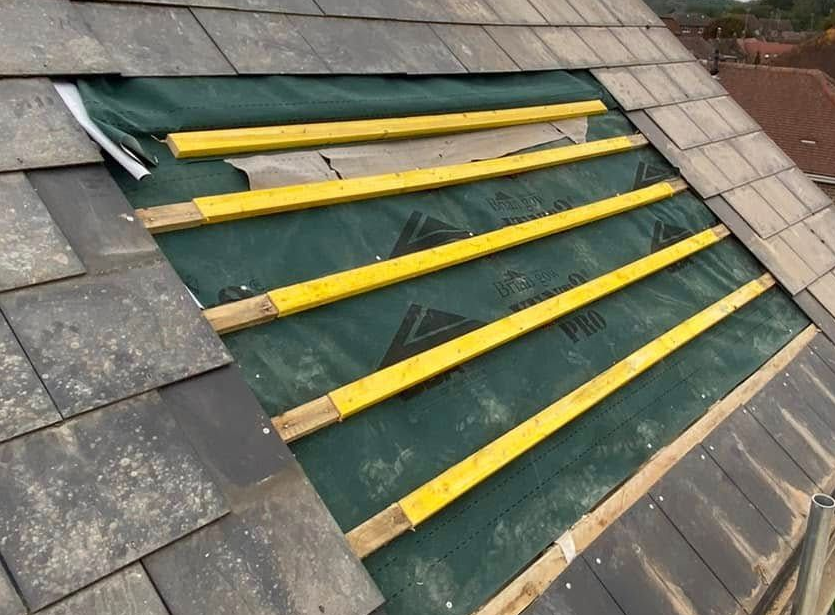
- Checking the roof deck, felt or underlay is intact beneath the repair area
All roofing materials we use carry BBA approval. If scaffolding is already erected for the stack removal — which it usually is — we use that access to complete the roof work at the same time. This keeps the job efficient and reduces the time your roof is exposed.
Does Removing a Chimney Add Value to Your Home in Nottingham?
The honest answer: it depends on your property type and your local market.
In smaller terraced homes and modern properties, reclaiming floor space from a chimney breast makes a tangible difference. Buyers notice a bedroom that feels wider, or a living room with a full unbroken wall for a media setup. In high-density areas, every square foot of usable space has value.
In period properties — particularly Victorian and Edwardian homes in West Bridgford, Sherwood, and Mapperley Park — original fireplaces, cast iron surrounds, and intact chimney breasts are often features buyers actively look for. Removing them can reduce the property's period character and its appeal to a specific buyer type.
The most important factor from a sale perspective is not whether you remove the chimney — it is whether the work was done correctly and certified. Buyers' solicitors ask for the building regulations completion certificate as standard. If it is missing, your sale is at risk.
All chimney removal work we carry out is completed to building regulations standard and signed off with a completion certificate. You receive a copy for your records.
Areas We Cover — For Chimney Removal around Nottingham & Nottinghamshire
Trust Roofing Services carries out chimney removals throughout Nottingham city and the wider Nottinghamshire region.
We cover all NG postcodes and several bordering areas.
- Nottingham City Centre — NG1
- The Meadows & Lenton — NG2
- Radford & Forest Fields — NG7
- Sherwood & Mapperley — NG3 / NG5
- Bulwell & Bestwood — NG5 / NG6
- Hucknall (our base) — NG15
- Arnold — NG5
- Carlton & Gedling — NG4
- West Bridgford & Edwalton — NG2 / NG12
- Beeston & Chilwell — NG9
- Wollaton & Bilborough — NG8
- Basford & Hyson Green — NG6 / NG7
- Kirkby in Ashfield — NG17
- Sutton in Ashfield — NG17
- Mansfield — NG18 / NG19
- Newark on Trent — NG24
- Eastwood & Kimberley — NG16
- Stapleford & Trowell — NG9 / NG10
Not sure if we cover your area? Call us on 0115-647-3275 and we will confirm straight away.
Frequently Asked Questions — Chimney Removal Nottingham
How much does chimney removal cost in Nottingham?
The cost varies depending on the scope of the work. Chimney stack removal (above the roofline only) is generally the most affordable option, while full removal — breast and stack on multiple floors — involves significantly more structural and roofing work and costs more. Additional factors include scaffolding, skip hire, structural engineer fees, waste disposal, and the finishing required to walls, ceilings, and floors after the breast is removed. We provide a clear written quote after a free site survey so you know exactly what is included before any work starts.
Do I need planning permission to remove a chimney in Nottingham?
In most cases, no. Chimney removal falls under permitted development for standard residential properties. However, if your property is listed, in a conservation area, or leasehold, additional consent is required. Parts of Nottingham city centre and The Park Estate area have conservation area designations. We check this for you at survey stage.
Do I need building regulations approval for chimney removal?
Yes — for chimney breast removal and full stack removal throughout the house, building regulations approval is required. The work is a structural alteration under Part A of UK Building Regulations. You will receive a completion certificate once the work is signed off, which you must have when you sell or remortgage.
Do I need a structural engineer?
Yes. A structural engineer must assess the load and design any permanent support — such as an RSJ steel beam or gallows brackets — before chimney breast removal begins. This is a legal requirement and a practical necessity. We help you arrange this as part of the project.
Does chimney removal affect my neighbour?
It can. If your chimney sits on a party wall, the Party Wall etc. Act 1996 applies and you must serve written notice on your neighbour before work starts. If you share a chimney stack, both owners must agree before it can be removed. We confirm at survey whether notice is required for your property.
Can I just remove the chimney stack and leave the breast inside?
Yes — this is possible in most cases. The stack above the roofline is taken down and the roof is made weathertight, while the internal breast is left in place. The remaining structure must be properly supported, and we check feasibility at the survey stage before quoting.
How long does chimney removal take?
Chimney stack removal typically takes one to two days once scaffolding is in place. Chimney breast removal on one floor usually takes two to four days. Full chimney removal — breast and stack across multiple floors — can take five to eight days or more depending on the complexity. We give you a realistic timescale in your written quote.
Will removing my chimney affect my home insurance?
Yes. You must notify your home insurer before structural work starts. Chimney breast removal is classed as a material alteration, and failing to inform your insurer can affect your cover. Most insurers require confirmation that qualified tradespeople are carrying out the work and that it will be signed off by building control.
What happens to the roof after the chimney stack is removed?
Once the stack is down, the opening in the roof must be made fully weathertight. We install new lead flashing, fit matching roof tiles or slates, reinstate or replace ridge tiles, and check the roof deck beneath. This is included as standard in our chimney removal service — not treated as a separate job.
Is chimney breast removal a DIY job?
No. Chimney breast removal is structural work that requires a structural engineer's calculations, building regulations approval, and inspection by a building control officer. Attempting this without professional oversight risks structural collapse, failed building control inspections, and serious complications when selling the property.
Ready to Book Your Free Chimney Removal Survey in Nottingham?
If your chimney is leaking, unused, deteriorating, or simply taking up space your home could put to better use — now is the right time to act.
Left unattended, a failing chimney gets worse. Water ingress spreads. Mortar crumbles further. Loose brickwork becomes a safety risk. And the longer you leave it, the more work — and cost — is involved when you eventually do address it.
Trust Roofing Services makes the process straightforward from the start:
- Free site survey — we assess the chimney and confirm exactly what the job involves
- Clear written quote — no hidden extras, no vague estimates
- Structural planning and building regulations managed for you
- Fully insured work, completed to building regulations standard
- Completion certificate issued — your property is fully protected at sale or remortgage
- Roof weatherproofed and made good as standard
- Full site clearance on completion
We are local to Nottingham. We know the housing stock, we know the NG postcode area, and we know what is required to get the job done correctly.
📞 Call us today: 0115-647-3275
🌐 www.roofersnottinghamgrp.co.uk
Trust Roofing Services 40 Harrow Rd, Hucknall, Nottingham NG15 6JD
Monday – Friday: 7:30am – 5:30pm | Saturday: 8:30am – 4:00pm | Sunday: Closed
Don't wait for a small chimney problem to become a structural one. Call Trust Roofing Services today and get a straight answer from a local expert who knows Nottingham's homes inside out.
Let’s talk about your chimney removal project
Fill out the form, or call us to discuss your requirements
0115-647-3275