Roof Insulation & Ventilation Nottingham — Warm Roof & Cold Roof Repairs
- Free Drone Survey
- Free Quote
- BBA-Approved Materials. 10-Year Guarantee.
Roof Insulation & Ventilation Specialists — FREE Drone Survey Available
If your upstairs rooms feel cold in winter, your energy bills keep rising, or you've spotted damp patches in your loft, your roof insulation or ventilation may be the problem. In Nottingham, a poorly insulated or badly ventilated roof is one of the most common — and most overlooked — causes of heat loss in a home.
At Trust Roofing Services, we carry out roof insulation and ventilation upgrades for homeowners and businesses across Nottingham and Nottinghamshire. We work on warm roof installations, cold roof repairs, flat roof insulation upgrades, loft conversion roof systems, and ventilation fixes — all with full building regulations compliance and honest advice.
Whether your property is a Victorian terrace in Hyson Green, a semi-detached in Arnold, or a flat-roofed extension in West Bridgford, we can assess your roof and carry out the right work, properly. Call us on 0115-647-3275 to book your free roof survey.
Roof Insulation & Ventilation Nottingham — Warm Roof & Cold Roof Upgrades
Contact us now — call 0115-647-3275 to arrange a FREE drone survey and consultation.
At Trust Roofing Services, we carry out warm roof installations, cold roof repairs, flat roof insulation upgrades, loft conversion roof systems, and ventilation fixes across Nottingham and Nottinghamshire — all with full Building Regulations compliance and honest advice.
We survey before we recommend anything, explain warm roof and cold roof options in plain English, and handle all compliance documentation and sign-off paperwork as part of the job. Call us on 0115-647-3275 for a free, no-obligation roof survey.
Key Selling Points
- Free drone roof survey checking insulation depth, ventilation paths and roof condition before any work is recommended
- Full Building Regulations compliance — U-value calculations, condensation risk assessment and completion certificate provided
- BBA-approved materials with a 10-year workmanship guarantee on every job
Call 0115-647-3275. We offer a free, no-obligation inspection across Nottingham and the surrounding area.
Types of Roof Insulation for Nottingham Homes
Choosing the right insulation material is just as important as the depth you install it to. Nottingham's mix of Victorian terraces, 1930s semis, and modern flat-roof extensions means there is rarely a single "correct" product — the right choice depends on your roof type, the space available, and how the room below is used.
The main options we install across Nottingham and Nottinghamshire are:
- Mineral wool (glass wool / rock wool) — flexible rolls or batts for cold roof top-ups, breathable and forgiving in draughty older lofts, typically laid to 270mm.
- PIR rigid insulation boards — high thermal performance in a slim build-up, ideal for warm roof systems and flat roof deck upgrades.
- Phenolic boards — the highest thermal rating available in rigid board form, used where headroom is tight, such as dormer conversions.
- Multifoil insulation — reflective foil layers that combine insulation and vapour control in one slim product, suited to restricted loft spaces.
- Natural options — sheep’s wool and wood fibre boards for homeowners who want a breathable, eco-friendly material in a period property.
We tell you exactly which material suits your roof, and why, before any work begins — call us on 0115-647-3275 to book a free survey.
Why Roof Ventilation Matters — Condensation & Damp Risk
Insulation on its own is only half the job. Without the right ventilation, moisture from everyday living — cooking, showering, drying washing — rises into the loft and has nowhere to escape. On a cold roof, that moist air meets cold roof timbers and condenses, soaking insulation and encouraging mould and timber decay.
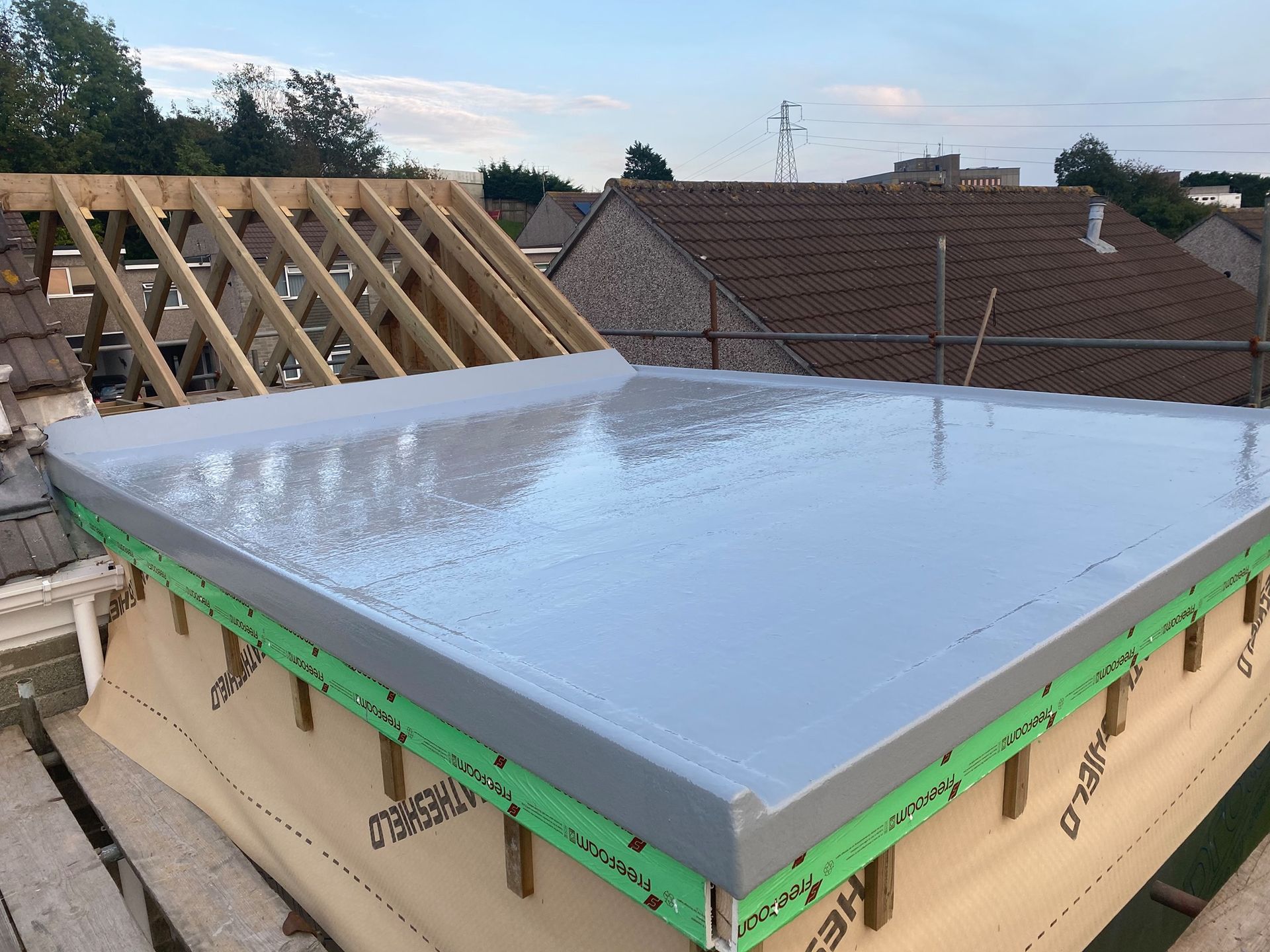
Blocked or missing ventilation is one of the most common issues we find on Nottingham surveys. Warning signs include:
- Dark staining or mould on loft timbers and the underside of roof felt
- Wet, compressed, or sunken insulation that has lost its shape
- A musty or damp smell in the loft after wet weather
- Condensation droplets on the underside of the roof covering
A 50mm clear air gap from eaves to ridge is required on cold roofs under Approved Document F. On warm roofs, moisture is managed instead through a correctly sealed vapour control layer. Both approaches work — but only if they are installed and maintained properly.
Cold Roof vs Warm Roof — Which System Suits Your Property?
"Warm roof" and "cold roof" describe where the insulation sits in the roof build-up, not how warm your house feels. Both are valid systems — the right one depends on how the roof space is used.
Cold roof — best for unused loft spaces. Insulation sits at ceiling level, the loft above stays cold and ventilated, and a 50mm air gap from eaves to ridge prevents moisture build-up. It’s the most common setup in Nottingham’s older terraced and semi-detached housing stock, and disruption is minimal for straightforward top-up jobs.
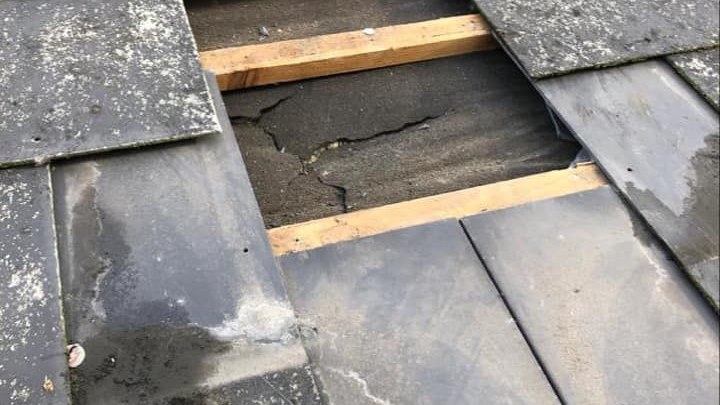
Warm roof — best for loft conversions and flat roofs. Insulation moves up into the roof structure itself, so there is no cold void to ventilate — moisture is managed through a vapour control layer instead. Warm roofs suit loft conversions, flat roof extensions, and complex roof shapes with dormers, hips, or valleys where ventilating a cold void isn’t practical. Disruption is higher, since the roof covering is usually removed to install the system correctly.
Not sure which system your roof has? We survey properties across Nottingham every week and can tell you exactly what you’re working with — call 0115-647-3275.
Signs Your Nottingham Roof Has Poor Ventilation
Many homeowners assume a damp loft means a roof leak. In reality, poor insulation or blocked ventilation is the cause more often than not — and it’s easy to miss until the damage is already done.
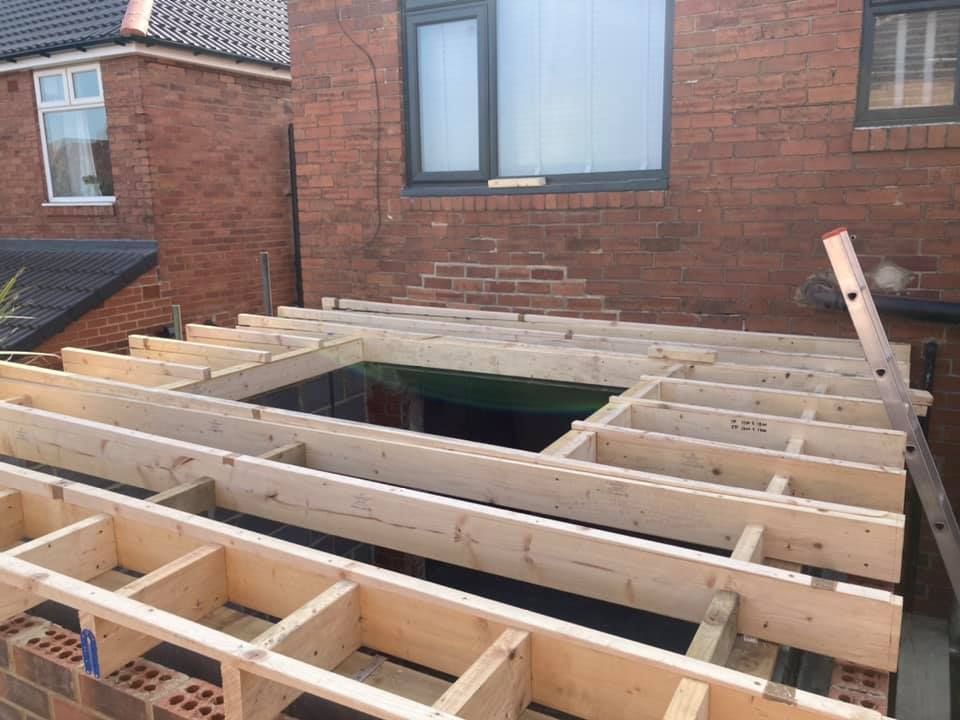
These are the warning signs we look for on every survey:
- Cold or draughty upstairs bedrooms, even with the heating on
- Higher energy bills despite your boiler working normally
- A loft space that feels as cold as the outside air in winter
- An unsealed or poorly insulated loft hatch — one of the most overlooked weak points in older Nottingham properties
- Thermal bridging through exposed ceiling joists, chilling the rooms below
- Musty smells, staining, or visible mould after wet weather
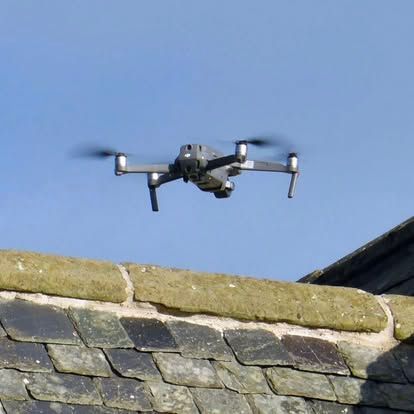
We offer free drone roof surveys across Nottingham and Nottinghamshire, checking insulation coverage, ventilation paths, and roof condition without scaffolding. If we find a problem, we explain it plainly and tell you exactly what needs doing.
How We Install Roof Insulation & Ventilation Upgrades
The method we use depends on your roof type, its current condition, and what you need from it going forward. Every job is carried out with full building regulations compliance and photo evidence at each key stage.
Cold roof repair process:
- Survey the loft to check existing insulation depth, coverage, and condition
- Inspect eaves and baffle vents, clearing any blockages in the ventilation path
- Check the loft hatch and draught-proof or insulate it where needed
- Top up or replace insulation to at least 270mm, ensuring continuous coverage across all joists
- Fit insulation over joists as well as between them to address thermal bridging
- Fit or replace eaves and ridge ventilation where airflow is restricted
Warm roof installation process:
- Remove the existing roof covering carefully, salvaging tiles and slates where possible
- Fix rigid PIR or phenolic insulation board above or between the rafters
- Install a vapour control layer on the warm side, sealed at all joints and penetrations
- Re-felt using a high-resistance breathable membrane and re-batten
- Relay the tiles or slates and check the ridge, verge, and eaves for continuity
- Carry out a final inspection with photo evidence of all key stages
Most cold roof repairs are completed within a day; warm roof installations on a standard pitched roof typically take two to three days.
Cost & Areas We Cover for Roof Insulation & Ventilation
Every roof is different, so we price insulation and ventilation upgrades after a free survey rather than guessing over the phone. Cost depends on the system (cold roof top-up vs full warm roof installation), the material used, the size of the roof, and access.
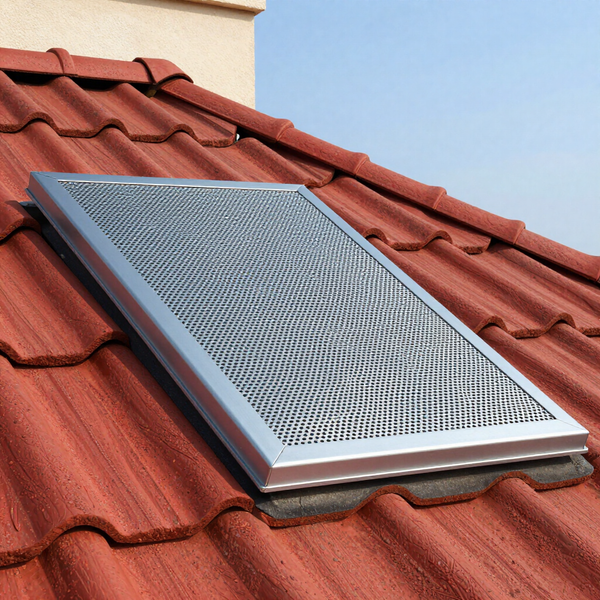
As a rough guide: a straightforward mineral wool top-up in an accessible loft is the most affordable option, PIR or phenolic warm roof upgrades cost more due to the labour involved in removing and relaying the roof covering, and loft conversions with warm roof insulation sit at the higher end because of the additional structural work. We give you a clear, written quote before anything starts — no surprises.
We’re based in Hucknall and cover Nottingham City Centre (NG1), West Bridgford and Sneinton (NG2), Carlton and Mapperley (NG3), Gedling and Netherfield (NG4), Arnold and Sherwood (NG5), Bulwell (NG6), Hyson Green, Lenton and Radford (NG7), Wollaton and Aspley (NG8), Beeston and Chilwell (NG9), Long Eaton (NG10), Clifton and Ruddington (NG11), Radcliffe on Trent and Cotgrave (NG12), and out to Eastwood, Kimberley, Kirkby in Ashfield, Mansfield, and Newark-on-Trent.
Not sure if we cover your area? Call us on 0115-647-3275 and we’ll confirm straight away.
Frequently Asked Questions — Roof Insulation & Ventilation Nottingham
What is the difference between a warm roof and a cold roof?
A warm roof places insulation within or above the roof structure, so the entire roof sits inside the heated home. A cold roof insulates at ceiling level, leaving the loft space cold and ventilated. The key difference is where the insulation sits and how moisture is managed — warm roofs use a vapour control layer, cold roofs rely on through-ventilation via the eaves and ridge.
Which is better for my Nottingham home — a warm roof or a cold roof?
Neither is universally better — it depends on how your loft is used. A cold roof works well for an unused, well-ventilated loft and is the most common setup in Nottingham. A warm roof suits loft conversions, flat roof extensions, or where reliable long-term performance matters more than upfront simplicity. We survey your property and recommend the right system.
Does a cold roof need ventilation, and how much?
Yes. A cold roof requires a clear 50mm air gap between the top of the insulation and the underside of the roof covering, running from eaves to ridge. Soffit vents at the front and ridge or over-tile vents keep air moving. Without this airflow, moisture builds up and causes timber decay, mould, and wet insulation.
Why is there condensation in my loft even though it has insulation?
The most common cause is blocked eaves vents — when insulation is pushed too close to the eaves, it seals off the ventilation path. Without airflow, warm moist air from the house rises into the loft, meets cold surfaces, and condenses. A damaged or missing vapour control layer can also cause this on warm roof systems. A survey identifies the exact cause.
What U-value does my roof insulation need to meet?
For renovations, current minimum targets under Part L of the UK Building Regulations are: cold pitched roof — 0.16 W/m²K; warm pitched roof — 0.13 W/m²K; flat warm deck roof — 0.18 W/m²K. We carry out U-value calculations and provide the paperwork to confirm compliance.
How thick does roof insulation need to be?
Mineral wool in a cold roof needs around 270mm depth to meet the required U-value. PIR or phenolic boards in a warm roof system typically need between 100mm and 150mm, depending on the product and rafter depth. We calculate the correct thickness for your specific roof before starting work.
Can I convert my cold roof to a warm roof without removing the tiles?
In some cases, yes. During a loft conversion, insulation can be installed between and below the rafters from inside the roof space without disturbing the tiles. Whether this is possible depends on rafter depth and the existing roof build-up. We assess this during the survey and tell you exactly what is and isn’t achievable.
Do I need building regulations approval for a roof insulation upgrade?
Yes, for significant upgrades — Nottingham Building Control must be notified before work starts. Without sign-off, you can face issues when selling or remortgaging the property. Trust Roofing Services handles all notifications, documentation, and the completion certificate on your behalf.
How much does a roof insulation and ventilation upgrade cost in Nottingham?
It depends on the system and scope — a mineral wool top-up in an accessible loft is the most affordable option, while a full warm roof installation or loft conversion costs more due to the labour involved. We provide a clear, written quote after a free survey, with no obligation.
Ready to Fix Your Roof Insulation or Ventilation?
Call Trust Roofing Services Today
Cold rooms, rising energy bills, a damp loft, or a loft conversion you’re planning — whatever the reason, the right time to sort your roof insulation and ventilation is before small problems become expensive repairs. We are a family-run roofing contractor based in Hucknall, serving homeowners and businesses across Nottingham and Nottinghamshire for over 15 years. Every job comes with full building regulations compliance, photo documentation, and honest advice — no pressure, no guesswork.
When you call us, here is what happens:
- We arrange a free drone roof survey at a time that suits you
- We check your insulation depth, material, and ventilation paths
- We tell you plainly what your roof needs — and what it doesn’t
- We give you a clear, written quote with no obligation
- We carry out the work with full compliance documentation and sign-off
📞 Call us now on 0115-647-3275
Get in Touch
Trust Roofing Services — Hucknall
40 Harrow Road, Hucknall, Nottingham, NG15 6JD
📞 0115-647-3275
✉️ office@roofersnottinghamgrp.co.uk
Frequently Asked Questions
Warm Roof vs Cold Roof — Which System Suits Your Nottingham Property?
The terms "warm roof" and "cold roof" refer to where the insulation sits in your roof build-up — not how warm your house feels. Both systems can work well, but they suit different properties, different roof types, and different uses.
What Is a Cold Roof?
A cold roof places insulation at ceiling level — between and over the loft joists. The loft space above stays cold and ventilated. Air moves in through the eaves and out at the ridge, carrying moisture away with it. This is the most common setup in Nottingham's older terraced and semi-detached housing stock. It works well when ventilation paths are clear and the insulation is installed to the correct depth. However, cold roofs are less forgiving than many people realise. When eaves vents get blocked by debris or insulation pushed too close to the edge, moisture builds up quickly — especially during Nottingham's damp winters.
What Is a Warm Roof?
A warm roof moves the insulation up into the roof structure itself — either between, above, or below the rafters — so the entire roof becomes part of the heated home. There is no cold void, and ventilation is managed through the build-up rather than relying on open airflow through the loft. Warm roofs are less dependent on ongoing ventilation maintenance and offer more consistent long-term performance. They are particularly well suited to: Loft conversions , where the roof space becomes a living area Flat roofs on extensions — warm deck construction is now the recommended approach across the UK Complex roof shapes with dormers, hips, or valleys where ventilating a cold void is impractical Properties in wetter parts of Nottinghamshire where cold roof ventilation is difficult to maintain rel
Which Is Right for Your Property?
Cold Roof — Best For: Unused loft spaces Insulation sits at ceiling level. Ventilation is required — a 50mm air gap from eaves to ridge is needed to prevent moisture build-up. The risk of condensation is higher if vents become blocked over time. Disruption is minimal for top-up jobs, making it a straightforward upgrade for most Nottingham homes with an unused loft. Warm Roof — Best For: Loft conversions and flat roofs Insulation sits within or above the roof structure. No cold void means no ventilation gap is required inside the build-up — moisture is managed through the structure itself. The risk of condensation is lower as a result. Disruption is higher, as the roof covering is often removed to install the system correctly. Quick Comparison: Cold Roof — insulation at ceiling level, venti
What is the difference between a warm roof and a cold roof?
A warm roof places insulation within or above the roof structure, so the entire roof sits inside the heated home. A cold roof insulates at ceiling level, leaving the loft space cold and ventilated. The key difference is where the insulation sits and how moisture is managed — warm roofs use a vapour control layer, while cold roofs rely on through-ventilation via the eaves and ridge.
Which is better for a UK home — a warm roof or a cold roof?
Neither is universally better — it depends on how your loft is used. A cold roof works well for an unused, well-ventilated loft and is the most common setup in Nottingham. A warm roof is better for loft conversions, flat roof extensions, or where reliable long-term performance is more important than upfront simplicity. We survey your property and recommend the right system.
Does a cold roof need ventilation, and how much?
Yes. A cold roof requires a clear 50mm air gap between the top of the insulation and the underside of the roof covering, running from eaves to ridge. Soffit vents at the front and over-tile vents or ridge vents at the back keep air moving. Without this airflow, moisture builds up and causes timber decay, mould, and wet insulation.
Why is there condensation in my loft even though it has insulation?
The most common cause is blocked eaves vents. When insulation is pushed too close to the eaves, it seals off the ventilation path. Without airflow, warm moist air from the house rises into the loft, meets cold surfaces, and condenses. A damaged or missing vapour control layer can also cause this on warm roof systems. A survey will identify the exact cause.
What U-value does my roof insulation need to meet in Nottingham?
For renovations, the minimum U-value targets are: cold pitched roof — 0.16 W/m²K; warm pitched roof — 0.13 W/m²K; flat warm deck roof — 0.18 W/m²K. These are set under Part L of the UK Building Regulations. We carry out U-value calculations and provide the paperwork to confirm compliance.
How thick does roof insulation need to be?
Mineral wool in a cold roof needs around 270mm depth to meet the required U-value. PIR or phenolic boards in a warm roof system typically need between 100mm and 150mm, depending on the product used and the depth of the rafters. We calculate the correct thickness for your specific roof before starting work.
Can I convert my cold roof to a warm roof without stripping the tiles?
In some cases, yes. During a loft conversion, insulation can be installed between and below the rafters from inside the roof space without disturbing the tiles. Whether this is possible depends on rafter depth and the existing roof build-up. We assess this during the survey and tell you exactly what is and isn't achievable.
What insulation materials are best for warm roofs and cold roofs?
For cold roofs, mineral wool (glass wool or rock wool) is the most widely used material — it is breathable, flexible, and cost-effective. For warm roofs, PIR rigid boards or phenolic boards are the preferred choice due to their high thermal performance in a slim build-up. Multifoil insulation is a good option for restricted spaces like dormer roofs or older loft structures.
Are there government grants available for roof insulation in Nottinghamshire?
Eligible households in Nottinghamshire may be able to access funding through the ECO4 scheme or the Warm Homes Plan. Eligibility is typically linked to income, benefits received, or a low EPC rating (D–G). Your local council can confirm what schemes are currently available in your area. We can advise on this during your free survey.
Do I need building regulations approval for a roof insulation upgrade?
Yes, for significant upgrades — you must notify Nottingham Building Control before work starts. Without sign-off, you can face issues when selling or remortgaging the property. Trust Roofing Services handles all notifications, documentation, and the completion certificate on your behalf, so you have everything in order from day one.
Will roof insulation help with noise from rain and outside?
Yes — a well-insulated roof acts as a useful acoustic barrier. Mineral wool and rigid boards both absorb sound, which reduces the noise from rain and external traffic entering the rooms below. This is a secondary benefit that many Nottingham homeowners notice after an upgrade.
Can roof insulation help prevent damp and mould inside my home?
Yes, when installed correctly. Poor or missing insulation allows cold surfaces to form inside the roof structure, which causes condensation and eventually mould. Upgrading and correctly ventilating your roof removes the cold surface problem at source — which is more effective than treating mould after it has formed.
Ready to Book Your Free Roof Survey in Nottingham?
If you are losing heat through your roof, dealing with a damp loft, or planning a loft conversion or flat roof upgrade, the right time to act is now — before small problems become expensive repairs. Trust Roofing Services is a family-run roofing contractor based in Hucknall, serving homeowners and businesses across Nottingham and Nottinghamshire. We have over 15 years of hands-on experience with both warm and cold roof systems. Every job comes with full building regulations compliance, photo documentation, and honest advice — no pressure, no guesswork. Call us today on 0115-647-3275 for a free, no-obligation roof survey. We will assess your current insulation and ventilation, tell you exactly what your roof needs, and give you a clear quote. Most surveys can be booked within the week. Trus
🏠 Trust Roofing Services
Roof Insulation & Ventilation · Contact Us Now
- Free Drone Survey
- Free Quote
- BBA-Approved Materials. 10-Year Guarantee.
Let's talk about your roof insulation and ventilation in Nottingham
Fill out the form, or call us to discuss your requirements
📞 0115-647-3275